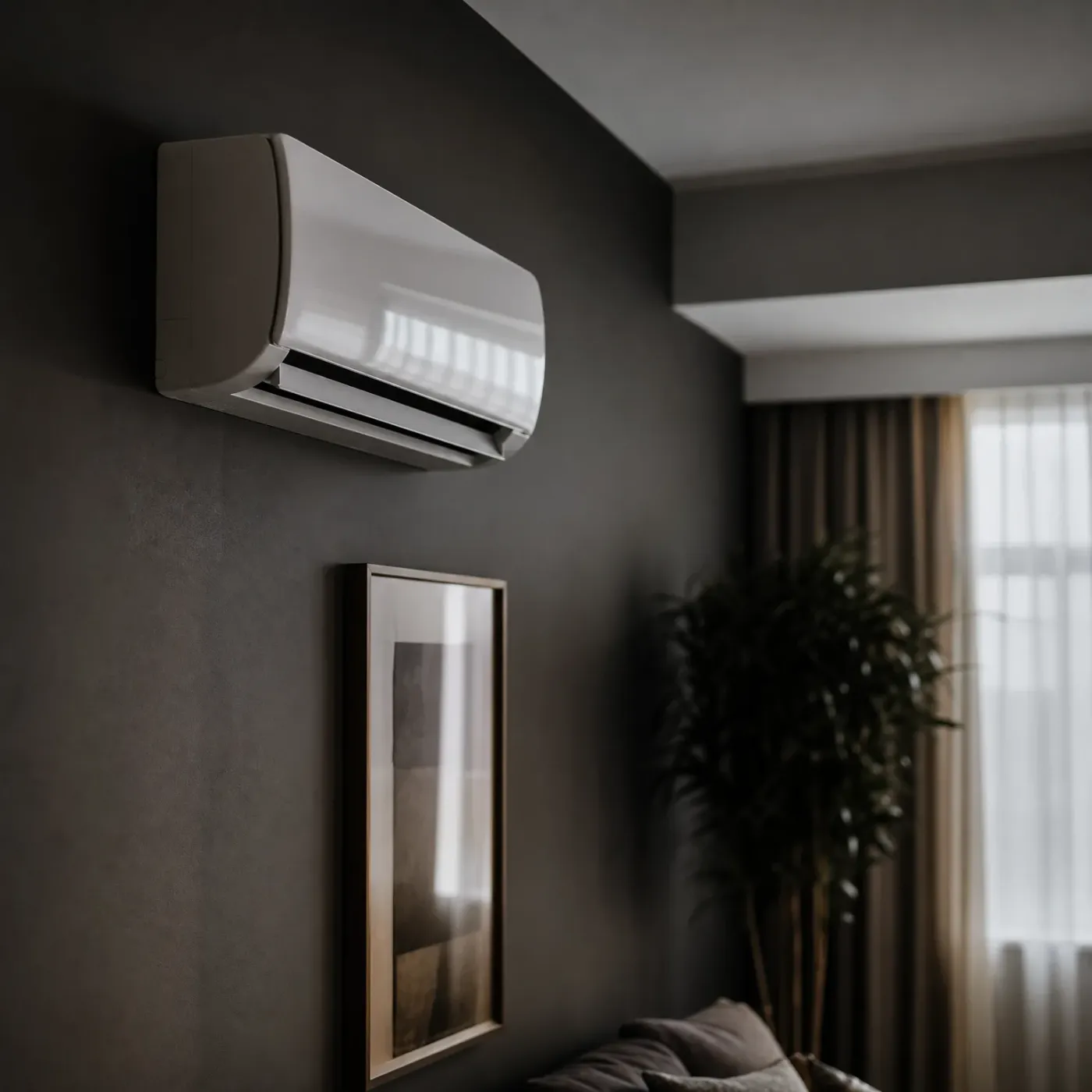


A white wall-mounted mini-split air conditioner on a dark gray interior wall above a framed picture, with a potted plant and curtained window to the right.

One request and it's handed off

Why your mini split won't turn on in a Michigan winter

A mini split that won't start when it's cold out usually comes down to a few things: a defrost cycle stuck on, a frozen outdoor unit, a tripped breaker, or a control board that's lost its signal. This page walks through what's likely going on. Skip the phone calls and the back and forth. Send one form and let someone else track down the right contractor for you.

Hand it off

A mini split that won't turn on when it's cold out is usually stuck in defrost or blocked by ice, not actually broken. The outdoor unit pulls heat from outside air even in winter, and in Michigan cold, frost builds up on its coil fast. The system is supposed to run a defrost cycle to clear that, switching briefly to cooling mode to melt the ice, then back to heat. If that cycle doesn't finish right, or if snow and ice build up faster than it can clear, the unit can shut itself down rather than keep running blocked. A tripped breaker or a control board that lost communication with the indoor head can look the same from where you're standing: nothing happens when you hit the button. Clearing ice off the outdoor unit is something you can check yourself. If it still won't start once it's clear, the cycle or the board needs a technician.

A smiling man in a dark blue T-shirt sits on a light gray sofa in a living room with a wooden shelf and window behind him, with a laptop edge visible in the foreground.
A bearded man in a plaid flannel shirt stands indoors looking out a frost-covered window, with a steaming dark blue mug on the wooden sill and snow-covered trees outside.

The outdoor unit is built to handle frost. It watches its own coil temperature, and when ice builds up it switches into a defrost cycle without any input from you. The indoor fan cuts off during this so the room doesn't get hit with cold air, and that quiet can look like the system shut down when it hasn't. A reversing valve does the actual work, flipping the system briefly out of heating mode to melt the coil clean, then flipping back. That cycle depends on the outdoor fan moving air across the coil the whole time. If that fan stalls while the compressor keeps running, frost piles up faster than the defrost cycle can keep up with, and the unit can't recover on its own. Separately, the indoor head and outdoor unit talk to each other constantly. When that signal drops, you'll usually see a blinking light on the indoor head rather than heat, which is different from a unit that's simply off. None of this is the system malfunctioning in the way a furnace failing would be. It's the machine doing what it's designed to do, just not finishing the job.

What's happening inside the unit

  • The outdoor unit checks its coil temperature every few minutes and starts a defrost cycle on its own once frost builds up.
  • During defrost, the indoor fan shuts off so cold air doesn't blow into the room, which can make the system look dead even though it's running.
  • A reversing valve switches the system into brief heating-off mode to melt the ice, then switches back once the coil clears.
  • If the outdoor fan stops turning while the compressor keeps running, frost can build faster than the defrost cycle can clear it.
  • A control board that loses communication with the indoor head will often show a blinking light instead of any heat at all.
  • Breakers sized for a mini split's startup draw can trip in single-digit cold even when the unit itself is working fine.
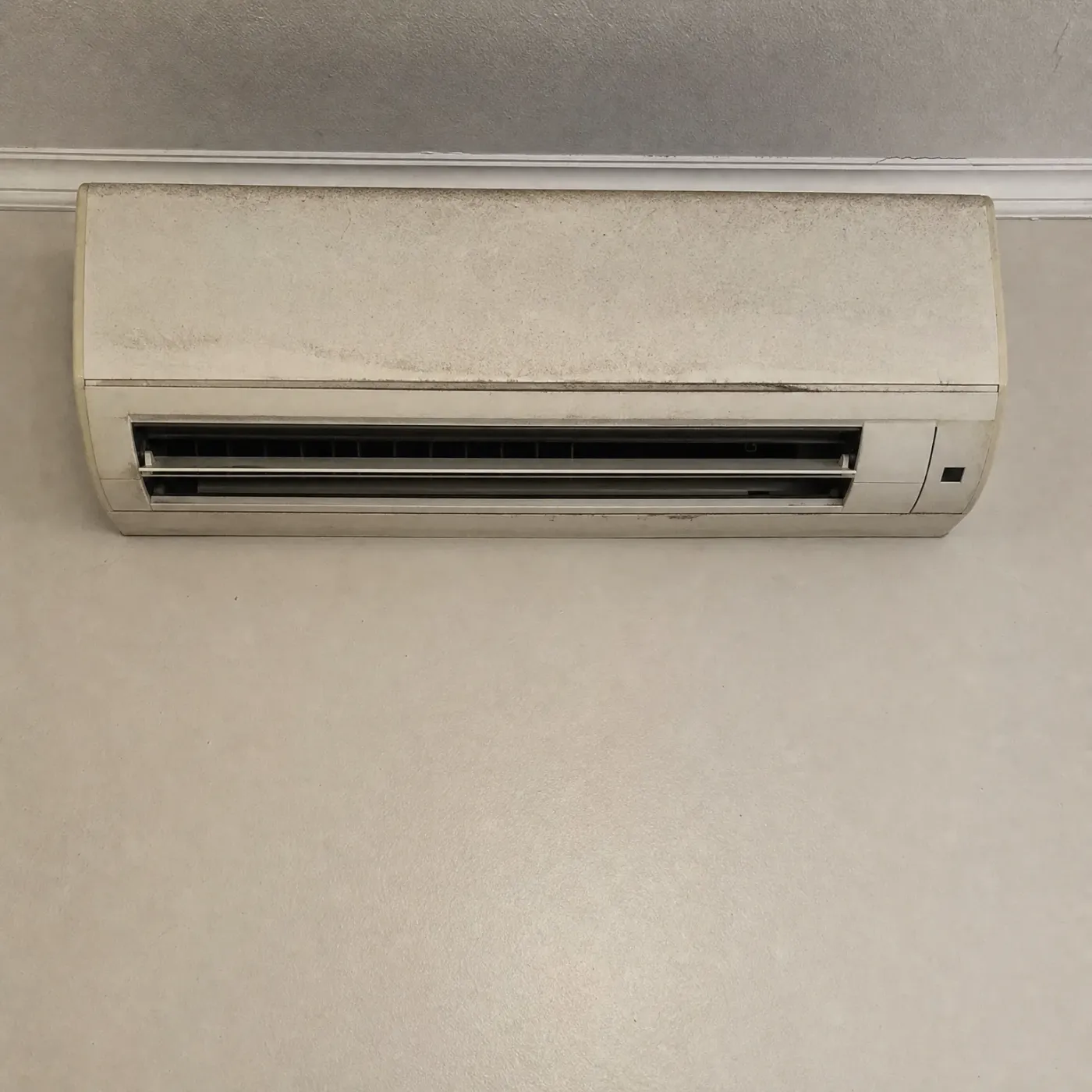
A dusty, discolored wall-mounted mini-split air conditioner indoor unit near the top of a plain light-colored interior wall below a white molding strip.
Before you get your mini split repair
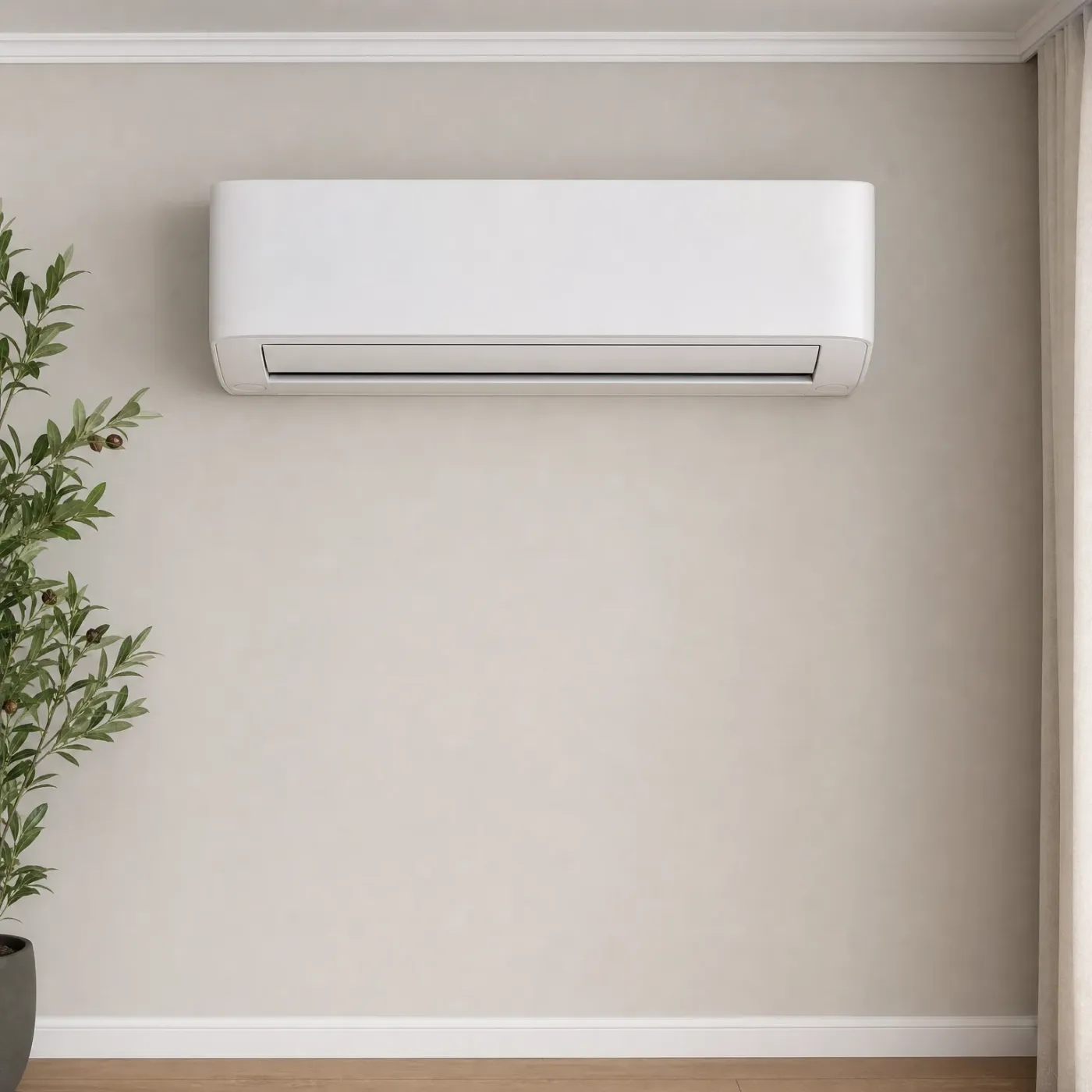
A white wall-mounted mini-split indoor unit on a beige interior wall, with a potted leafy plant at the left and a curtain edge at the right.
After you get your mini split repair
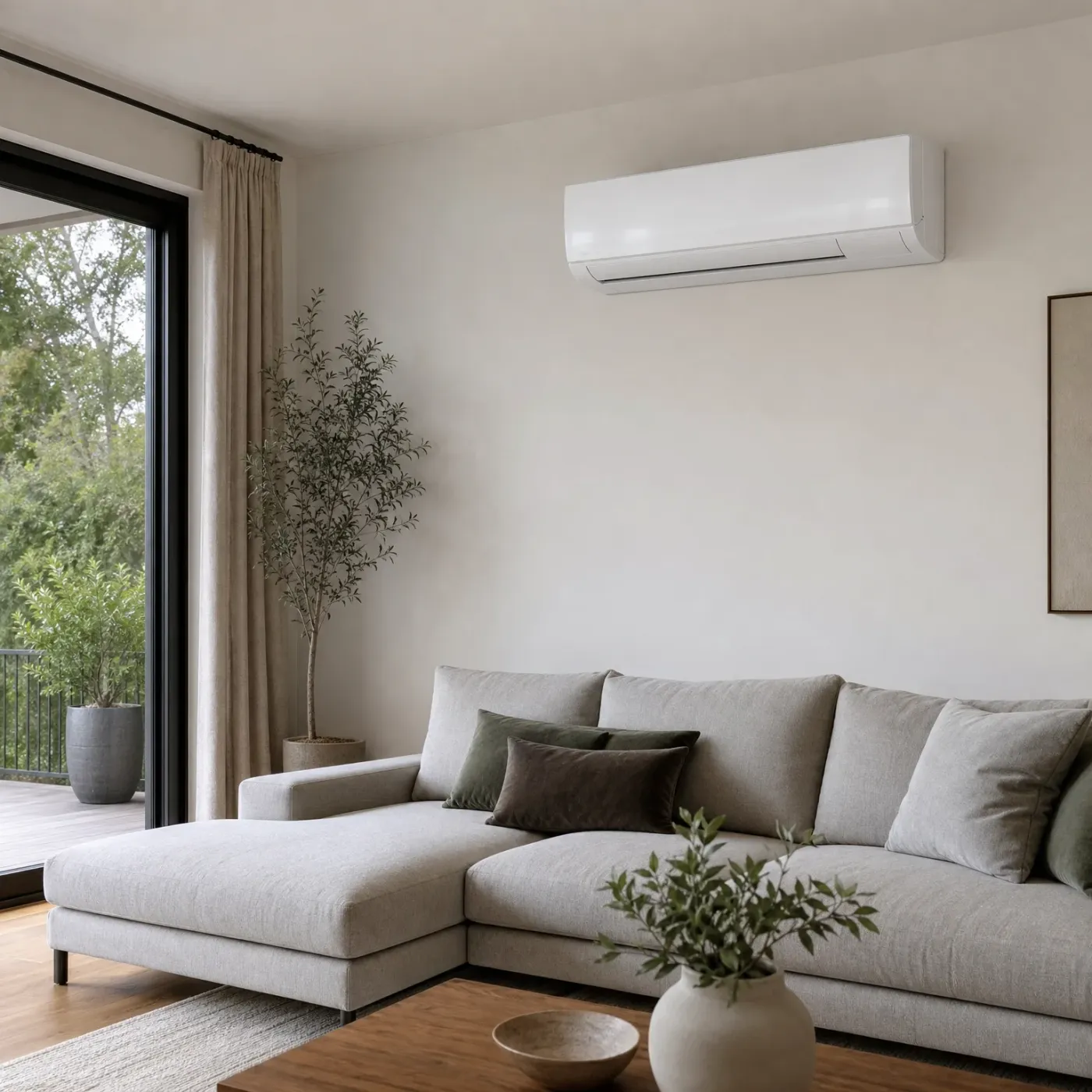
Living room with a grey sectional sofa, wall-mounted white mini-split air conditioner above it, a potted tree beside sliding glass doors with beige curtains, and a wooden coffee table with a vase of foliage in the foreground.

Done looking for a mini split pro

Explain the job once and skip repeating it on every call.

Once you send the form, finding a pro is off your list.

Hand off the search

Asking costs nothing, and the choice to hire stays yours.

Is this normal, or is my mini split actually stuck?

You check the indoor head and the fan isn't moving. No air, warm or cold, coming out of it. The outdoor unit might be humming along or it might be silent, maybe with a layer of ice across the coil or the bottom pan. The remote shows a temperature setting but nothing changes when you raise it. Some units flash a light on the indoor head, a code you don't recognize. If this has been going on for more than twenty or thirty minutes, it's probably not a normal defrost cycle anymore. Left alone through a Michigan cold snap, a unit that can't clear itself of ice or reset its control board won't heat the room, and the room it heats won't get warmer on its own.

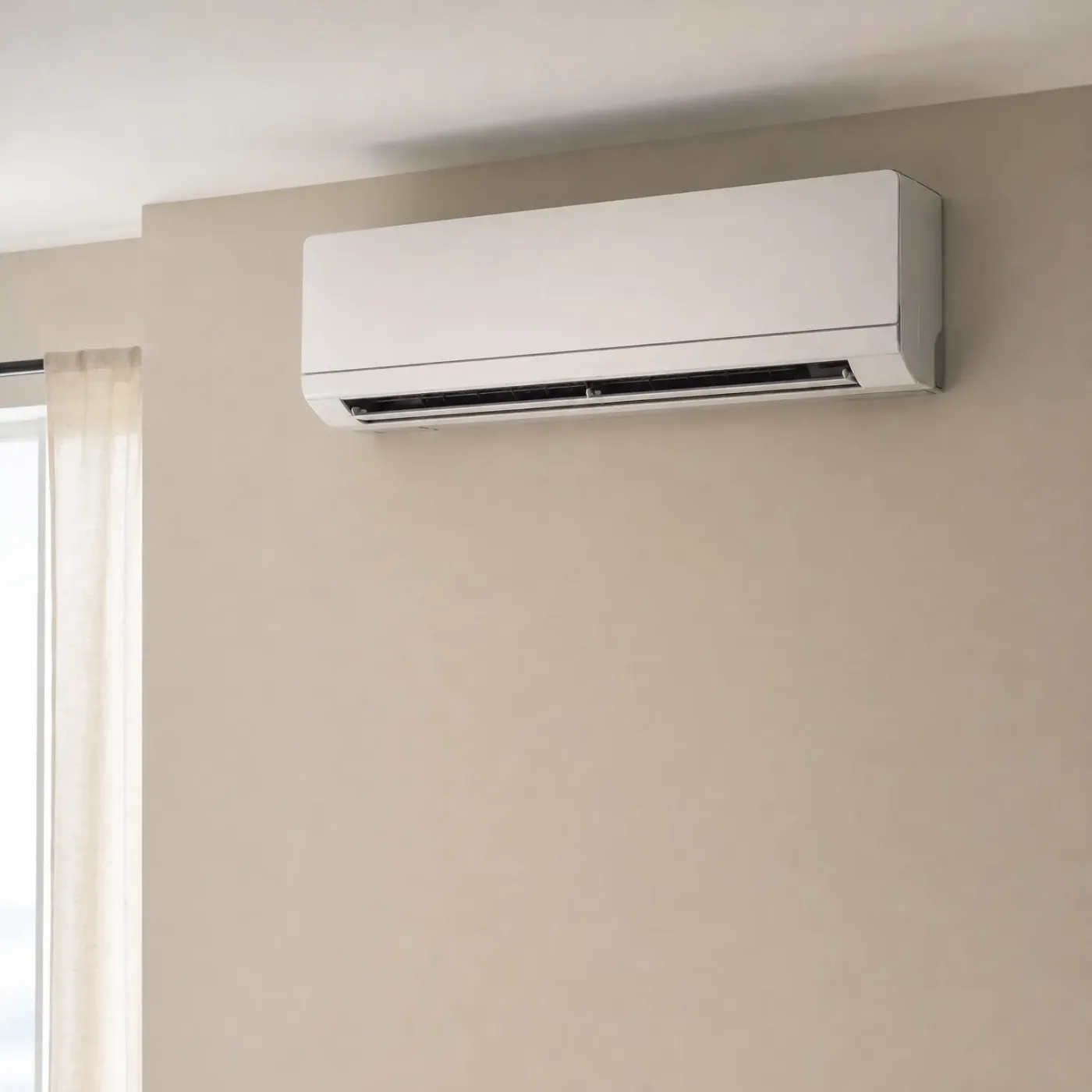
A white wall-mounted mini-split air conditioner installed high on a beige interior wall near the ceiling, with a sheer curtain and window at the left edge.

Running the way it should

Air moves out of the head steady, and it's warm when the thermostat calls for heat. The outdoor unit cycles on and off through the day, and frost that forms on the coil clears on its own within a few minutes. No ice sitting on the louvers, no smell, no grinding or clicking you haven't heard before.
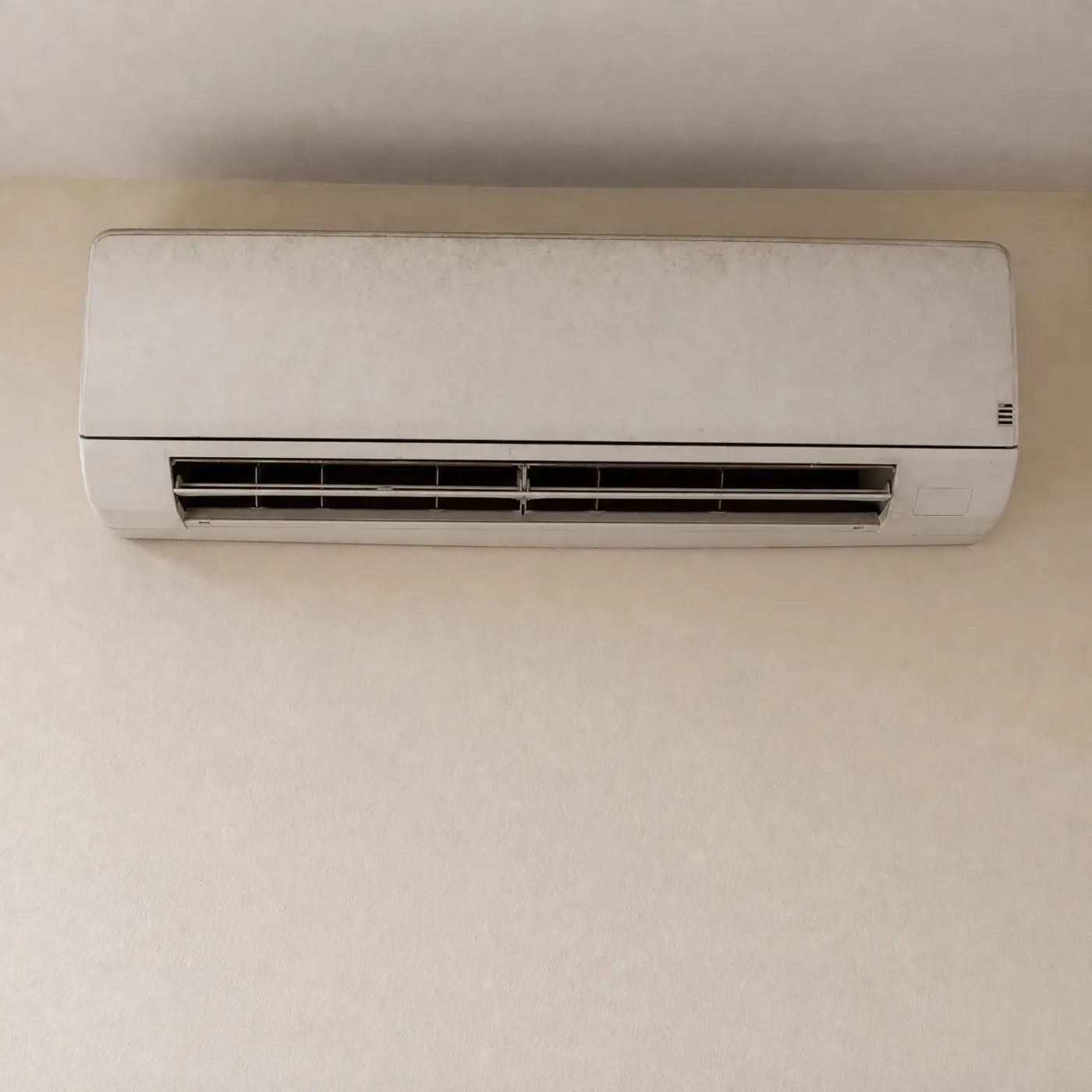
A white wall-mounted mini-split air conditioner indoor unit with visible dust and discoloration, installed near the ceiling on a plain beige wall.

Stuck, not just resting

Dust and discoloration on the vent usually mean the filter hasn't been cleaned in a while, and that makes the coil work harder in cold weather. If the louvers stay open but nothing moves and the panel light won't change, the board isn't getting past whatever stopped it.

Power costs 20.03 cents per kilowatt-hour statewide

At 20.03 cents a kilowatt-hour, a mini split that keeps restarting a stuck defrost cycle or runs its backup heat strip to fight ice is costing you more than it should. A unit that's actually broken and drawing power without heating the room will show up fast on your bill.

EIA-861 2025 statewide residential average

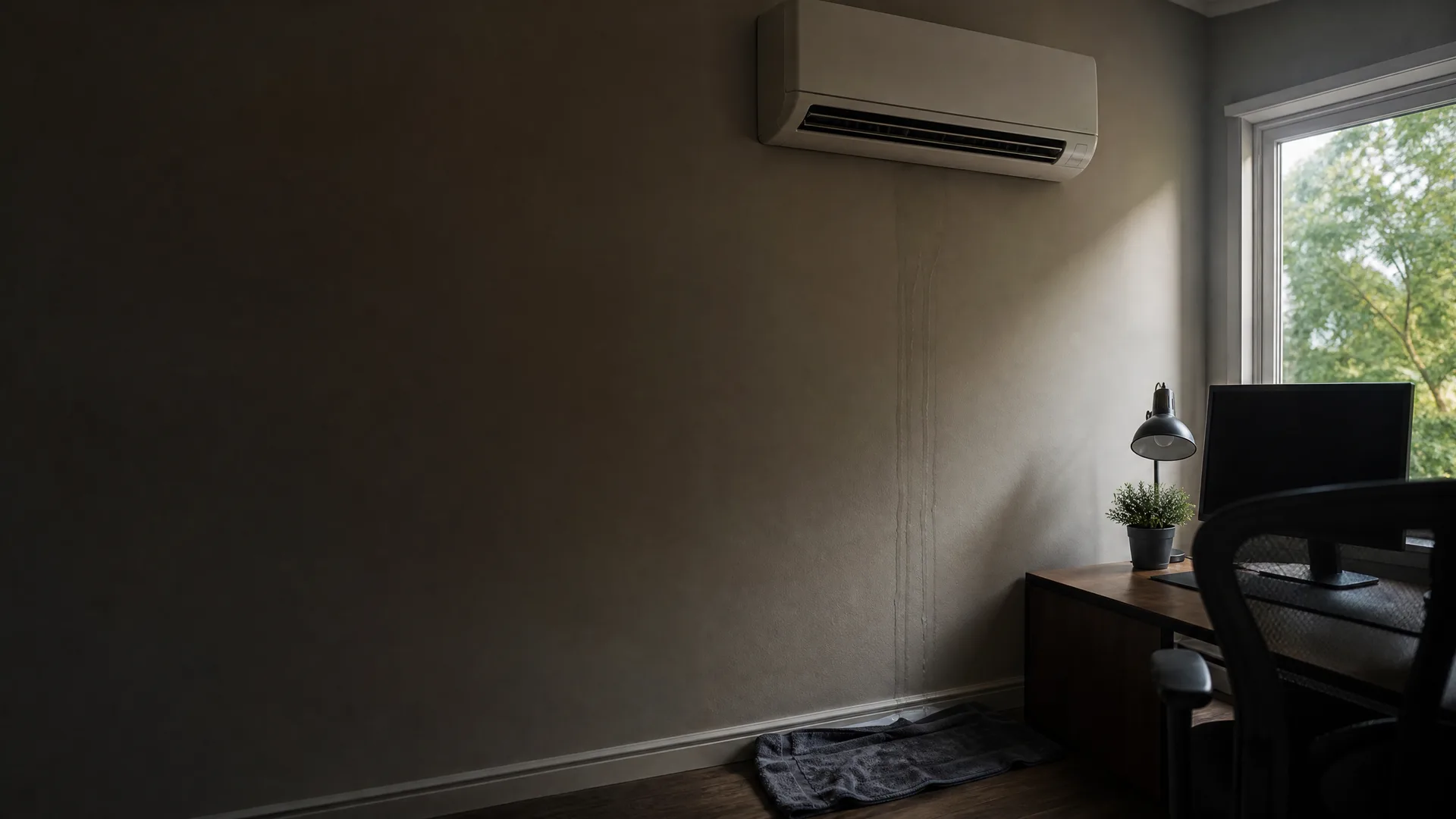
A dim room with a wall-mounted mini-split air conditioner above a faint vertical stain running down the wall, a folded grey towel on the wood floor at the baseboard, and a desk with monitor, lamp, small plant and office chair by a window.

It's July, late afternoon, and you're at the desk in the home office, the one room the mini split actually keeps livable when the air outside gets as sticky as it does in Michigan by midsummer. You notice the carpet under the window is damp before you notice anything else, then you see it: a streak running down the wall below the indoor unit, dark against the paint. You grab a towel from the hall bathroom and press it against the baseboard. The unit is still blowing cold air like nothing's wrong. You stand there for a second, towel under your foot, trying to figure out where the water's coming from if the thing upstairs is still running fine.

A closed silver laptop and a glazed ceramic mug on a wooden table, with a blurred kitchen counter, potted plant, cutting board and window in the background.

So where does that leave your mini split

Most of the time, a mini split that won't start in a Michigan winter is doing exactly what it was built to do. It's clearing ice off the outdoor coil so it can keep pulling heat from air that's below freezing. Give it a few minutes before you assume the worst. If the fan stays off, the outdoor unit stays silent or iced over, or the breaker keeps tripping once you reset it, that's not a defrost cycle anymore. That's a part that's failed.

Sorting out which one you're looking at usually means a tech on-site with gauges and a clear view of the board, not another hour of searching listings, calling shops to see who answers, and explaining the same thing three times to three different people. Send the form once and that part of it is off your plate. Whoever picks it up already knows what you're dealing with and what Michigan winters do to these systems.

Interior corner of a dining room with a round wooden table, a ceramic vase holding olive branches, a dark spindle-back chair near a curtained window, and a sideboard with a lamp against beige walls.
A smiling man in a gray long-sleeved shirt stands in a kitchen looking to the side, with open shelves of dishes, a white mug on the counter, a potted plant, and a view through a doorway into a living room.
A smiling bearded man in a green sweater sits at a white marble kitchen island with a mug, potted plant and bowl of fruit, in a bright white interior with open shelving and an arched doorway.
A smiling man with dark curly hair and a beard, wearing a dark green knit sweater, stands at a white marble kitchen counter with a dark blue mug, with open shelving, pendant lights and a houseplant behind him.
A smiling man in a green ribbed sweater stands behind a wooden table holding a ceramic mug of coffee in a kitchen with white subway tile, shelves of potted plants, and a bowl of fruit.

Mini Split Repair

It's off your list after this

Skip searching for a mini split pro and answer a few questions instead.

A black-framed smartphone standing upright against a plain white background, its screen filled with solid green.
Step 1 of 3: Equipment