Running clean
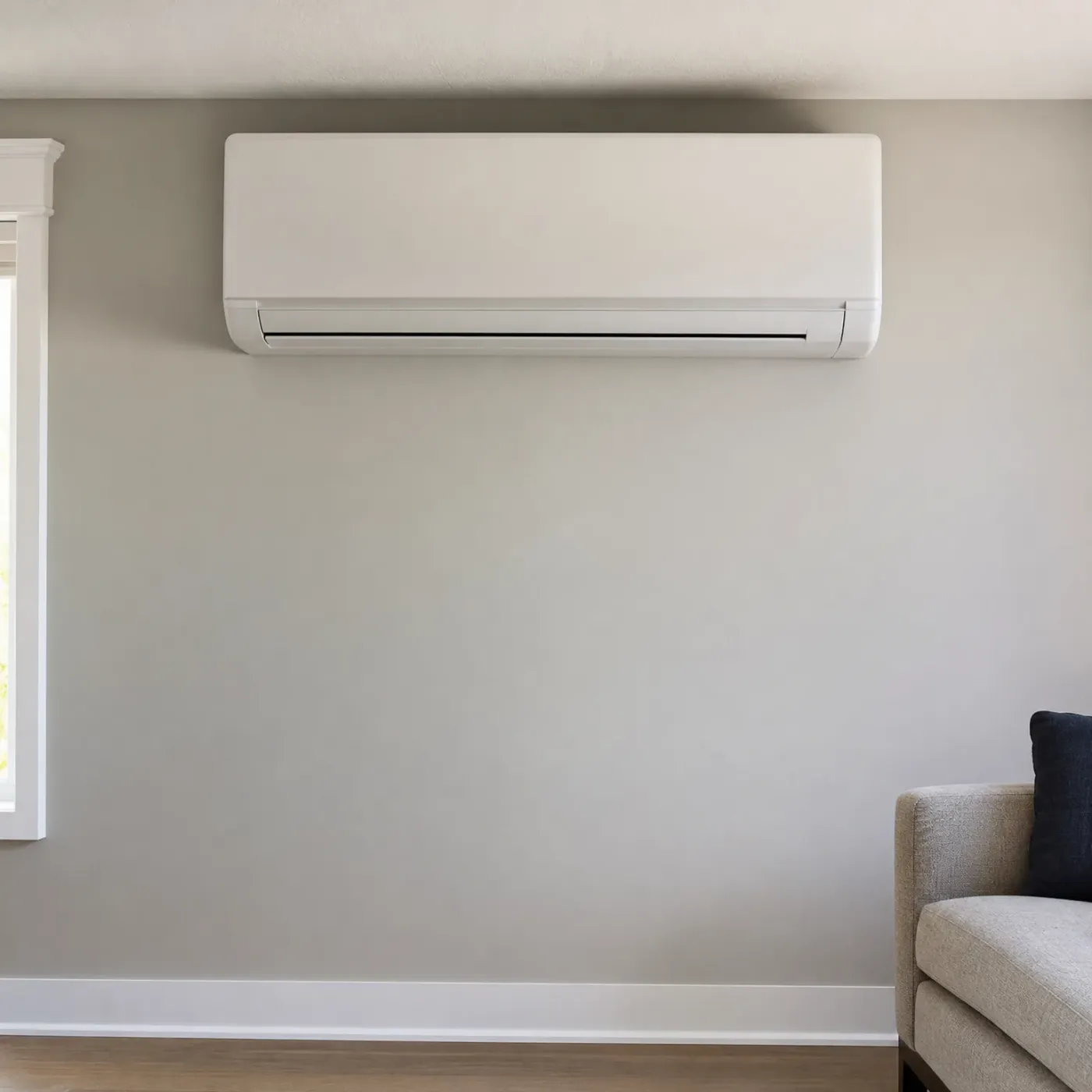
This is what a mini split looks like doing its job. No film on the casing, no streaking below it, no smell when the heat kicks on. The vents stay clear because nothing is growing on them.

A local pro for your mini split repair
A smell from the mini split when it's heating usually means dust burning off the coil, standing water in the drain pan, or mold growing somewhere in the line set or indoor unit. Which one you've got changes what needs fixing. Skip the back and forth of calling around Michigan for someone who works on these systems. Answer a few questions and a contractor who handles mini split repair will reach out to you directly.
Get matchedA burning smell when your mini split first kicks on for the season is usually just dust burning off the coil, and it should clear in a few minutes. If the smell is musty or sour instead, that's different. It means water sitting in the drain pan or mold growing in the line set or indoor unit, and switching from cooling to heating pushes that smell into the air you're breathing. Michigan summers get humid enough that condensation builds up in the unit all season, and if the drain isn't clear or the coil doesn't dry out right, that moisture sits there until heating mode starts moving air through it again. A chemical or electrical smell is its own problem, usually wiring or a component overheating, and that one shouldn't wait. Figuring out which of these you've got tells you whether this is a quick cleaning or something that needs a tech inside the unit soon.

You're at your desk working from home, laptop open, afternoon sun coming through the window. The mini split on the wall is running. You catch a smell, something off, and look over to find a wet streak down the wall under the indoor unit. You grab a towel from the hall bathroom and lay it on the floor where the water's pooling. Outside it's one of those sticky Michigan summer days, the kind where you keep the unit running most of the afternoon. You stand there looking at the streak, wondering how long it's been dripping before you noticed, and how much of that wall is soaked behind the paint.
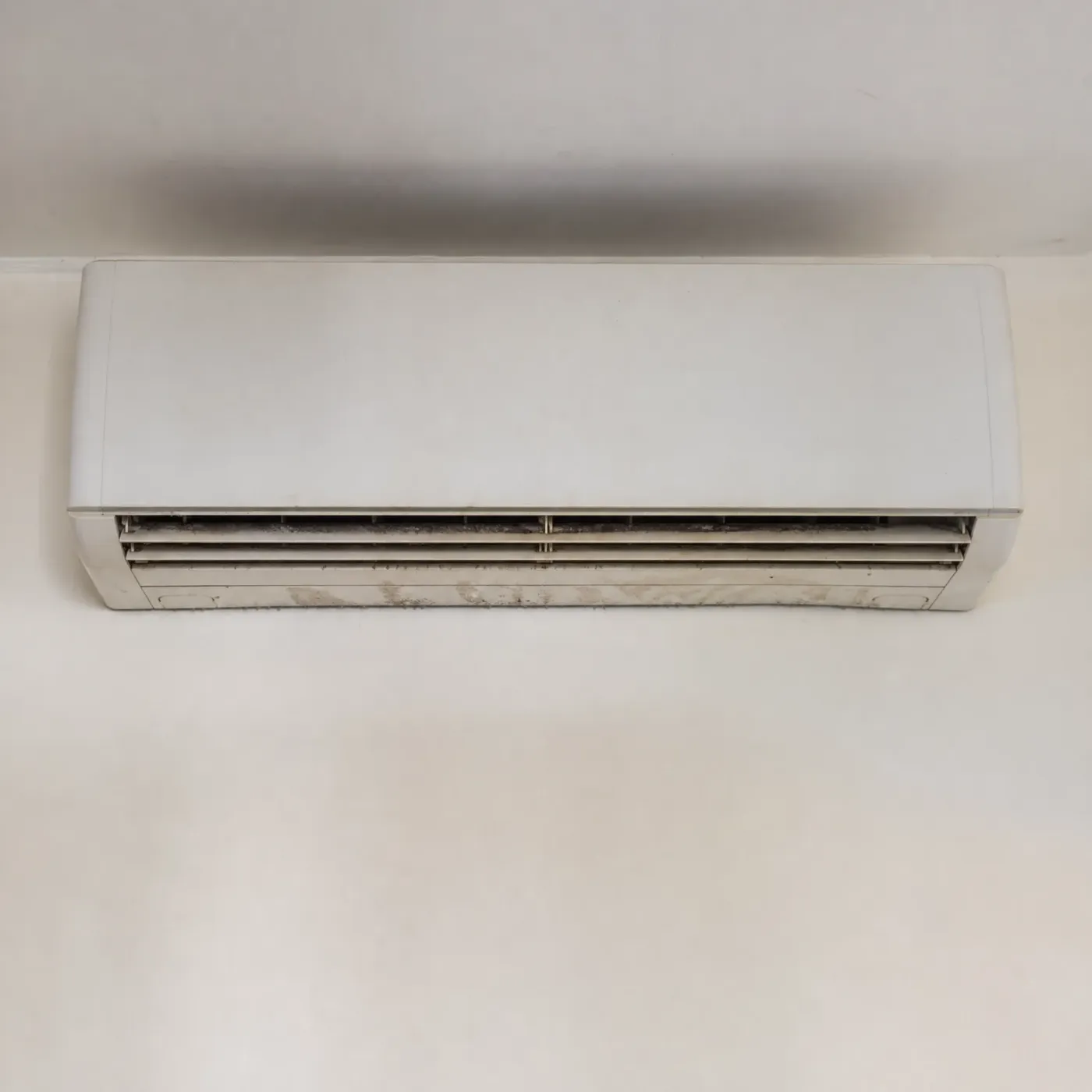





A mini split cools and heats with the same coil, just running the refrigerant cycle backward. All summer, that coil stays wet from pulling moisture out of the air, and most of it drains off fine. But any dust that settled on the coil during those months mixes with the film of moisture left behind. When the system switches over to heat, that coil gets warm again, and whatever built up on it gets baked off into the air moving through the unit. That's the smell.
If a contractor opens the unit and finds the coil coated or the drain pan holding water that should have run clear, that tells them something about how the line set is pitched or how clogged the drain has gotten over time, not just what to wipe down. A tech who's seen your specific setup, your model, your wall, how the unit is mounted, can tell you whether this is a one-time clean or a sign the drain needs rework. That's a different call than guessing from a description over the phone.


This is what a mini split looks like doing its job. No film on the casing, no streaking below it, no smell when the heat kicks on. The vents stay clear because nothing is growing on them.
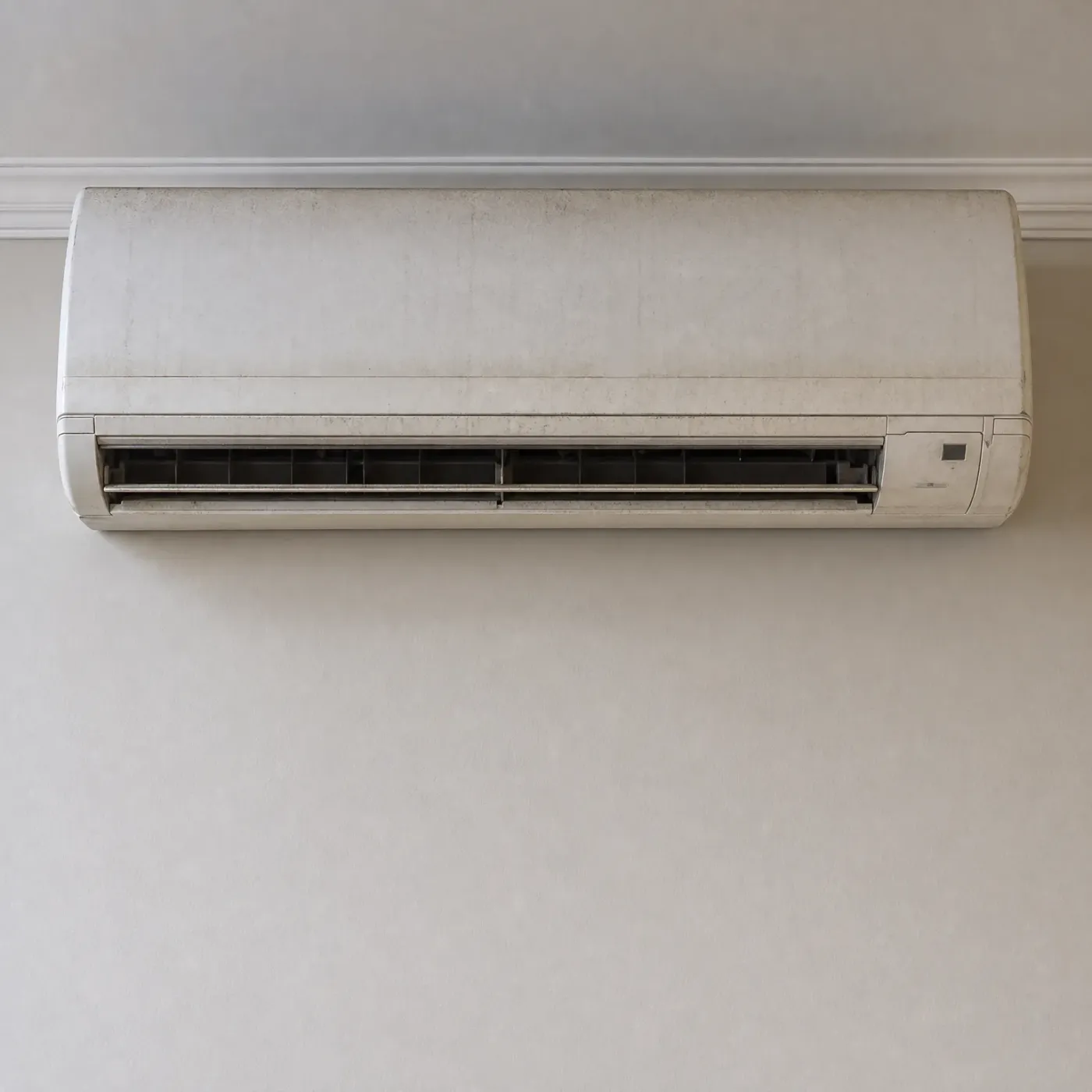
That gray on the casing isn't just age. It's dust and mold sitting on the vents, and warm air pushes that smell straight into the room when the unit heats. A contractor can clean the coil and vents and check the drain pan for standing water.


Explain the job once and skip repeating it on every call.
There's no charge for the request.

The indoor coil sits behind the filter and the vents, and it has fins packed close together so it can move a lot of air across a small space. That same tight spacing makes it slow to dry out. Water clings between the fins instead of draining off right away, and if the line set has any slope issues, some of it backs up into the drain pan instead of leaving the unit. Michigan summers put that coil through months of pulling moisture out of sticky air, so it has that much more to dry before heat season starts.

When the unit switches to heat, the blower pushes air across the coil and out through the vents, same as it does blowing cold. It doesn't scrub anything off the coil or the inside of the casing on its way through. If mold or dust has built up in there, the blower just carries that smell into the room with the warm air. Running the unit longer or turning up the heat won't change what's sitting on the coil. It takes cleaning the coil and the drain pan to get rid of where the smell is actually coming from.
At 20.03 cents a kilowatt-hour, a mini split stuck running with a dirty coil or a clogged drain is burning more power than it should just to push out air that smells off. Fixing what's causing the smell keeps the unit from working harder than it needs to.
EIA-861 2025 statewide residential average
A mini split that smells when it switches to heat is telling you one of two things. Dust on the coil burns off fast, a few minutes and it's gone, and that's the end of it. A musty or sour smell doesn't clear on its own, because it means water sitting where it shouldn't or mold growing in the line set or indoor unit, and that stays until someone deals with it. Once Michigan's cold settles in, the mini split runs for months without much of a break, so whichever smell you've got is going to be around a while. If it's the musty kind, every week it runs is another week the mold has to spread and another week the unit works harder than it should to move air through it. That shows up on a power bill in a state where every kilowatt-hour already costs 20.03 cents. Telling the two apart yourself is the hard part. Deciding what to do about it shouldn't mean calling around to three or four contractors, describing the same smell three or four times, and then sitting with a stack of quotes trying to figure out who actually knows what they're looking at. Getting matched with a contractor who handles this skips that part. You explain it once, to the person who's going to look at the unit, and go from there.

A pro who works on mini splits