

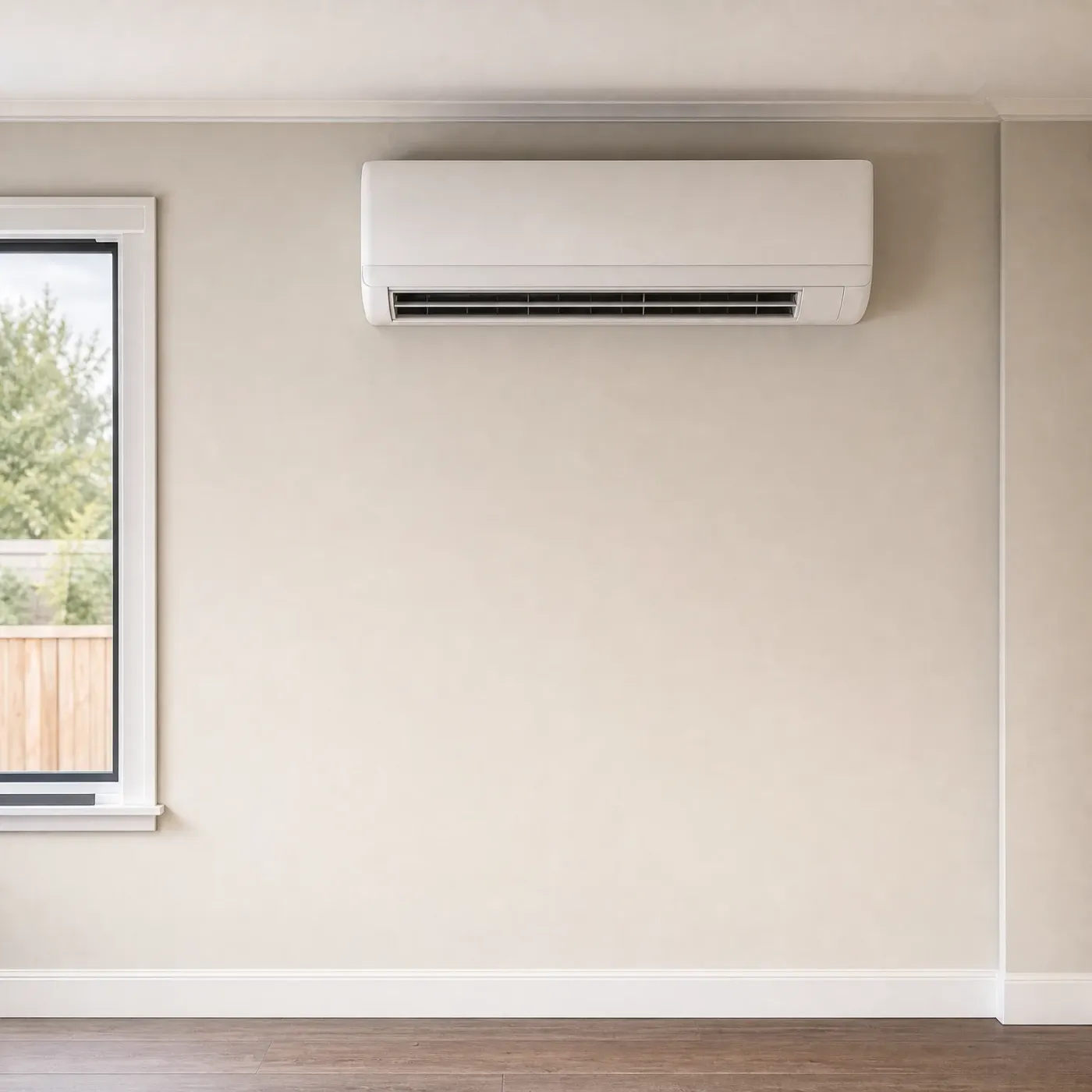
Draining the way it should
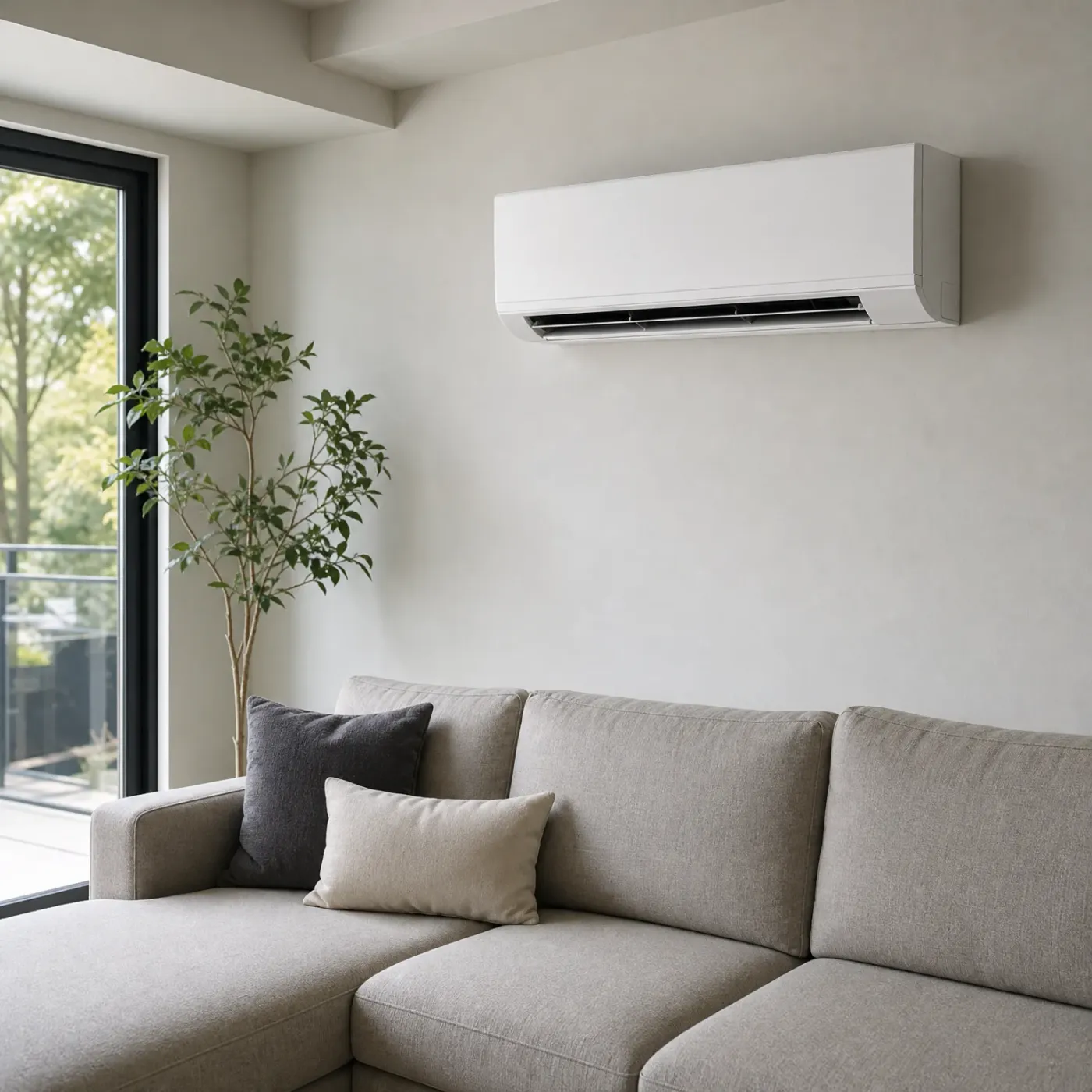
This is what a mini split looks like when the drain line is clear. Condensate moves out through the hose and never touches the wall or the floor below the unit. No staining, no drip, no sound of water hitting the sill.
Answer a few questions instead of calling shop after shop.
Skip the callsCold out, and the indoor unit on your mini split is dripping or pooling water on the wall or floor below it. It feels backward. Winter is supposed to be the dry season, not the one with water showing up where it shouldn't. You want to know if this is a frozen coil, a clogged drain, or something about how the system runs when it's this cold in Michigan.
In a Michigan winter, a mini split running in heat mode frosts up its outdoor coil as part of normal operation, then runs a defrost cycle to melt it off. If the condensate line is cracked, disconnected, or pitched wrong, that meltwater doesn't drain outside where it should. It backs up into the indoor unit or runs down the wall below it. A clogged or frozen drain line does the same thing from the other direction, trapping water that has nowhere to go but out through the unit's housing. Either way, the water you're seeing is a drainage problem showing up at the coldest, hardest-working part of the year, not a sign the unit is broken beyond fixing.

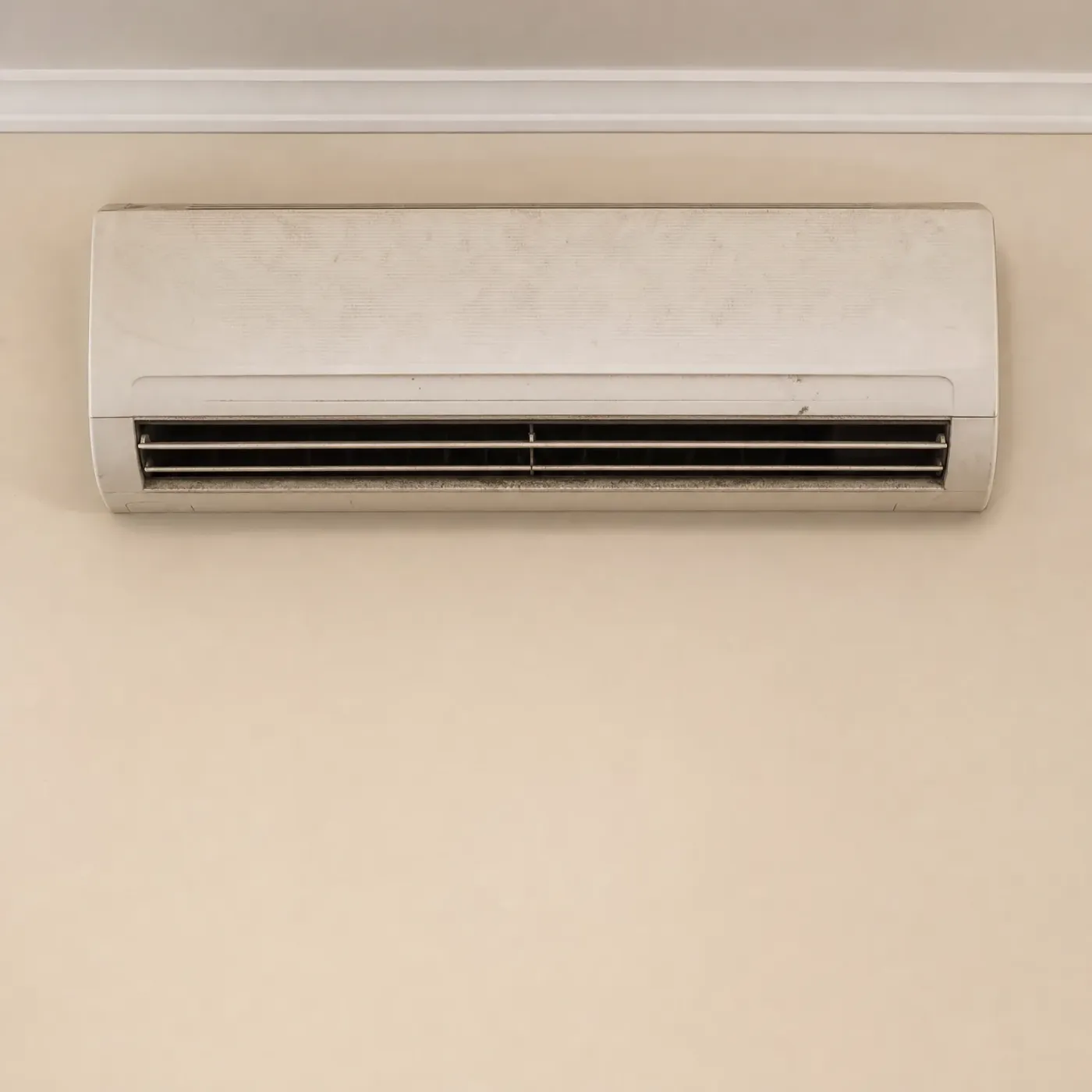


The indoor unit on a mini split is built to handle water. Warm air moves across the cold coil, moisture condenses out, and it's supposed to drip straight down into a drain pan, then out through a hose that runs alongside the refrigerant lines to the outside wall. In summer that water leaves the house without you ever seeing it. Winter is where the path breaks. The outdoor end of that hose sits exposed to the cold, and if it isn't insulated or sloped right, it freezes shut. Water has nowhere to go but back up into the unit, and that's when it starts showing up on your wall or floor. The same thing happens, cold or not, if the drain pan has caked-up buildup or the line sags somewhere along its run. A low spot holds water like a trap. It sits there until it has nowhere to go but over the edge. A contractor who works on these units every winter knows to check the slope first, then the pan, then whether the line itself has frozen. That's a different fix each time: clearing a clog, reinsulating the hose, or correcting a line that was never pitched right when it was installed. None of those get sorted by guessing. The part failing is specific, and so is the fix.
At 20.03 cents per kilowatt-hour, running a heat strip or backup resistance heat to work around a leaking mini split costs real money fast. Fixing the drain or the frozen line is cheaper than letting your unit limp along or switching over to electric backup heat for the winter.
EIA-861 2025 statewide residential average
That drip on the wall under your indoor unit is not staying put. Water running down drywall leaves a stain first, then softens the board behind it if it keeps going. If the unit sits above a wood floor or carpet, the water finds its way there too, and that damage doesn't dry out on its own before it warps or molds. A frozen drain line outside means the water backing up has nowhere to go but back into the unit and out through the case. Meanwhile the unit is working harder to push air through a coil that's icing up from the inside, which is part of why it stops heating the room the way it used to. If you've been running a space heater or your furnace more to make up for it, that's added cost on top of whatever the leak itself is costing you in electricity. None of that gets better by waiting for a thaw.




The pro who reaches out is licensed in Michigan.
Describe your mini split job once, to one pro.
It costs nothing to send, and you don't have to hire anyone.
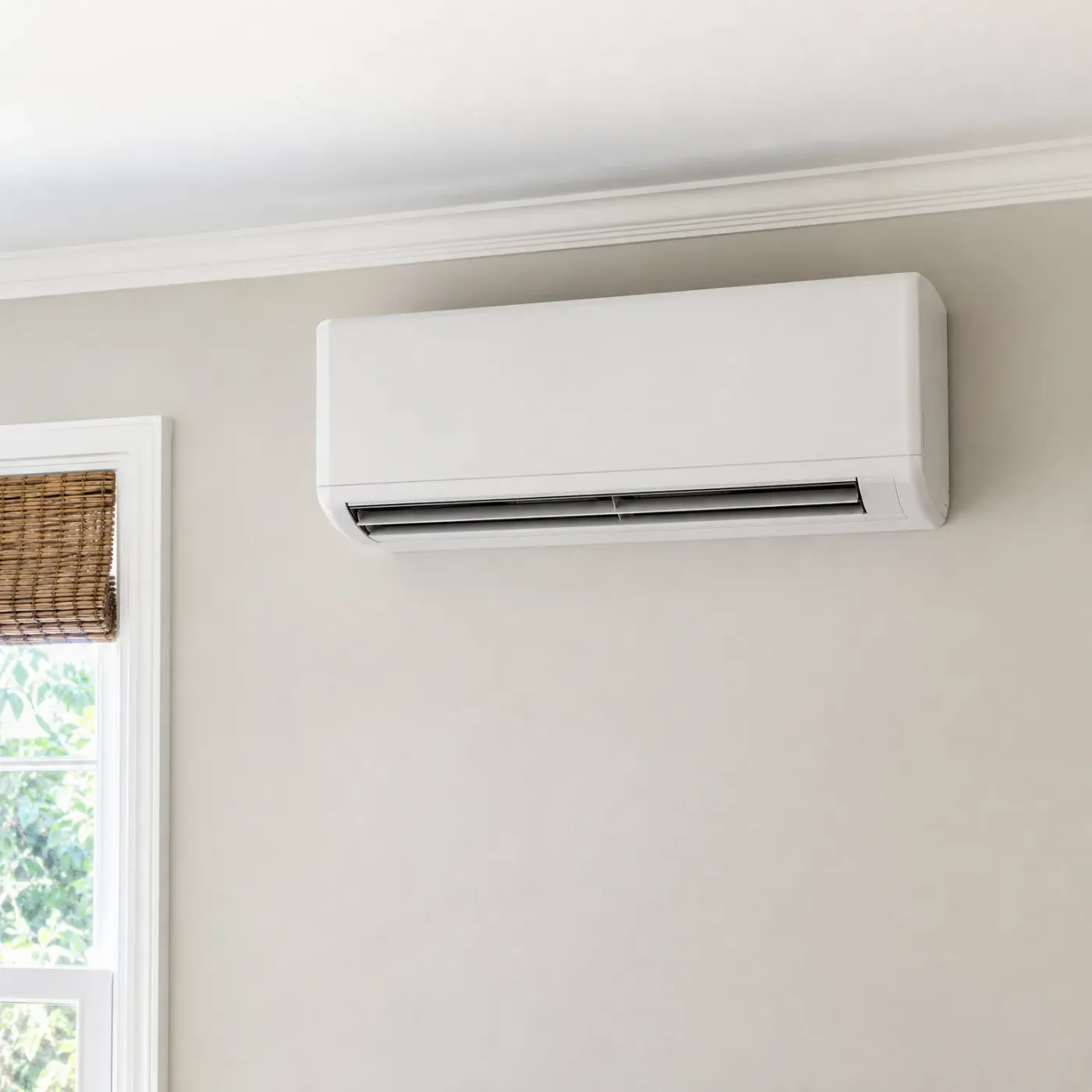
This is what a mini split looks like when the drain line is clear. Condensate moves out through the hose and never touches the wall or the floor below the unit. No staining, no drip, no sound of water hitting the sill.
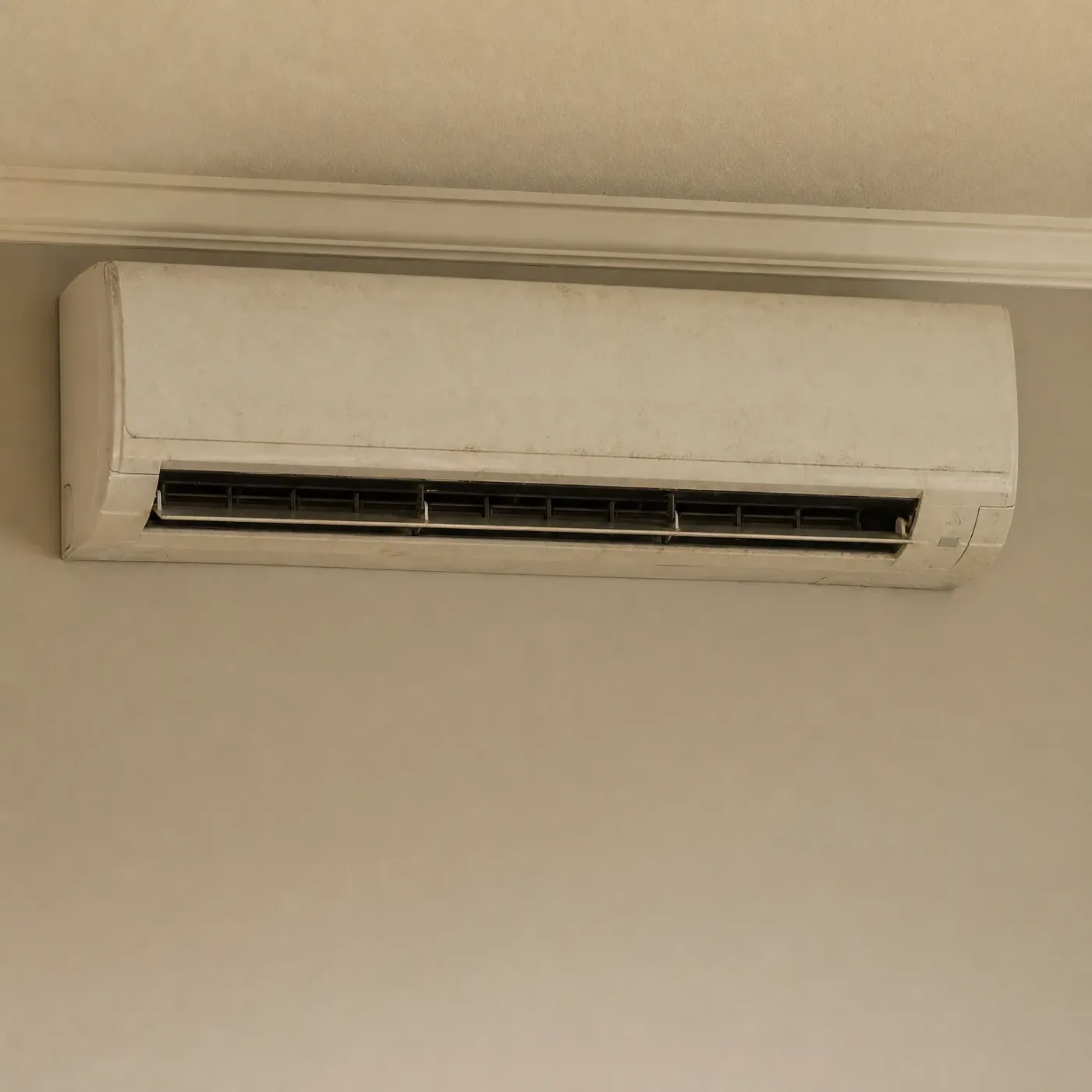
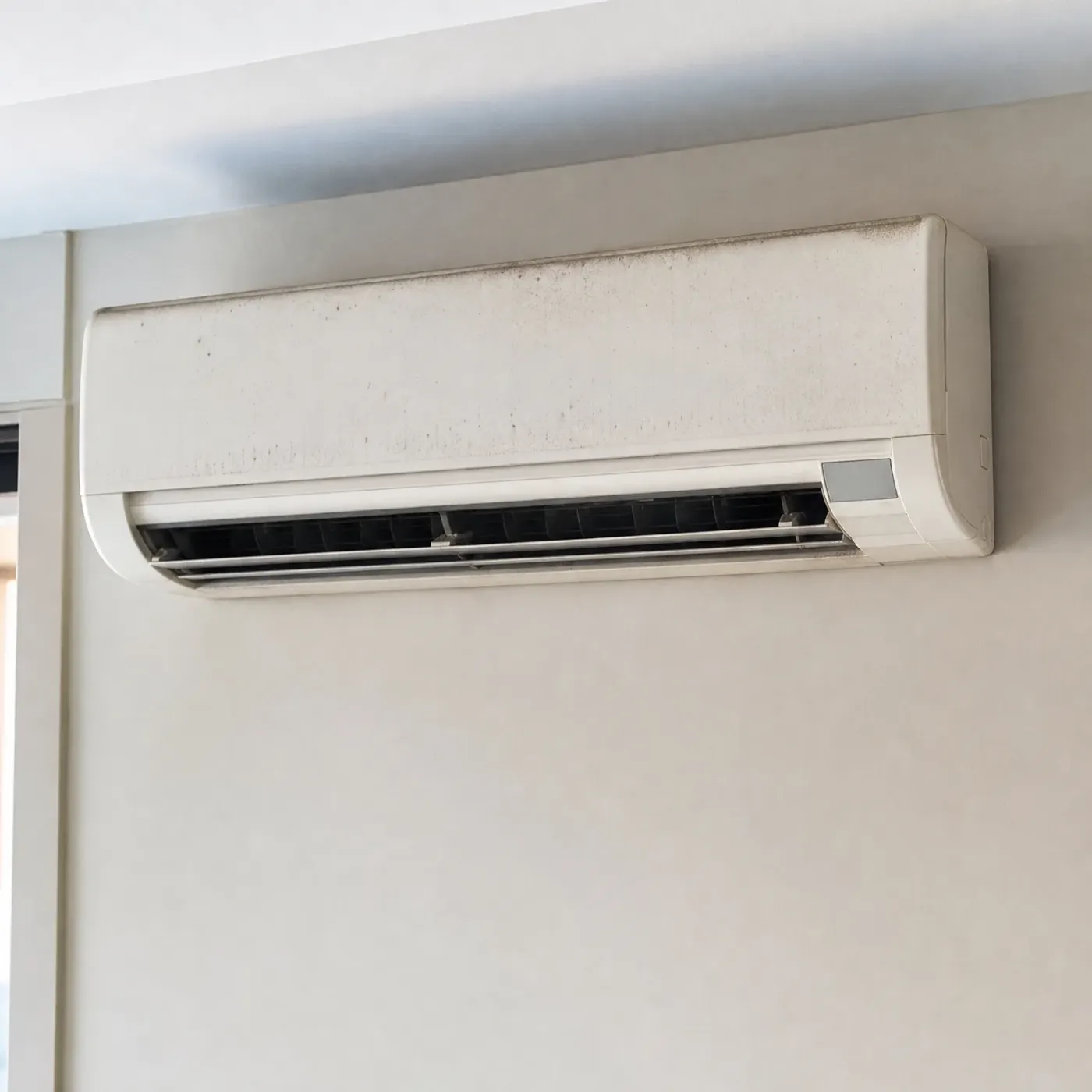
Dust and grime around the vents choke the airflow this unit needs to drain properly. Once that buildup sits for a while, condensation backs up instead of running out, and that's usually when the dripping starts.
Look at the wall under the indoor unit. There's a stain spreading out from under it, or water beading on the cover and running down. Maybe you've heard dripping after the unit cycles off, or found a damp spot on the floor or windowsill below it each morning. Some mornings there's ice on the line set outside where it runs to the outdoor unit. The drip might stop for a day or two, then start again once it gets cold. None of that is normal for a mini split in good working order. Left alone through a Michigan winter, that water keeps softening the drywall and the floor underneath, and the spot only gets bigger the longer it runs.

That moisture problem doesn't start in winter. All summer, your mini split is pulling water out of air that sits at a dew point of 60°F across June, July and August, which is heavy enough that the unit is draining condensate almost constantly to keep up. That's the load the drain line handles for months before cold weather ever hits it. By the time winter comes, the same hose, trap and pitch that moved all that water in July are what's supposed to keep working in freezing temperatures. If there's a low spot in the line or a weak pitch, summer humidity is usually when it first starts struggling, even if you didn't notice the drip until the line froze. Source: NOAA climate normals
NASA POWER T2MDEW county cells weighted by homes

Water on the wall or floor under your indoor unit comes from a blocked drain, a frozen line outside, or a dirty coil that's lost its drainage. One of those three is behind what you're seeing. A contractor who services mini splits all winter can look at the unit, the drain hose, and the line set outside and tell you which one it is, usually in the same visit.
Right now that might mean searching around for someone who even works on mini splits in Michigan, calling a few places to ask, explaining the stain on your wall more than once, then sitting with quotes trying to guess which one is fair. A local contractor who already knows this equipment and sees this same leak every winter skips you past all of that. You get one person looking at your unit, not three competing for the job.

Describe it once