Profile view of a bearded man wearing a black baseball cap and a dark gray T-shirt against a plain light background.

What defrost mode means on a Michigan mini split

Step 1 of 3: Equipment

Defrost mode is your mini split pausing heat to melt ice off the outdoor unit. In a Michigan winter, the coil outside picks up moisture from the air, and once temperatures drop toward freezing that moisture turns to frost. Left alone, frost builds into ice that blocks airflow across the coil and the unit stops working properly. So the system reverses itself for a few minutes, runs like an air conditioner to warm the coil, melts the ice, then switches back to heating. You'll feel cool air blowing, maybe see steam rising off the outdoor unit, and hear the system cycle. That's normal on a cold night. What's not normal is defrost running constantly, taking a long time to finish, or the heat not coming back strong once it switches over. That points to a real problem, like a stuck reversing valve, a bad sensor, or low refrigerant, and it needs a technician to look at it.

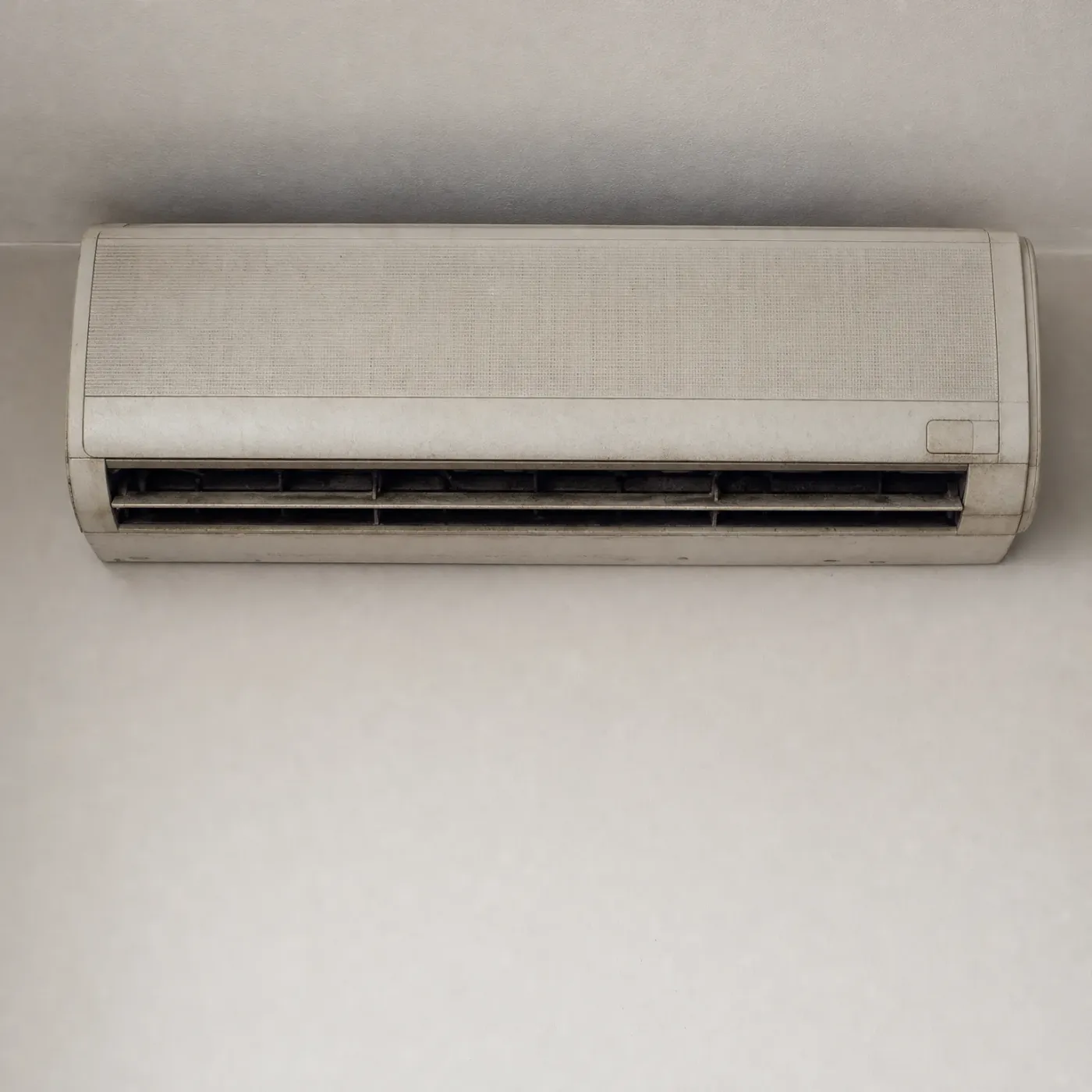
A dusty, discolored wall-mounted mini-split air conditioner indoor unit on a plain white wall, with its horizontal louvers and vent grille visible.
Before you get your mini split repair
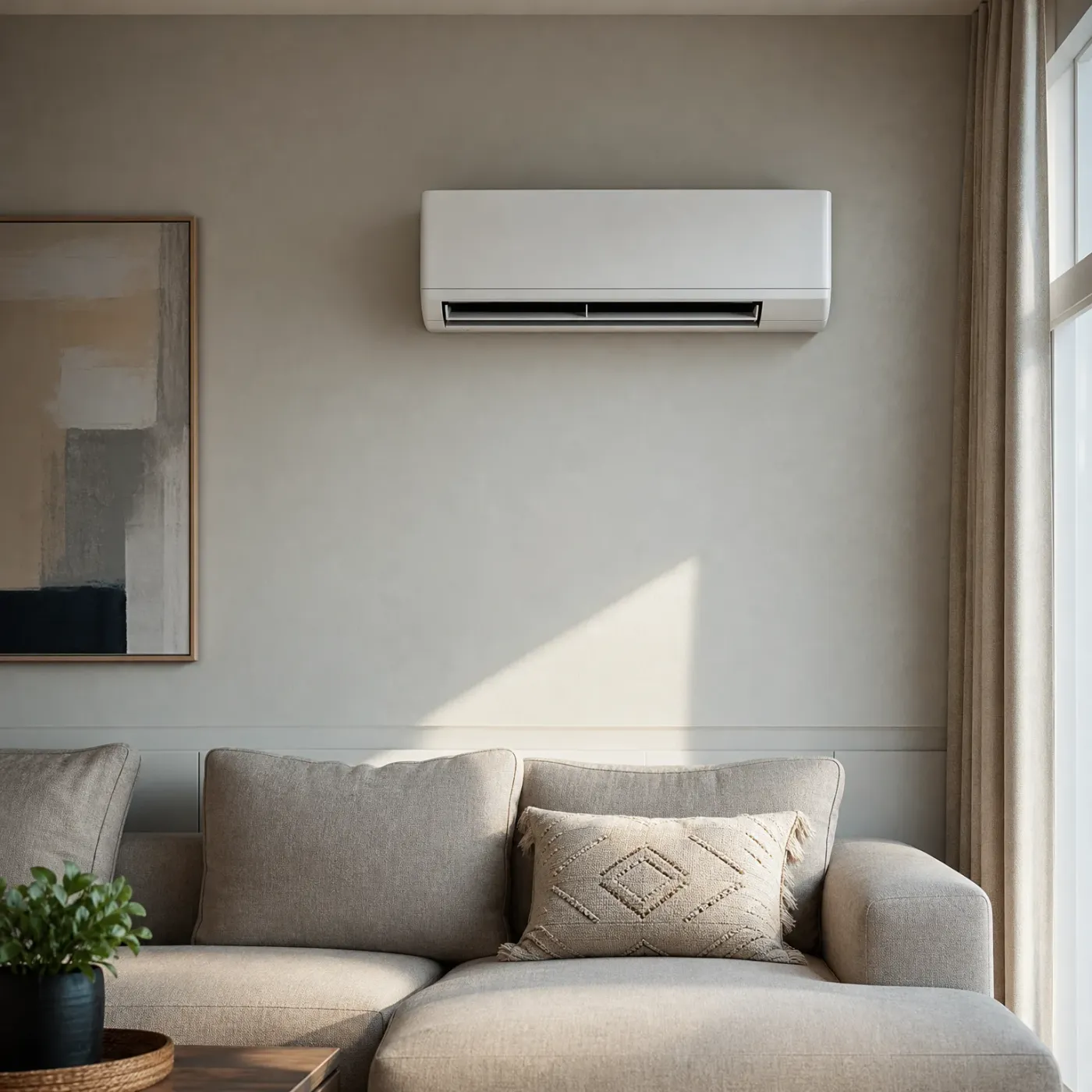
A white wall-mounted mini-split air conditioner on a beige interior wall, next to a window with sheer white curtains and green foliage outside.
After you get your mini split repair

Why it reverses the fan

During defrost, the outdoor fan stops and the system runs hot gas through the outdoor coil to melt what's built up on it. That heat has to come from somewhere, so indoors the air handler often shuts off too, or blows cool air for a few minutes. It can feel like the unit is working against itself. It isn't. It's clearing the coil so it can keep pulling heat out of cold air once it switches back.


What tells it to start

A sensor on the outdoor coil tracks temperature, and the control board tracks how long the unit has run since the last defrost cycle. When frost builds past what the airflow can shed on its own, the board kicks the cycle off on its own schedule, not because someone pressed a button. A unit that defrosts constantly, or never seems to, is telling you the sensor or the board behind it isn't reading things right.

A smiling man in a dark navy sweater sits on a light sofa in a living room, with a glass bowl of popcorn on a wooden coffee table and bookshelves behind him.
A smiling man in a dark green sweater sits on a tan leather sofa in a dimly lit living room, with a bowl of popcorn in the foreground and a kitchen area blurred behind him.
A smiling middle-aged man in a dark shirt sits on a gray sofa in a living room, with a bowl of popcorn on a side table and shelves, a window and kitchen area behind him.
A smiling bearded man in a dark gray t-shirt sits on a gray couch in a living room, with a large glass bowl of popcorn on a wooden table in the foreground.

Your mini split can shift into defrost several times on a cold night, and each time the indoor unit stops pushing heat, or blows cool air, while the room keeps losing warmth to the outside.

If that cycling is happening more than it should, the room never catches back up, your gas furnace or backup heat is picking up the slack, and your electric bill carries a load the mini split was supposed to handle.

Power costs 20.03 cents per kilowatt-hour statewide

At that rate, every defrost cycle that runs long costs you more than it should, since the unit is drawing power to heat the coil without warming your house. A mini split stuck defrosting too often on a cold night adds up fast on your bill.

EIA-861 2025 statewide residential average

Normal defrost versus a stuck cycle

A normal defrost cycle runs for a few minutes, then the outdoor fan kicks back on and the unit goes back to heating. You might not even notice it happen on a mild night. A stuck cycle looks different. The outdoor unit keeps running but the ice doesn't clear, or the system drops into defrost again ten minutes after it just finished one. If you're standing near the indoor unit and it's blowing cool air for long stretches instead of short ones, that's the difference between the system doing its job and the system failing at it.

What keeps it from resetting

A mini split comes out of defrost when a sensor on the outdoor coil reads that the ice is gone and tells the board to switch back. If that sensor is reading wrong, or the reversing valve that sends hot gas outside is sticking, the unit has no way to know the job's done. It can also mean the coil has more ice than one cycle can handle, which points to a drainage problem or a fan that isn't moving air the way it should. None of that clears on its own by waiting out the cold snap.

A woman in a dark gray sweater reclines on a light sofa with eyes closed and a slight smile, under a textured gray blanket with an open book resting on her lap, with a lit table lamp and plant in the background.
A smiling bearded man in a navy crewneck sweater sits at a dinner table with a glass of red wine, plates and glasses in the foreground, in a dimly lit room with a lamp and framed picture behind him.
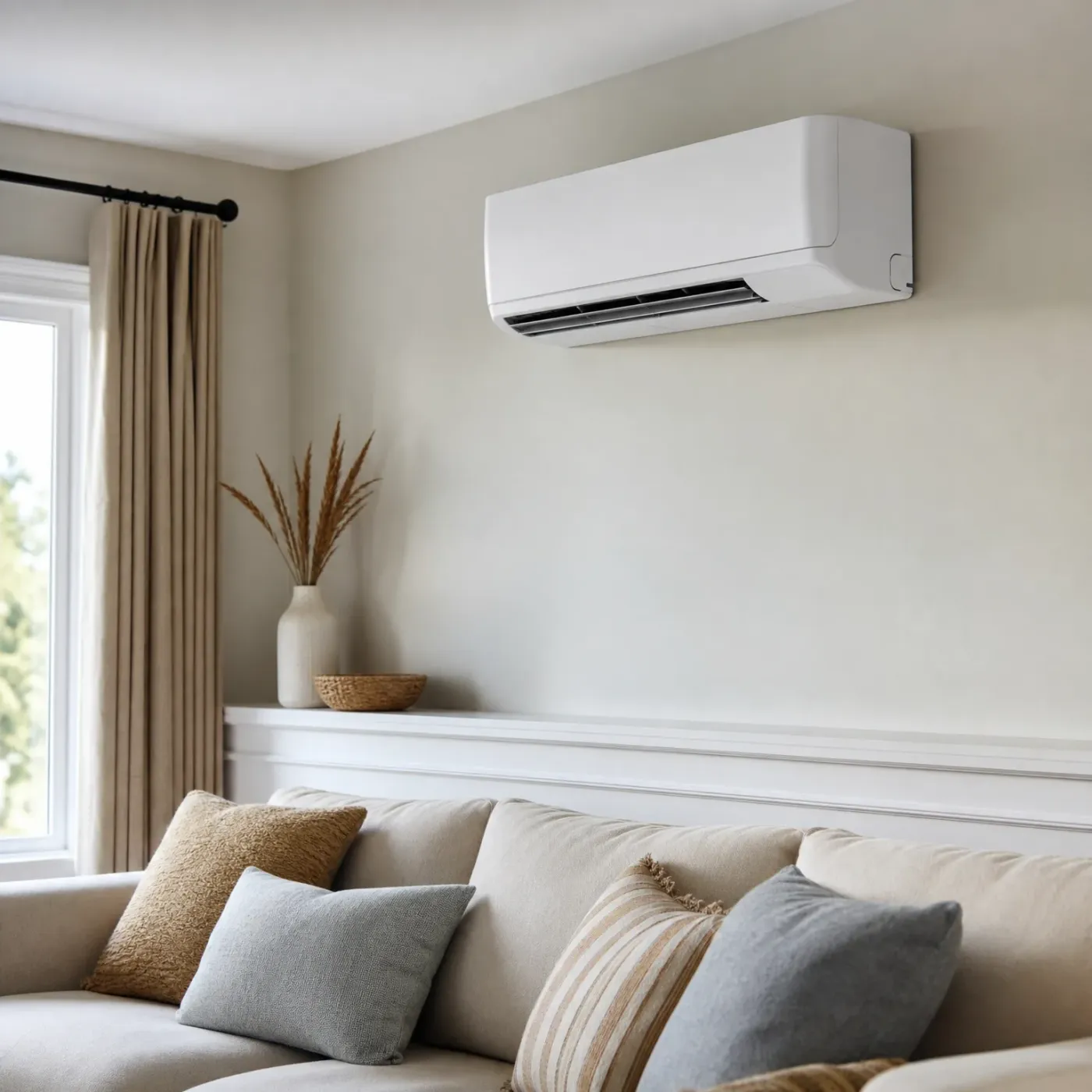
A white wall-mounted mini-split air conditioner on a pale wall above a beige sofa with assorted cushions, beside a window with long curtains and a shelf holding a vase of dried grasses and a woven bowl.

Hand off the mini split problem

Answer a few questions instead of calling shop after shop.

One request and the search for a pro is handled.

I'm done searching

You're not committing to anything by asking.

How does the mini split know when to start defrosting?

You've noticed your mini split flips into defrost at what seems like random moments, and you're wondering if something's wrong with it or if it's just doing what it's supposed to do. Knowing what triggers it helps you tell a normal cycle from one that's happening too often because of a real problem.

A sensor on the outdoor coil tracks temperature and tells the system when to defrost

The outdoor unit has a thermistor clipped to the coil that reads its surface temperature. Some models pair that with a timer, so the system checks the coil's temperature after it's run for a set stretch, rather than watching it every second. When the coil reading drops low enough for long enough, the unit reads that as frost and switches into defrost on its own. It's not guessing from the outdoor air temperature on the weather app, it's reading the metal itself. That's why defrost can kick in on a night that doesn't feel especially cold if the humidity is high enough to load the coil with frost fast. If that sensor drifts or fails, the unit can start defrosting when it doesn't need to, or miss a cycle when it does.

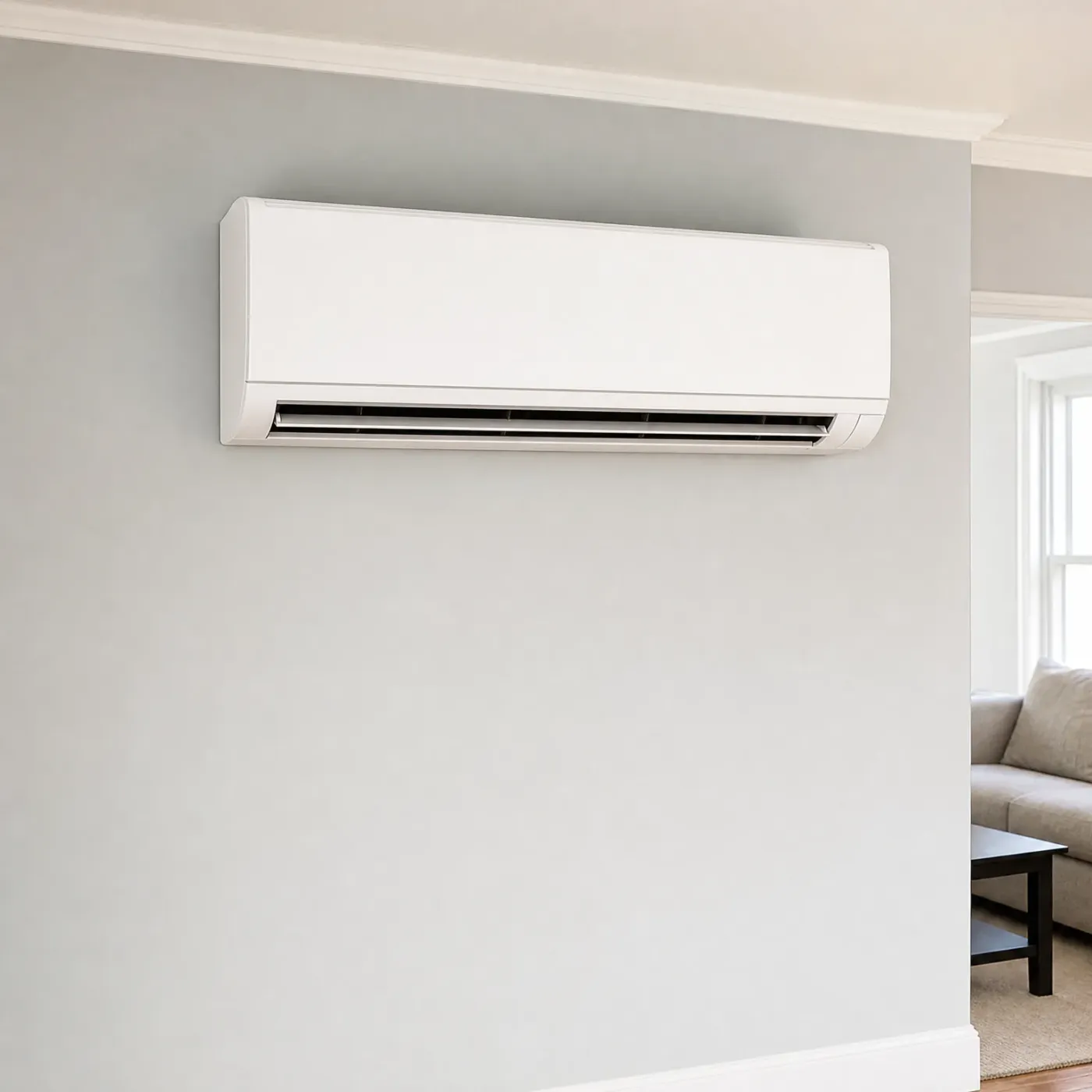
A white wall-mounted mini-split indoor unit installed high on a gray interior wall, with a sofa, dark table and window visible in an adjoining room to the right.

Running clean

This is a mini split doing its job. The coil outside is handling the cold, the defrost cycles are short, and the air coming out stays warm. Nothing on the indoor unit tells you it just finished melting frost off the outdoor coil minutes ago.

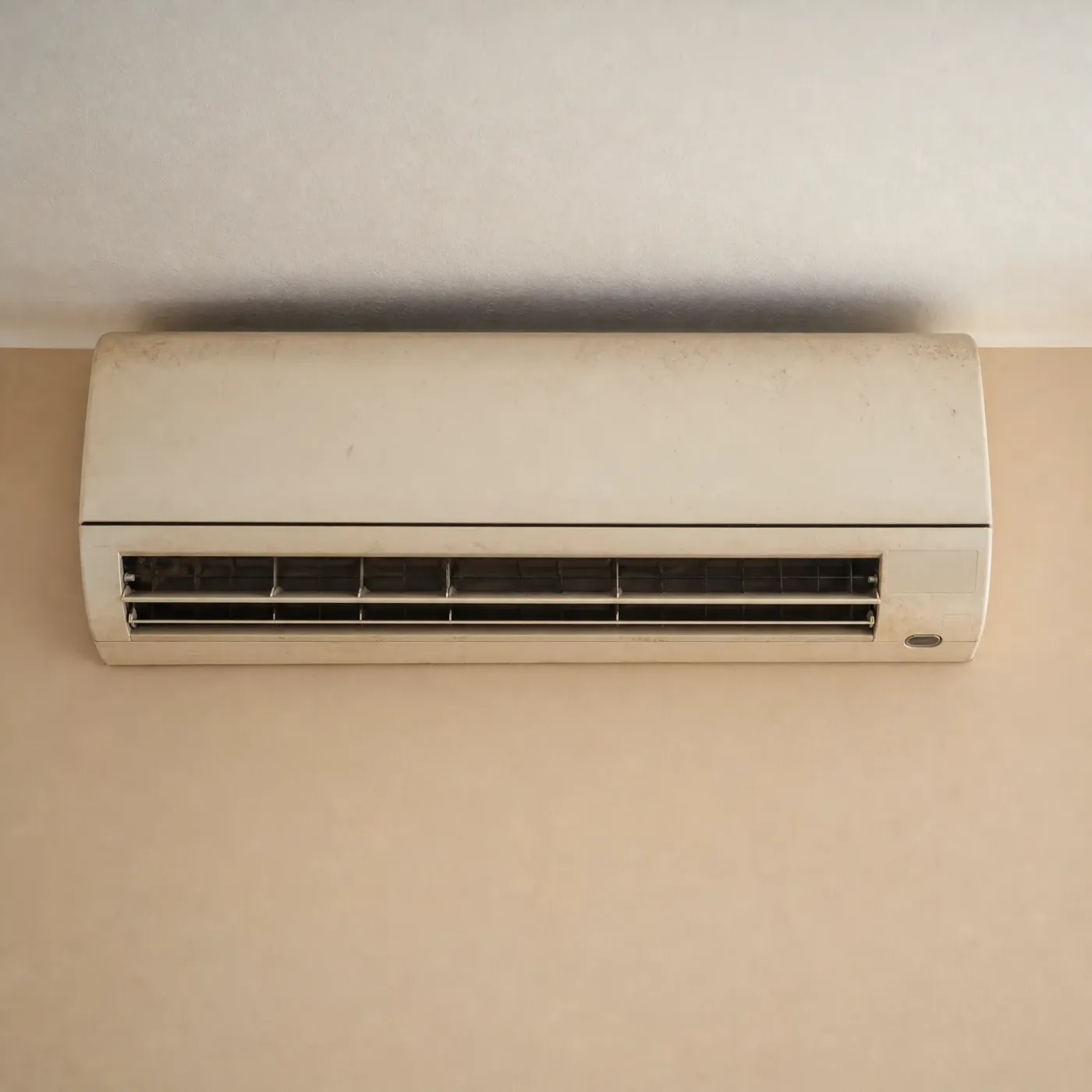
A wall-mounted mini-split air conditioner indoor unit with a dusty beige casing and dark louvered vent, installed near the ceiling on a plain beige wall.

Running down

Dust and yellowing like this build up over years of normal use, but they're worth a look when defrost is acting up too. A unit working harder to shed ice outside is a unit worth having checked before a January night turns into a cold room.

Is your defrost cycle normal or stuck

Normal defrost

  • The cycle runs a few minutes, then the outdoor fan comes back on and the unit returns to heating.
  • Room temperature holds steady or drops only slightly while the unit is away melting frost.
  • The outdoor coil looks clear of ice once the cycle ends, with maybe some water or steam near the base.
  • It happens on its own schedule based on coil temperature and run time, not something you have to think about.
  • Heat output picks back up at the same strength it had before the cycle started.

Stuck cycle

  • The outdoor unit keeps restarting defrost every few minutes instead of going back to steady heating.
  • Indoor air stays cool or blows cold for stretches longer than a normal pause would explain.
  • Ice keeps showing up on the outdoor coil even right after a cycle finishes, instead of melting off.
  • The room loses ground overnight because the unit spends more time defrosting than it does actually heating.
  • Something is keeping the unit from reading the coil correctly or from heating it enough to clear the frost.
A single-story house with gray vinyl siding, dark shingled gable roofs, and white-trimmed windows, set behind a partly dry green lawn under a clear blue sky.

Summer here is a different problem for the same unit. Michigan's summer dew point averages 60°F, per NOAA climate data, which is the sticky end of comfortable. Your mini split has to wring that moisture out of the air while it cools the room, and that's harder work than dropping temperature alone. If the system is low on refrigerant or the indoor coil is dirty, you'll feel it as a room that's cool but still clammy, air that never quite feels dry. A unit working right leaves the air feeling lighter, not just colder.

NASA POWER T2MDEW county cells weighted by homes

Why does my house feel cold even though the unit is running

You're sitting in the room and the indoor unit is on, but the air coming out feels cool instead of warm, or it's not blowing at all for a few minutes at a time. You check the thermostat and the house has lost a degree or two since you last looked. The outdoor unit, if you can see it from a window, has ice built up along the coil or the bottom, not just a light frost. If this is happening several times an hour, the room never gets a real chance to warm back up between cycles. Left running this way through a cold stretch, the unit works harder for less heat, and the parts forcing it into these extra cycles tend to wear out faster.

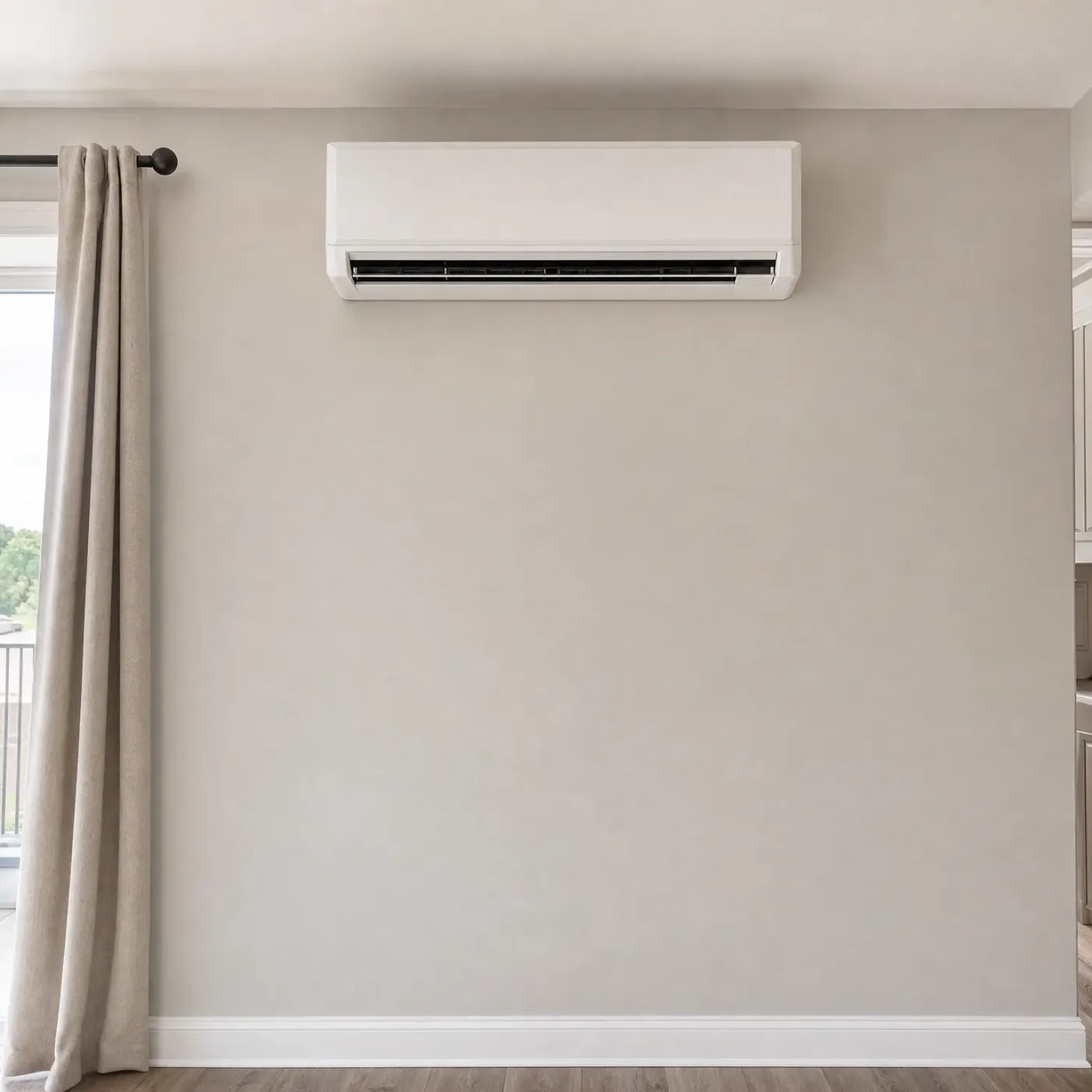
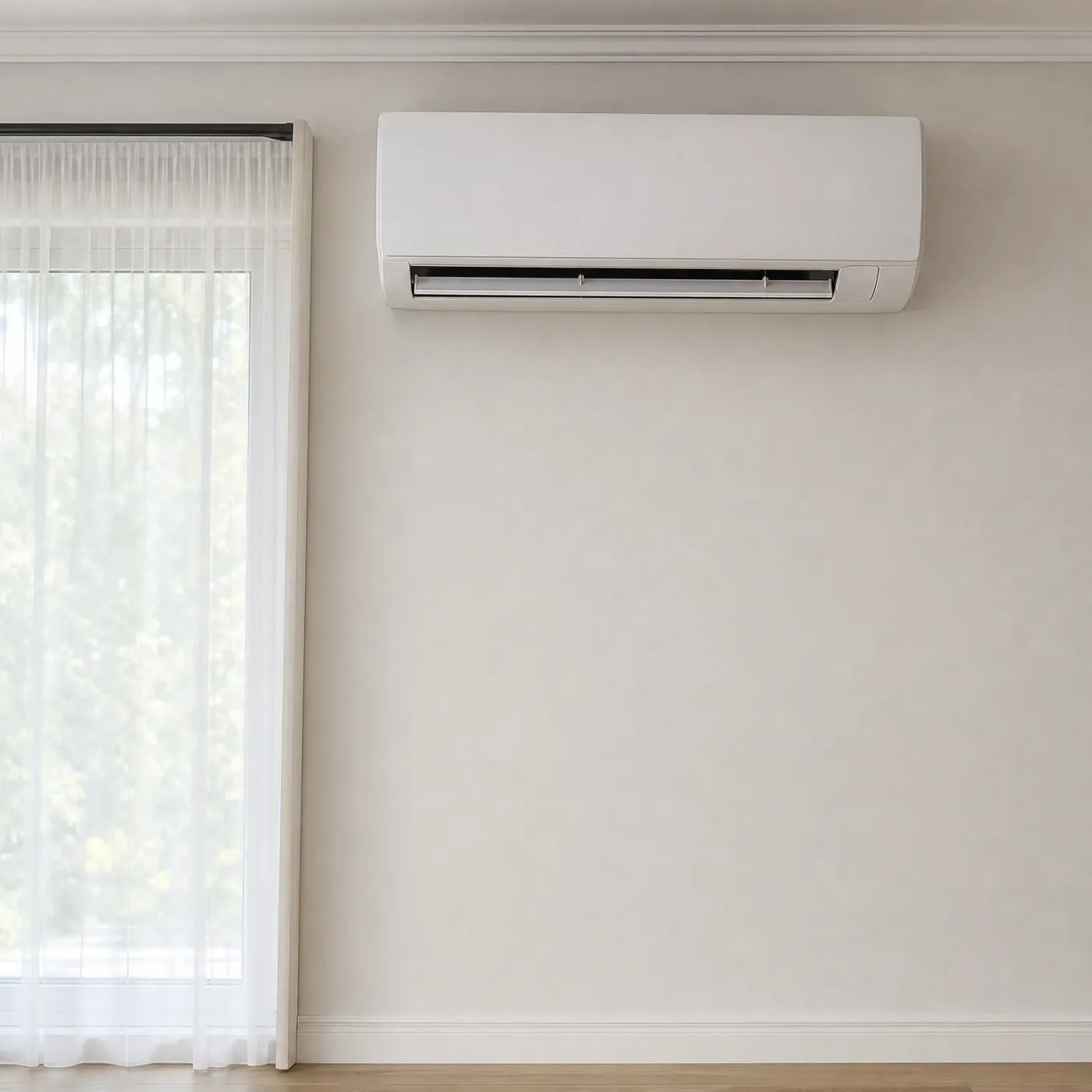
A white wall-mounted mini-split air conditioner unit high on a light gray interior wall, with a beige curtain and window at the left and wood-look flooring below.

Running normally

The fan is pushing warm air into the room and holding there. Walls stay beige, floor stays warm underfoot, and the unit up by the ceiling just does its job without drawing a second look. Whatever defrost cycles it's run tonight, they were short and over fast.

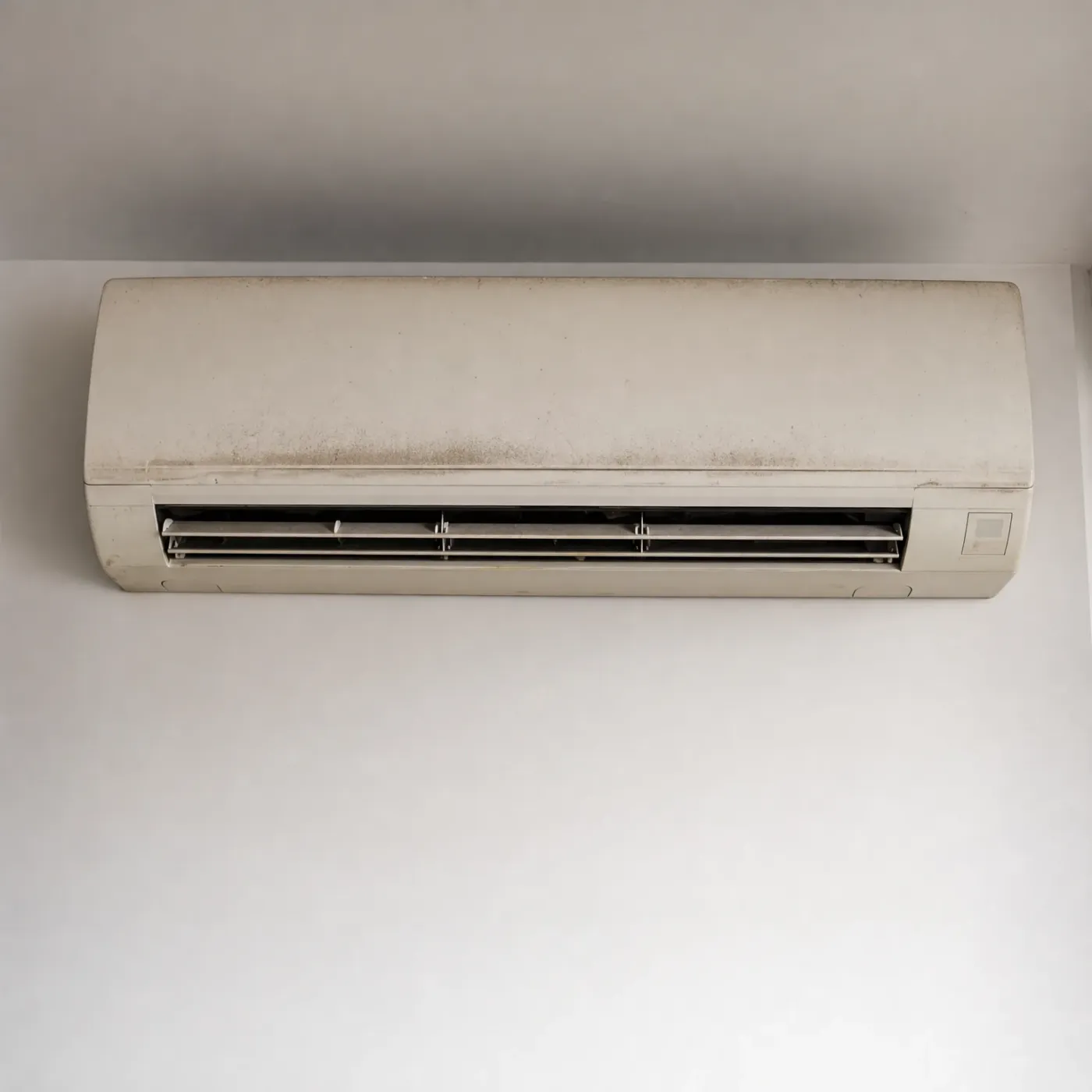
A dusty white wall-mounted mini-split air conditioner indoor unit with open louvers, installed near the ceiling on a plain light-colored wall.

Stuck in trouble

The grime along the vents is the tell. An indoor unit this dusty and discolored has been struggling for a while, and dirt buildup like that can keep a coil from shedding frost the way it should outside. If the air coming out stays cool longer than a few minutes, call for a repair.

A closed silver laptop and a ceramic mug of dark coffee sit on a wooden table in front of two chair backs, with a kitchen counter, tiled backsplash, wooden cutting boards, a vase of greenery and a potted plant by a window behind.

Defrost mode itself is normal. A unit stuck in it is not.

Your mini split is supposed to pause and melt frost off the outdoor coil on a cold night. That's defrost mode working as designed. What isn't normal is when those cycles run long, come back too often, or leave the room cold enough that you notice. That's a unit telling you something is off, whether it's a sensor reading wrong, a reversing valve not shifting clean, or a coil that's icing up faster than it should.

You don't have to figure out which one it is. That part is a contractor's job, not yours. Send the form and you're done hunting through reviews, calling shops to ask if they even work on mini splits, and repeating the same description of what your unit's doing to every person who picks up. Someone who knows these systems takes it from here.

Interior corner of a room with a window and sheer curtain at left, a gray upholstered sofa with a cushion at right, and a round wooden table holding stacked books and a round vase with an olive branch.
A white wall-mounted mini-split indoor unit on a light gray wall above a beige sectional sofa with a patterned cushion, beside a framed abstract artwork and a curtained window.

Let someone else find the pro

Hand it over

Describe your mini split job once, to one pro.

It costs nothing to send, and you don't have to hire anyone.