Profile view of a bearded man wearing a dark green baseball cap and a dark gray T-shirt against a plain light background.

What a mini split tune-up covers in Michigan

Step 1 of 3: Equipment

What does a mini split tune-up actually include in Michigan?

You're thinking about getting your mini split looked at before the weather turns, and you want to know what's actually going to happen when someone shows up. Not a vague "maintenance visit," but the real list: what gets opened, cleaned, checked, and what it means for a system that has to handle Michigan summers and shoulder-season heating on either end.

It covers the indoor coil, the filters, the outdoor unit, and the refrigerant charge

A mini split tune-up means someone opens the indoor head and cleans the coil and the filters, checks the drain line so condensate isn't backing up, and goes outside to clear debris from the condenser and check the fan and coil there too. They'll check refrigerant charge and look at the electrical connections. Each indoor head in the system gets this, not just one. In Michigan, the filters and coils matter more than people expect, because a mini split that's humid air all summer picks up buildup faster than one running dry heat all winter. A system that's clogged or low on charge has to work harder to do the same job, and that shows up on the power bill.

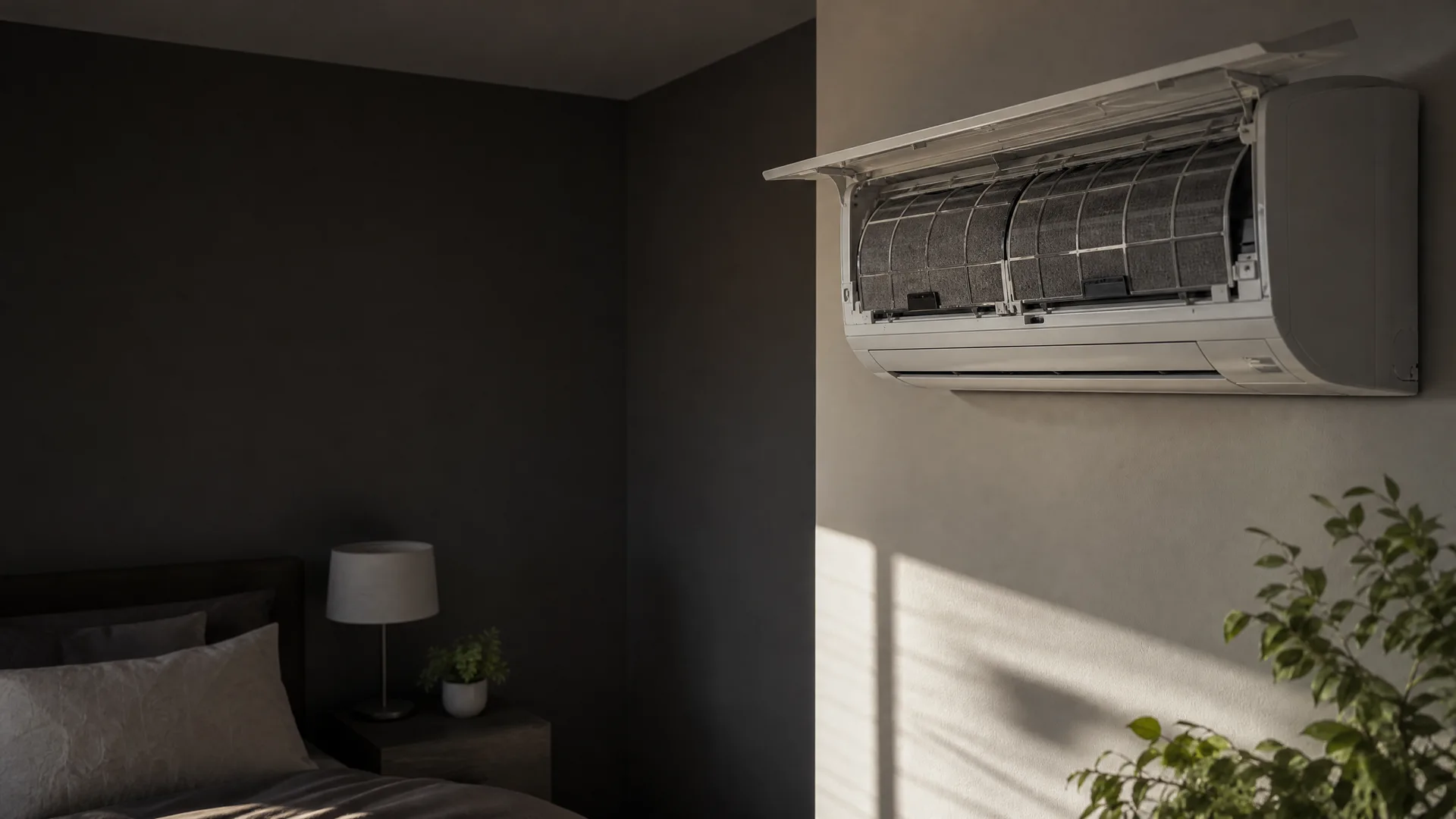
A wall-mounted mini-split air conditioner with its front cover open exposing the filters, in a dim bedroom with a bed, nightstand lamp and a potted plant.

You pop the cover off the indoor unit yourself on a Saturday in April, just to look before anyone comes out. The filter screen behind it is grey with a season's worth of dust, matted enough that you can't see through it to the coil. Light from the window catches all of it. You think about how this thing has been running quietly in the corner of the bedroom since last summer, pulling air through that screen the whole time. Outside it's still cool enough to leave the windows open, but Michigan summers get sticky fast, and you know this unit is going to be working hard again before long. You set the cover down on the bed and figure it's time to get someone out here.

Tune-Up Now Or Wait It Out

Skip the tune-up

  • The indoor filter stays clogged with the dust you saw behind the cover, so the unit pulls less air across the coil all summer.
  • A mini split working harder to push the same cool air through a dirty coil uses more power, and power in Michigan isn't cheap.
  • If the outdoor unit sat under leaves or snow drift all winter, nobody checked the coil or the fan before the first humid week hit.
  • Refrigerant levels only get checked if someone opens the unit up, so a slow leak can run unnoticed through a whole summer.
  • You find out something's wrong on the first 85-degree day, when every contractor in Michigan is already booked.
  • Any small issue, a stuck fan, a dirty sensor, keeps running until it's the reason the unit won't cool the room at all.

Get it looked at now

  • A contractor pulls the filter screens and washes them, so the unit is breathing clean air before summer starts.
  • The outdoor unit gets checked for anything blocking the coil or fan after a Michigan winter, snow, leaves, ice.
  • Refrigerant charge gets checked against what the unit is supposed to hold, so a leak gets caught before the heat does.
  • The drain line gets checked so condensate isn't backing up into the room once humidity picks up.
  • Electrical connections and the sensors get checked now, while there's still time to order a part if one's worn.
  • You're scheduling this on your own time in spring, not competing with every other call Michigan homeowners make in July.
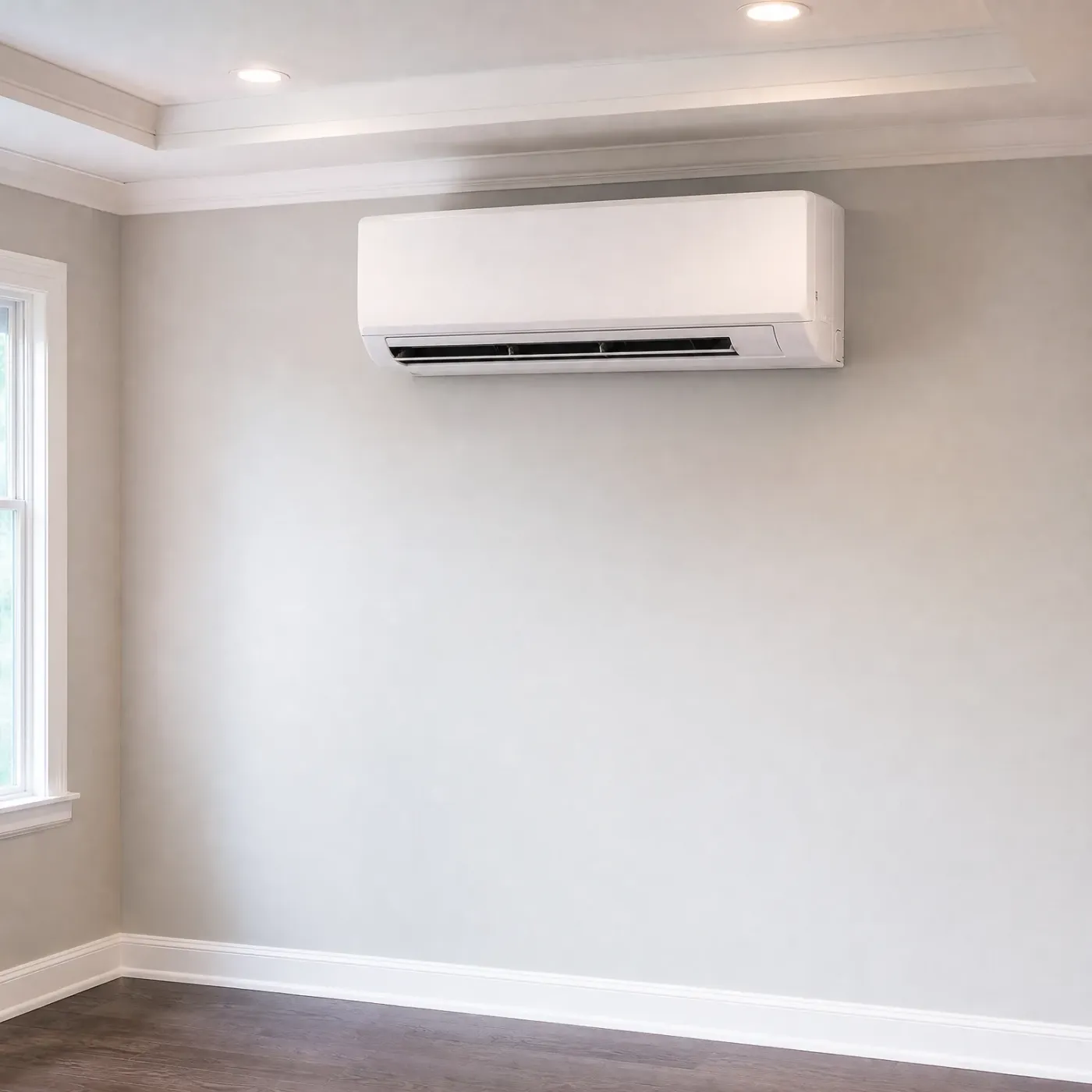
A white wall-mounted mini-split air conditioner on a light gray wall in an empty room with dark wood flooring, white baseboards, a tray ceiling with recessed lights, and a window at the left.

Running clean

This is what a tuned mini split looks like on the wall. Air moves through it without resistance, the coil underneath stays clear, and the unit cycles the way it was built to. No film, no buildup, nothing blocking the path between the room and the coil.

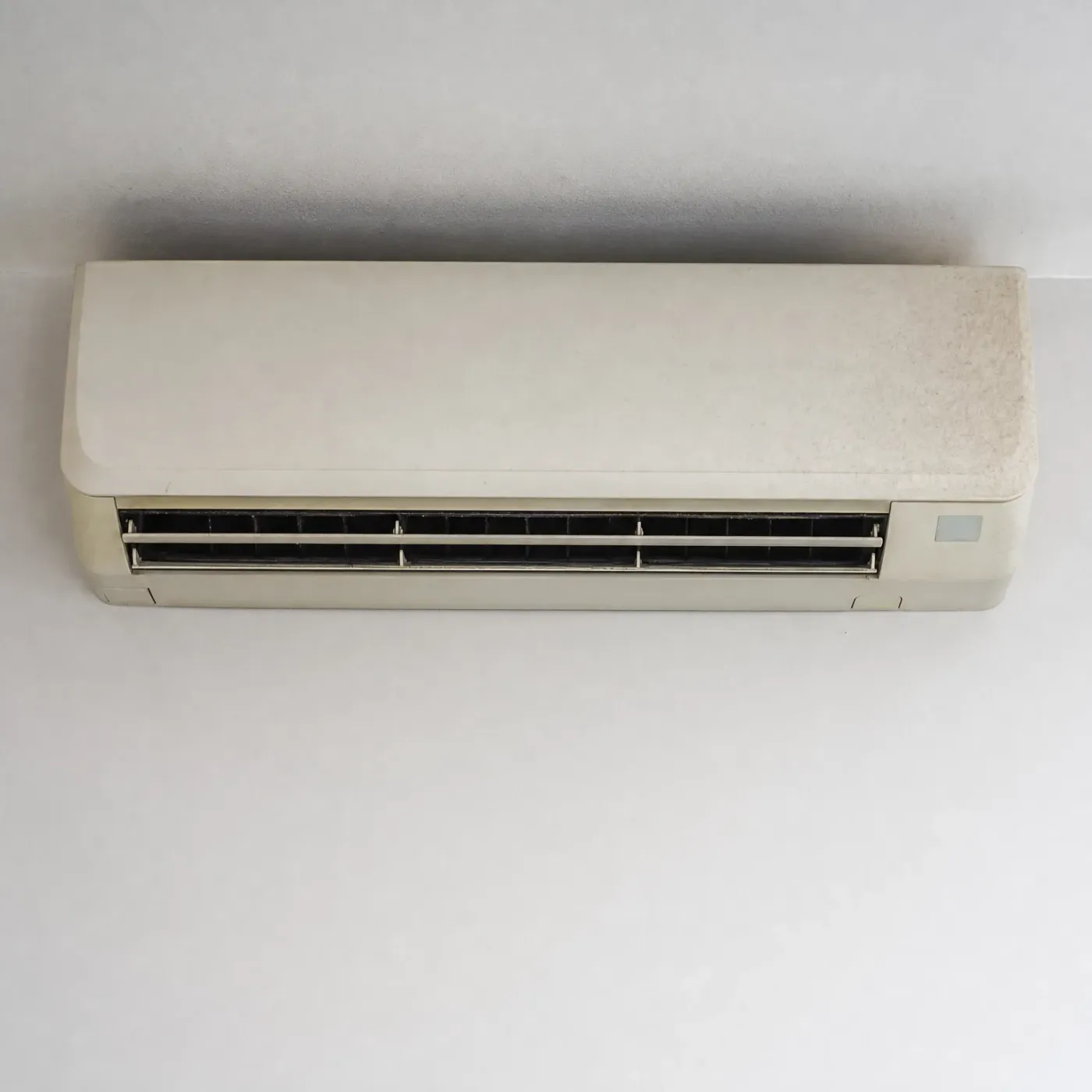
A wall-mounted mini-split air conditioner indoor unit with a yellowed plastic casing and dark horizontal vent louvers, installed on a plain light-gray wall.

Running dirty

Dust sits on top of the unit and dark residue rings the vents where the air pushes through. That residue builds up on the coil behind it too, not just the housing you can see. A tech can clear this in a visit instead of you tracking down who will.

Is your mini split working harder than it used to?

You notice it most in August, when the room takes longer to cool down than it did last year. The unit runs and runs and the air coming off it feels weaker than you remember, more of a breeze than a real blast of cold. Up close you might catch a musty smell when it first kicks on, or see a thin film on the louvers that wipes off on your finger. Water pooling under the indoor unit, or a hissing sound when it starts, means something past dust. None of this fixes itself. A mini split left alone like this keeps drawing power to do less cooling, and on a Michigan electric bill in July that difference shows up whether you tracked it down or not.

An older woman with gray hair in a cream knit sweater sits under a blanket on a sofa by a window, looking outside toward yellow-leaved trees, with a lamp, shelves and an armchair in the room behind her.
A gray-haired woman in a chunky knit sweater sits in an armchair with a blanket, looking out a window at yellow autumn foliage, with bookshelves and a potted plant behind her.
A gray-haired woman in a navy sweater sits in an armchair with a knit blanket beside a window, looking out at yellow autumn foliage, with a dining table and houseplant in the room behind her.
A gray-haired woman in a gray cowl-neck sweater sits in an armchair with a blanket, looking out a dark-framed window toward yellow autumn trees.

Get the right pro for your mini split

You already know what a dirty mini split costs you in August: a room that won't cool down and a power bill that climbs while it tries. What you don't know yet is which contractor in your part of Michigan actually does this work well, and that's the part that eats a Saturday. Calling three companies, describing the same dusty filter and weak airflow three times, waiting on quotes that come back different ways so you can't even compare them straight. You've got a gas furnace for winter, so this unit only has to earn its keep in summer, but it has to earn it. Hand off the search and skip the calling around. One contractor who covers your area gets your request and reaches out to you. You still decide what happens next. You just don't spend the week finding out who's available.

The full checklist, step by step

  • A tech pulls the indoor filter screens out and washes them, then checks the blower wheel behind them for caked-on dust.
  • The indoor coil gets sprayed with a cleaner and rinsed so air passes through it without resistance again.
  • The condensate drain line gets flushed, since a clogged one backs up and drips down your wall in August.
  • Outside, the tech clears leaves and grass clippings from the condenser fins and checks that the unit sits level on its pad.
  • The refrigerant line set gets checked for proper insulation, and line connections get inspected for oil residue that points to a slow leak.
  • Electrical connections at both the indoor and outdoor units get tightened, since a loose one causes the compressor to short cycle.

A tune-up starts inside, at the wall unit. The filter screens come out first, since nothing else matters if air can't get past them. Behind the screens sits the blower wheel, and dust cakes onto its blades the same way it cakes onto the screens, just slower, so it gets checked too. Next comes the coil, sprayed down and rinsed so the indoor unit can move air the way it did when it was new. From there the tech follows the condensate line, the small tube that carries water off the coil and out of the house. That line clogs with algae and dust over time, and when it clogs, the water backs up and finds somewhere else to go, usually down the wall under the unit. Outside, the work is different but just as specific. Leaves, cottonwood fluff, grass clippings from mowing too close, all of it packs into the condenser fins and blocks airflow the same way a dirty filter does inside. The tech clears that out and checks the pad underneath, because a unit that's settled unevenly strains the compressor. The refrigerant lines get a look too, both the insulation wrapped around them and the fittings at each end, where a trace of oil is usually the first sign of a slow leak long before the unit stops cooling. Last comes the electrical, connections at both ends tightened down, since a loose one is a common reason a compressor starts and stops when it shouldn't.

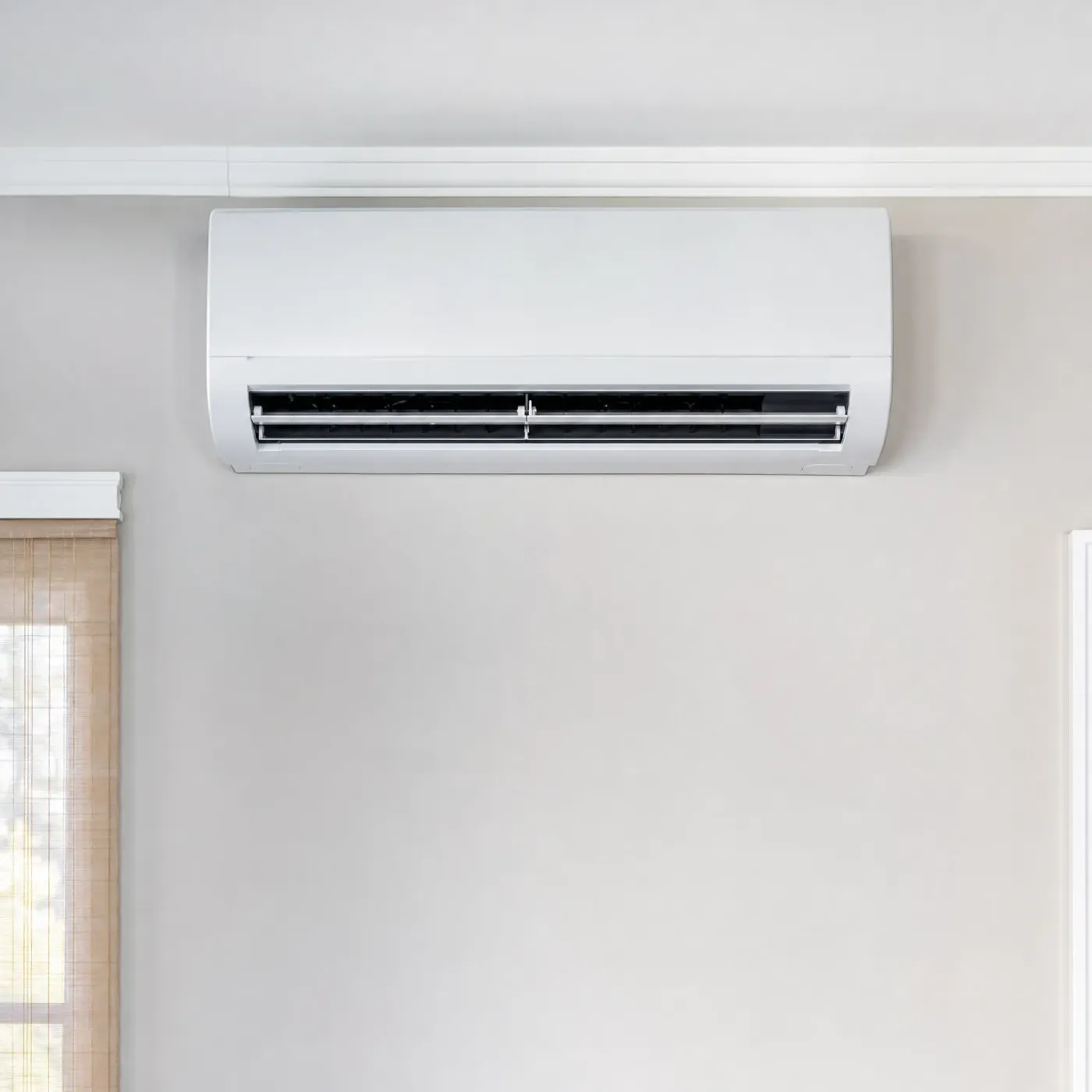
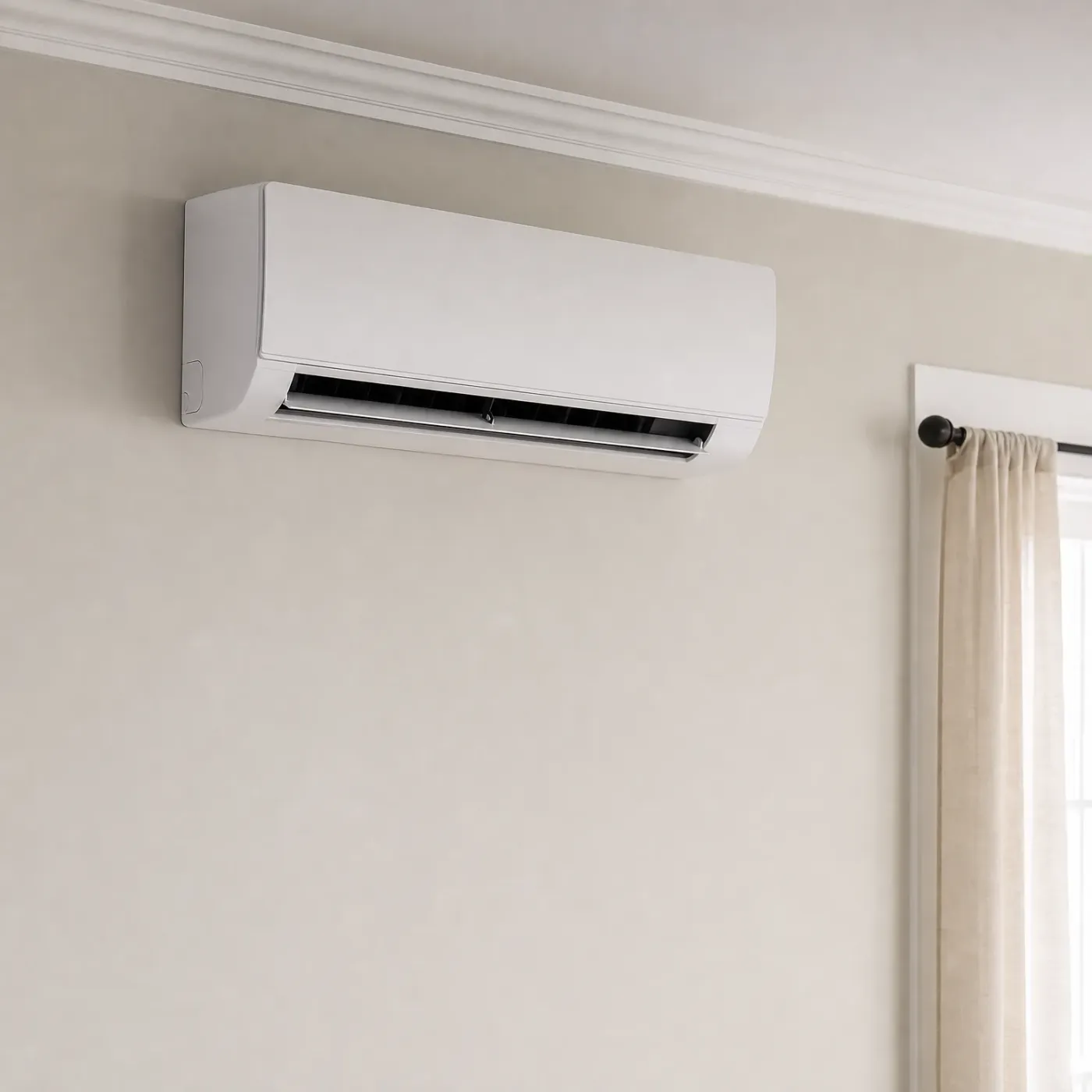
A white wall-mounted mini-split air conditioner unit installed high on a light gray interior wall below crown molding, with a bamboo-shaded window at the lower left.
A mini split that's been serviced moves air freely through a clean coil, so it cools the room without straining to do it.
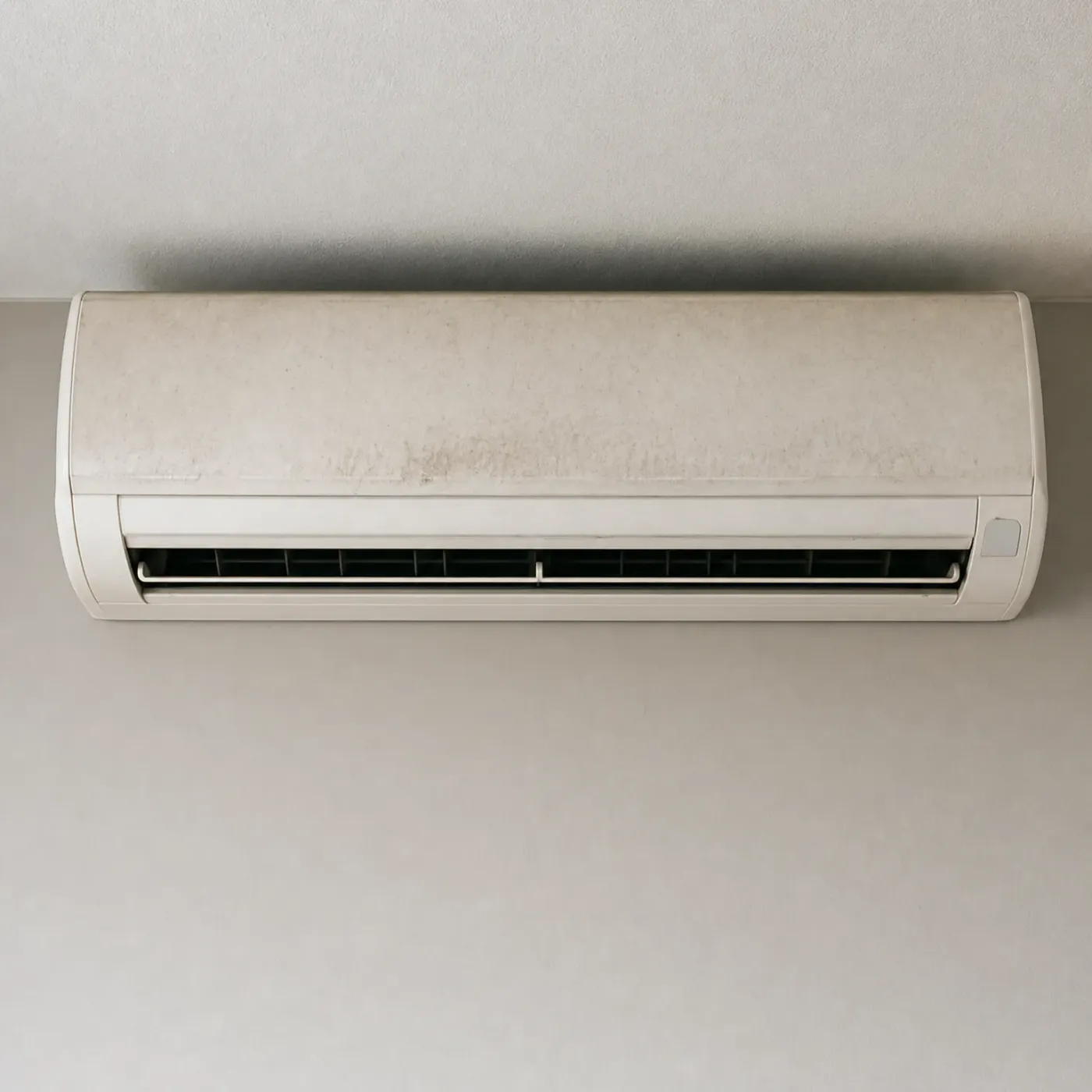
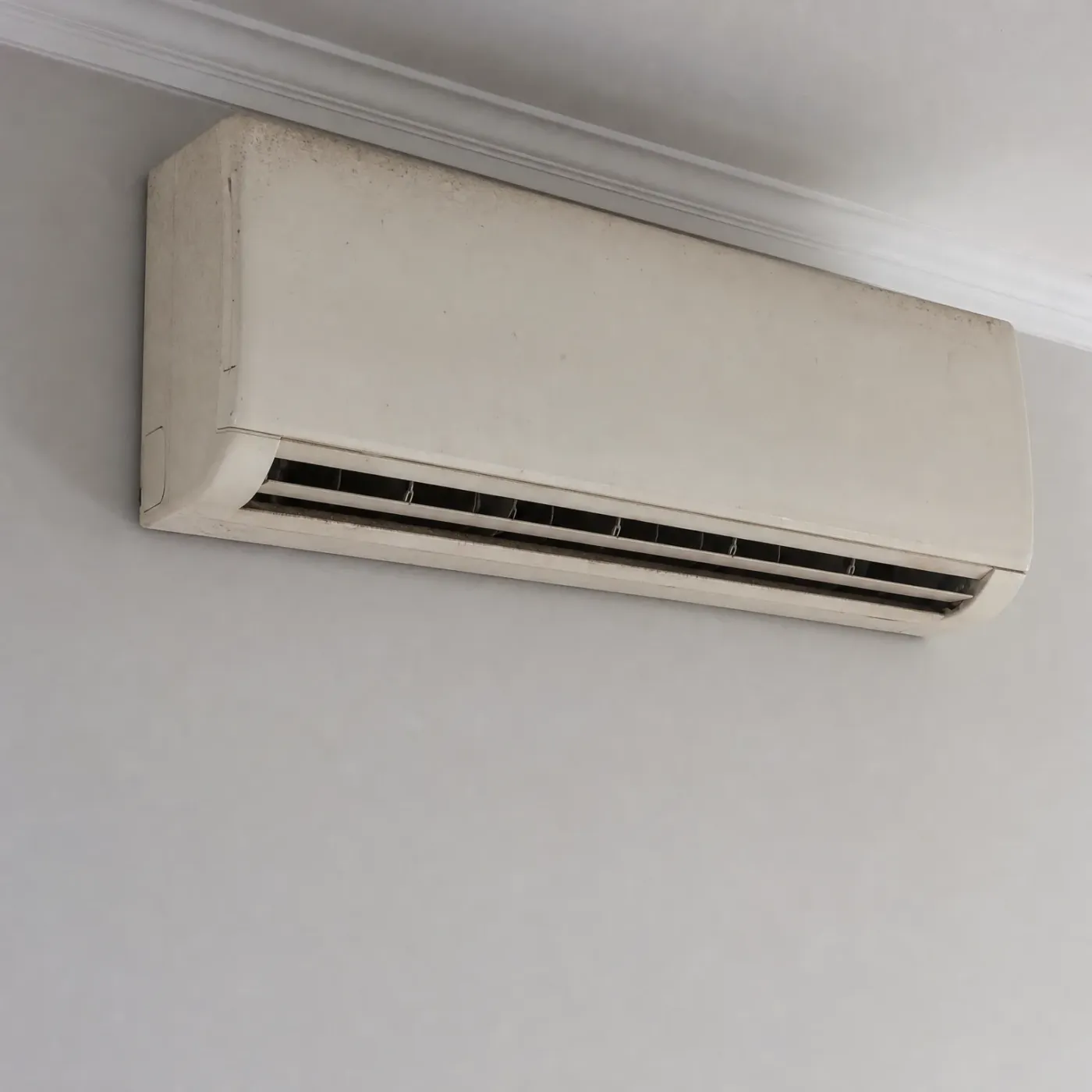
A wall-mounted mini-split air conditioner indoor unit with a dusty, discolored cover, installed near the ceiling on a plain light-colored wall.
Dust like this on the casing usually means the same film is built up on the coil behind it, and the unit is working through that to cool anything at all.
  1. Tech cuts power to the indoor and outdoor units first.

  2. Filter screens come out and get washed clean of dust.

  3. The blower wheel gets checked and cleared of buildup.

  4. Indoor coil gets sprayed, rinsed, and cleared of film.

A woman in a cream knit sweater sits in an armchair with her eyes closed and a slight smile, beside an open window showing orange autumn foliage, with a mug, books and a lit candle on a small side table.
An older man with gray hair and a beard leans back on a beige sofa with his eyes closed, in a sunlit room with potted plants, a wicker chair and large windows behind him.

What a dirty coil costs you

A mini split moves heat by passing air over a coil full of refrigerant. Dust on that coil acts like a blanket. The refrigerant underneath still gets cold, but the air can't pick up as much of it on the way through, so the room takes longer to come down and the unit runs longer to get there. In Michigan, where you're paying some of the higher power rates in the country, that extra runtime shows up on your bill every month from the first warm week through the last one in fall.

Why the outdoor unit matters too

The indoor half gets most of the attention because it's the part you can see, but the outdoor unit is doing the other side of the same job, dumping the heat pulled out of your house into the outside air. Leaves, grass clippings, and cottonwood seed build up on those outdoor fins over a Michigan summer and block that exchange. A tech checks that side along with the indoor coil and filters, because a clean indoor unit paired with a clogged outdoor one still leaves you with a system that's working harder than it needs to.

Power costs 20.03 cents per kilowatt-hour statewide

At 20.03 cents a kilowatt-hour, a mini split pulling extra current through a dirty coil shows up fast on your bill. A clean unit cools the same room on less power, which matters when every kilowatt-hour already costs more than you'd like.

EIA-861 2025 statewide residential average

A wall-mounted mini-split air conditioner indoor unit with a dusty off-white casing and dark lower vent, installed high on a plain light-colored wall below a ceiling molding.
Before you get your mini split maintenance
A white wall-mounted mini-split air conditioner installed high on a beige interior wall below crown molding, with a window and light curtain on a black rod at right.
After you get your mini split maintenance
A two-story house with gray and light gray siding, white-trimmed windows and a white front door, flanked by deciduous trees, with a partly browned lawn in front under a clear blue sky.

Summer air in Michigan sits at a dew point around 60°F on average across June, July and August, per NOAA climate data. That's heavy, sticky air, and your mini split has to wring more moisture out of it before the room feels cool. A unit with a clean coil and clear filter can still pull that moisture out efficiently. One that's been skipped over has a film on the coil already slowing it down, so it runs longer to get the same muggy air out of the room, and you feel it as a space that cools but never quite feels dry.

NASA POWER T2MDEW county cells weighted by homes

A mini split tune-up means a tech cuts power, pulls and washes the filter screens, clears the blower wheel, rinses the coil, flushes the drain line, and checks the refrigerant charge and electrical connections before powering it back on. That's the whole job. Finding someone to do it is the part that eats your evening: searching for mini split contractors near you, calling a few, describing the same unit and the same dust-filled filter three times over, then sitting with quotes trying to tell them apart. None of that gets your coil any cleaner. You already know what Michigan summer does to a dirty unit and what Michigan power rates do to the bill while it struggles. What's left is matching with a contractor who works on mini splits in your area and having them reach out to you, so the only thing left on your end is answering the phone.

Close view of a dark standing-seam metal roof with a stone chimney and metal flue cap, overlooking a wide river, trees, and flat farmland under a partly cloudy sky.

A pro who works on mini splits

Request a pro

You're not committing to anything by asking.

You'd otherwise be calling around to different Michigan contractors, explaining the same dirty coil and weak airflow each time, then sitting with quotes trying to guess who actually does this work well. Send the request and skip that part. You get matched with a contractor suited to your situation, and they reach out to you.