
Tell us about the job
Takes about a minute. No obligation.

A contractor diagnosing a mini-split repair in Grand Traverse County starts with the unit itself: how old the components are, whether the original installation was done cleanly, and whether the system has been serviced. 78 severe weather events were recorded in Grand Traverse County, Michigan between 2015 and 2024. At roughly that rate, severe weather is something equipment here encounters now and then, not a sustained operating pressure that grinds parts down season after season. A refrigerant leak, a failed capacitor, or a worn compressor bearing in this county points toward age and workmanship first. The weather record does not carry much of the blame.
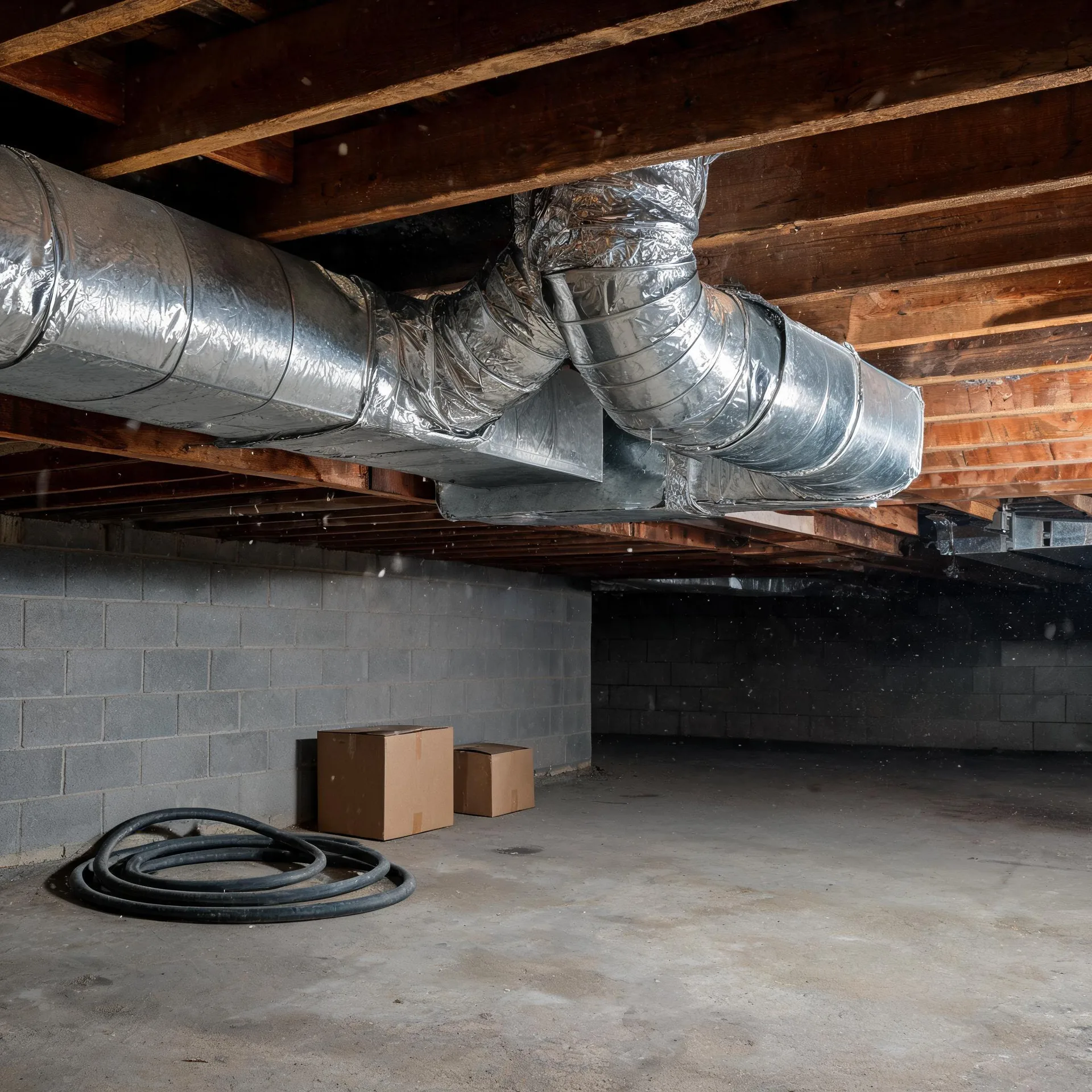
Half the homes in Grand Traverse County, Michigan were built in 1986 or earlier (2020-2024 ACS 5-year). A mini-split that has run through that many winters and summers puts its refrigerant line sets, flare fittings, and outdoor unit connections under repeated thermal stress that the indoor head unit often survives without showing obvious symptoms. When a contractor opens the system, the failure is frequently at a joint or a connection point rather than in the compressor or the board itself. That matters for parts sourcing: fittings and line set components are still made, but a contractor has to actually trace the lines before pricing the job.
The Parts of a Mini-split a Contractor Checks First
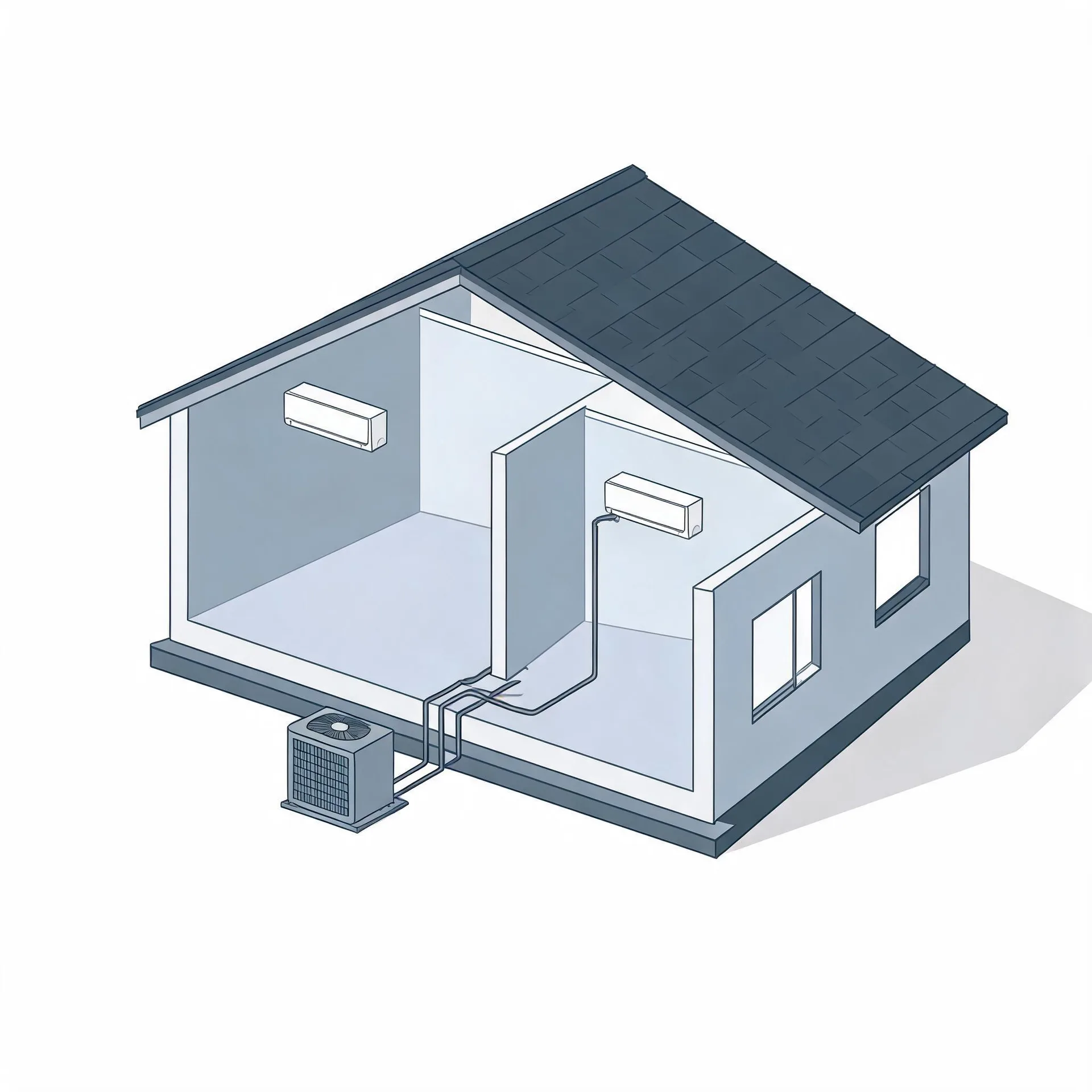
The indoor air handler mounts high on an interior wall and is the piece most homeowners notice right away. It pulls room air across a coil and a blower to deliver conditioned air. When the system is underperforming or throwing an error code, the handler's coil, blower wheel, and sensors are among the first things a contractor looks at.
The outdoor condenser unit sits on a pad or bracket outside the house and holds the compressor and the condenser coil. A refrigerant line set and a control wire run through a small penetration in the wall to connect the two units. The condenser and the line set are where a contractor turns when refrigerant pressure readings are off or the compressor is cycling oddly.
The drawing shows a typical layout, and a licensed contractor determines what applies to your specific system and house.
Get matched in Grand Traverse CountyGrand Traverse County, by the numbers
78 severe weather events were recorded in Grand Traverse County, Michigan between 2015 and 2024.
NOAA National Centers for Environmental Information, Storm Events Database, bulk CSV export, events 2015-01-01 through 2024-12-31.Half the homes in Grand Traverse County, Michigan were built in 1986 or earlier (2020-2024 ACS 5-year).
U.S. Census Bureau, 2020-2024 American Community Survey 5-Year EstimatesGrand Traverse County, Michigan holds 47,003 housing units (2020-2024 ACS 5-year).
U.S. Census Bureau, 2020-2024 American Community Survey 5-Year EstimatesOwners occupy 77.2% of the occupied homes in Grand Traverse County, Michigan (2020-2024 ACS 5-year).
U.S. Census Bureau, 2020-2024 American Community Survey 5-Year EstimatesRules & Standards Behind Mini-Split Repair in Grand Traverse County, Michigan2 sourced rules and standards
Licensing Rules for HVAC Repair in Grand Traverse County, Michigan
Michigan issues the mechanical contractor’s licence by classification: HVAC equipment, ductwork, refrigeration, hydronic heating and cooling, and limited or unlimited heating and refrigeration service are each a separate classification a contractor has to hold.
Michigan requires a mechanical contractor’s licence: nobody may install, alter or service the regulated mechanical work unless they, or an employee, hold a licence from the department that has not been revoked or suspended.
Severe Weather Events in Grand Traverse County, Year by Year
Grand Traverse County weather puts real stress on heating and cooling equipment, and that stress shows up as repair calls. A mini-split running hard through difficult conditions wears differently than one that does not, which is why local weather history is part of understanding what this equipment faces here.
78 severe weather events, 2015–2024. Source: NOAA National Centers for Environmental Information, Storm Events Database.