




Is a mini split cheaper than baseboard heat in Michigan

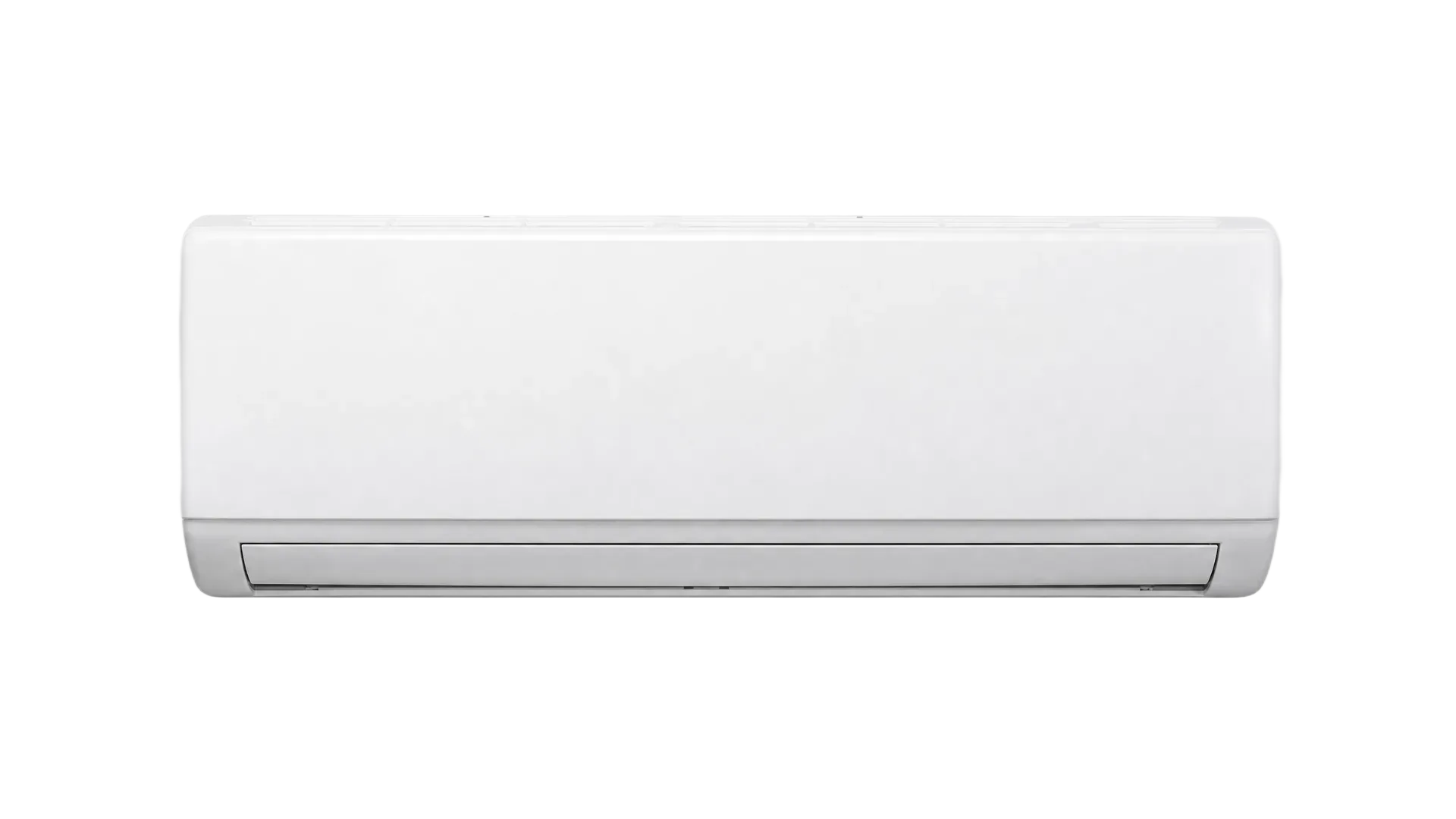
A white wall-mounted mini-split air conditioner indoor unit centered against a plain light gray background.
Skip the calls

Is a mini split cheaper to run than baseboard heat in Michigan?

Baseboard heat runs on electric resistance, and electricity in Michigan isn't cheap. If you've got a mini split in a room that used to rely on baseboard, or you're deciding whether to add one, you want to know if it actually costs less to run through a Michigan winter, not just in theory.

Yes, a mini split costs less to run than baseboard heat

A mini split moves heat instead of making it. Baseboard heat works by converting electricity straight into heat, one unit of power in, one unit of heat out. A mini split uses that same unit of power to pull several units of heat out of the outside air, even when that air is cold. That difference holds through most of a Michigan winter, since mini splits are built to keep working efficiently well below freezing. On the coldest nights, when the outdoor air drops low enough, a mini split's output and efficiency fall off, and some homes keep baseboard or another backup for those stretches. For the bulk of the season, the mini split carries the load for less.

A woman with long light-brown hair in a gray knit sweater sits in a living room looking off to the side, with a sectional sofa, houseplant, lamp, wooden table and large windows behind her.
A woman in a chunky gray turtleneck sweater sits indoors looking off to the side, with a blurred dining table, chairs, pendant lamp and window behind her.
A woman in a cream knit sweater with her hair in a bun stands near a window, looking off to the side, with a gray sofa, houseplant and open kitchen with pendant lights blurred behind her.
A woman with long brown hair in a cream knit sweater stands near a window, looking to the side, with a white sofa, shelving, and a hallway visible behind her.

Why does that room cost so much less to heat now?

If you already made the switch, you probably noticed it on the electric bill first. The baseboard used to run almost constantly to hold a room warm through a Michigan winter, and every hour of that was resistance heat, pulling full power the whole time. A mini split doesn't work that way. It moves heat instead of generating it, so it can hold the same room warm for a fraction of the electricity. The room itself feels different too. Baseboard heat tends to bake the air near the floor while the rest stays cooler. A mini split spreads heat more evenly, so you're not finding cold spots across the room or cranking the thermostat to compensate.

  1. Baseboard heat makes warmth straight from electricity, one to one.

  2. A mini split's outdoor unit pulls heat out of the cold outside air.

  3. A compressor concentrates that heat and sends it inside as refrigerant.

  4. The indoor head blows warm air across the room using a fraction of the power.

Baseboard Heat vs Mini Split

Baseboard heat

  • Every unit in the house pulls full power whenever that room calls for heat, with no outdoor air to draw from.
  • A room that loses heat fast, like one with a lot of window, runs the baseboard almost nonstop on a cold day.
  • There's no outdoor unit to maintain and no refrigerant line, so there's less to go wrong mechanically.
  • Each baseboard only heats the room it's in, so a cold back bedroom needs its own unit sized for that room.
  • Below zero outside, the baseboard still delivers exactly the same heat for the same electricity, since it isn't drawing on outdoor air.

Mini split

  • The outdoor unit does more of the work on a mild January day than on a night near zero.
  • One indoor head can cover a room that two or three baseboard units used to split between them.
  • The compressor and outdoor coil need a contractor who services this equipment to keep it running efficiently.
  • On the coldest nights of the year, the compressor works harder and the savings over baseboard narrow.
  • The same indoor head cools that room come summer, so it's doing a job the baseboard never could.
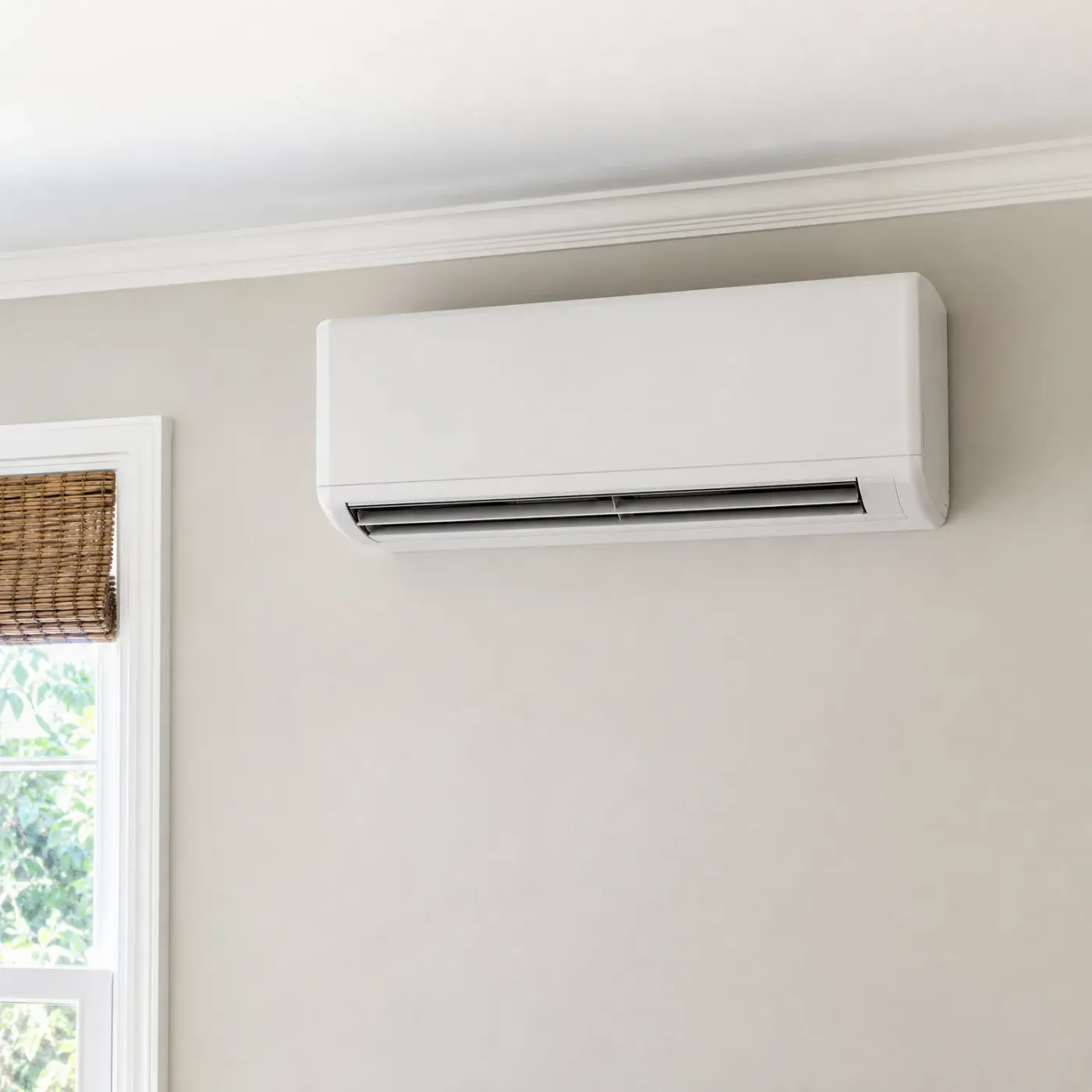
A white wall-mounted mini-split air conditioner unit installed high on a beige interior wall below white crown molding, with a window and woven shade at the left edge showing green foliage outside.

Running clean and efficient

This is a mini split doing its job. Air moves freely through the coil and out into the room, and the unit isn't working harder than it has to for the heat it puts out. A clean mini split holds the cost advantage over baseboard that it was installed for.
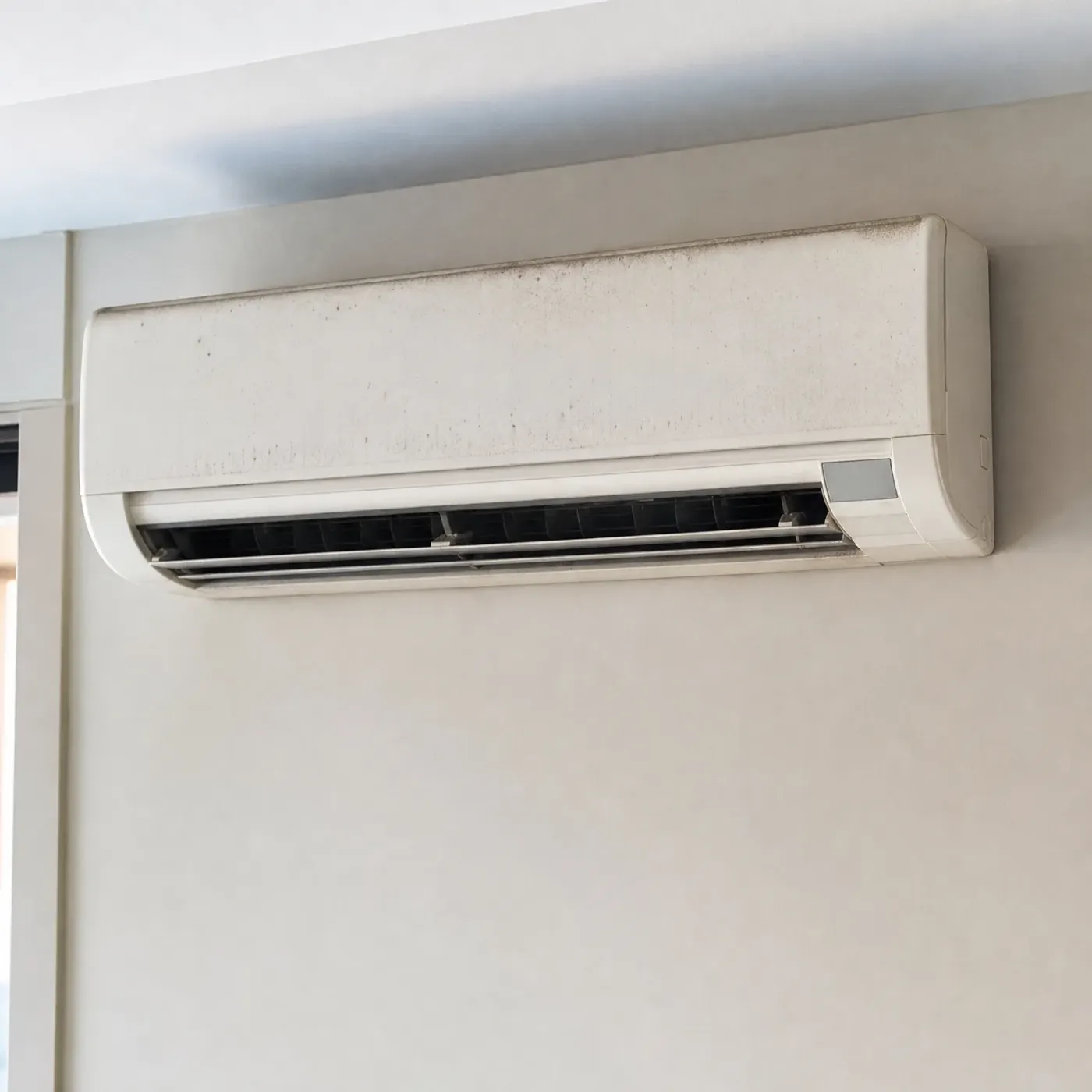

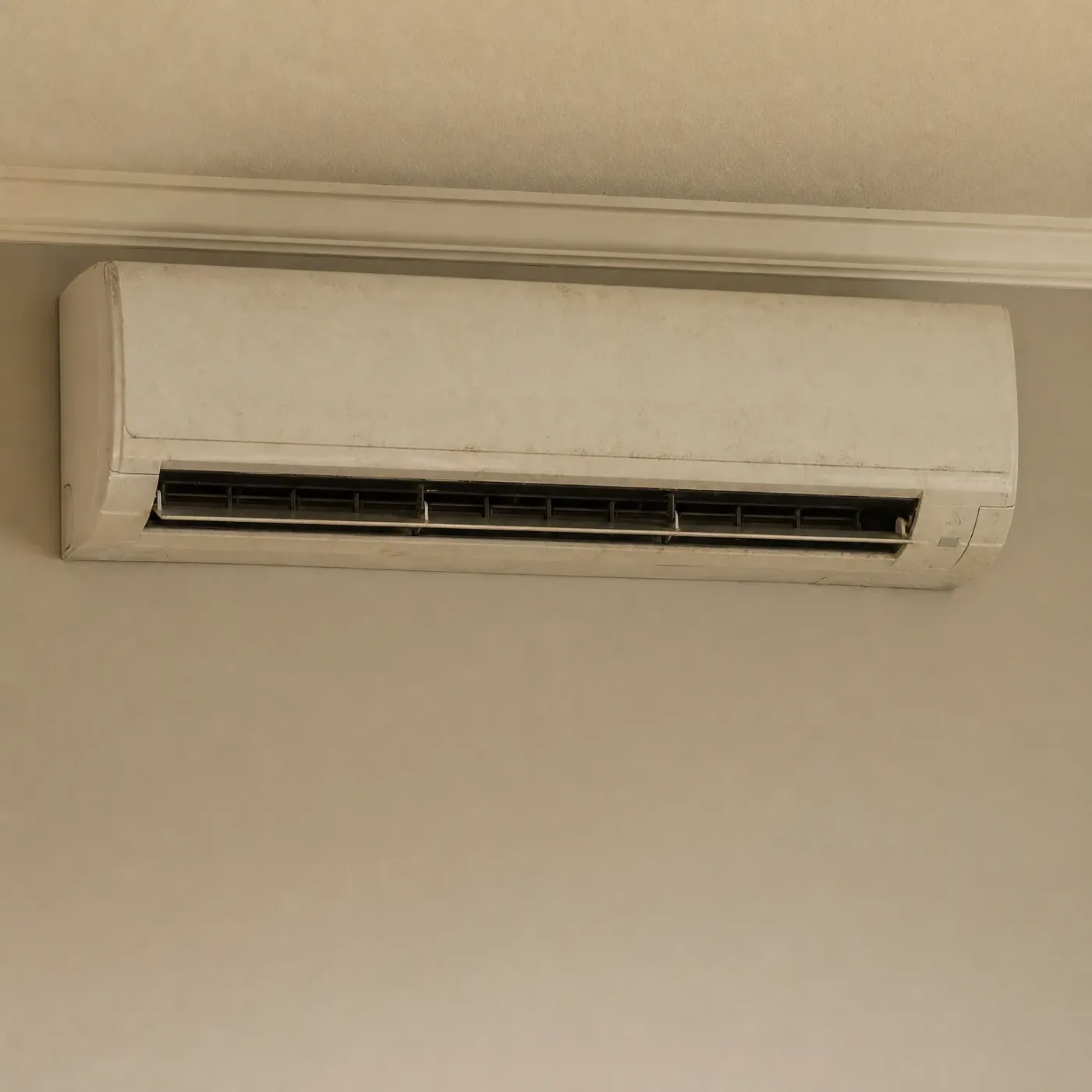
A dusty, stained white wall-mounted mini-split air conditioner indoor unit installed high on a plain off-white interior wall near the ceiling.

Dust cutting into savings

Dust like this blocks airflow across the coil, so the compressor runs longer to put out the same heat. A mini split in this shape still beats baseboard, but it's not saving what it could. The filters and coil need to be clean for the comparison to hold.

A woman and a child wrapped together in a knitted gray blanket on a couch, with the child's head resting on her shoulder and a lit table lamp and houseplant in the background.
An older woman with short gray hair in a cream cable-knit turtleneck sweater smiles while looking to the side in a wooden kitchen, with a round loaf of bread on a board in the foreground and a lit candle by a dark window.

Explain it one time

You already know the mini split costs less to run than the baseboard it replaced. Getting one installed right is a different question, and it matters more in Michigan than people think. A unit sized wrong for the room, or an outdoor unit set where it fights drifting snow and a bad flow of outside air all winter, will cost you back some of that savings every month it runs. Most gas-heated homes here are adding a mini split room by room rather than replacing a whole system, which makes correct sizing and placement for that one space even more important. Finding someone who installs these regularly, and not just the baseboard and furnace work most contractors see all day, usually means calling around and explaining the room, the wall, the wiring, and the old baseboard setup more than once. Send the request once and it goes to one local contractor who already does this work through a Michigan winter, not a handful fielding the same call.

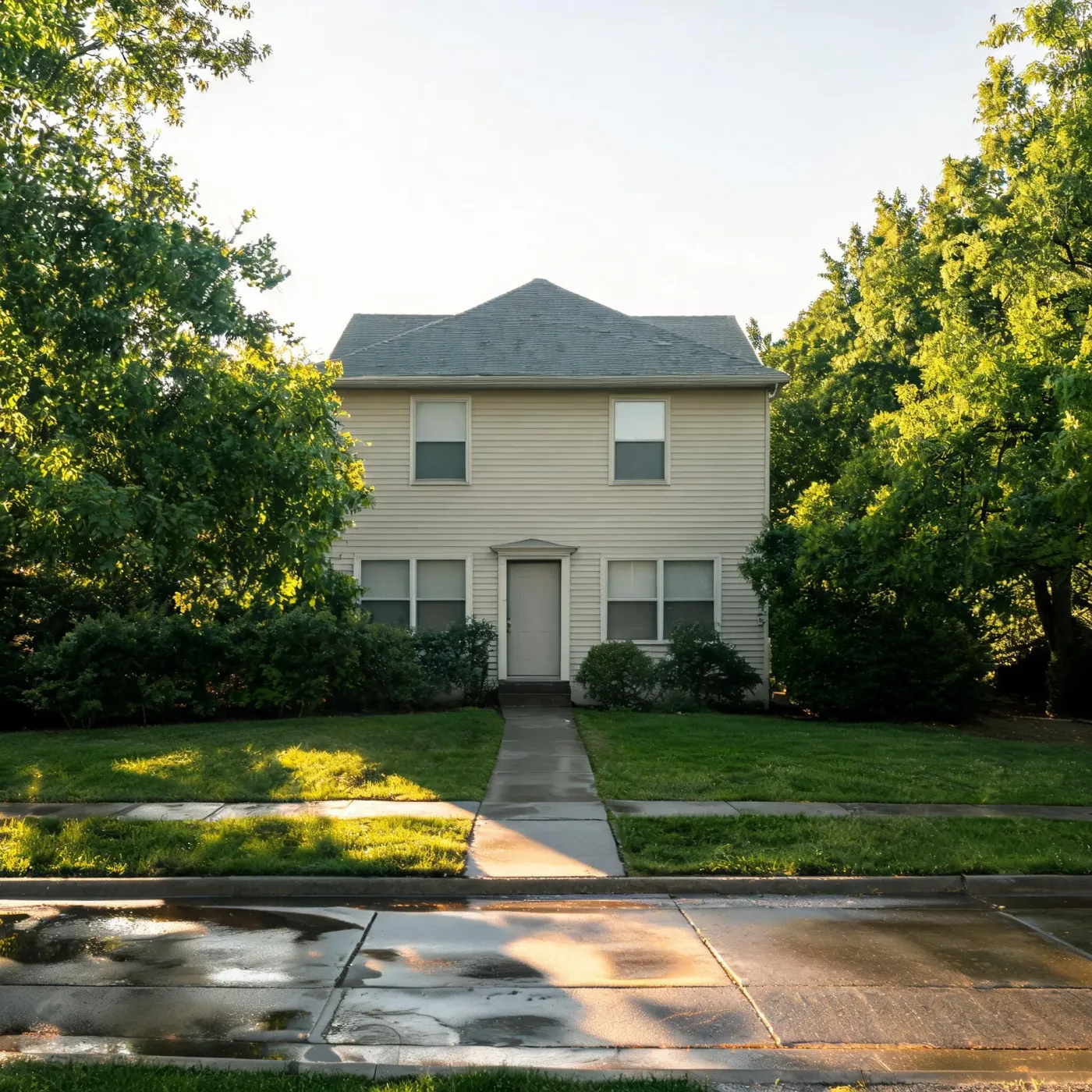
A two-story cream-colored house with horizontal siding and a gray hipped roof, flanked by large green trees and shrubs, with a concrete walkway crossing a lawn to a wet street in the foreground.

Michigan summers run humid, with the dew point averaging 60°F across June, July and August. That's sticky enough that a mini split spends those months pulling moisture out of the air as much as it cools it, since the indoor head dehumidifies every time it runs. A room that felt damp and warm with a window unit or no cooling at all tends to feel dry and even. It's also why the same mini split that saves you money heating in January is doing real work in July, not just sitting idle between seasons. Source: regional climate averages for Michigan.

NASA POWER T2MDEW county cells weighted by homes

A white wall-mounted mini-split air conditioner indoor unit with dark louvered vents, installed near the ceiling on a beige wall below white crown molding.
Before you get your mini split installation
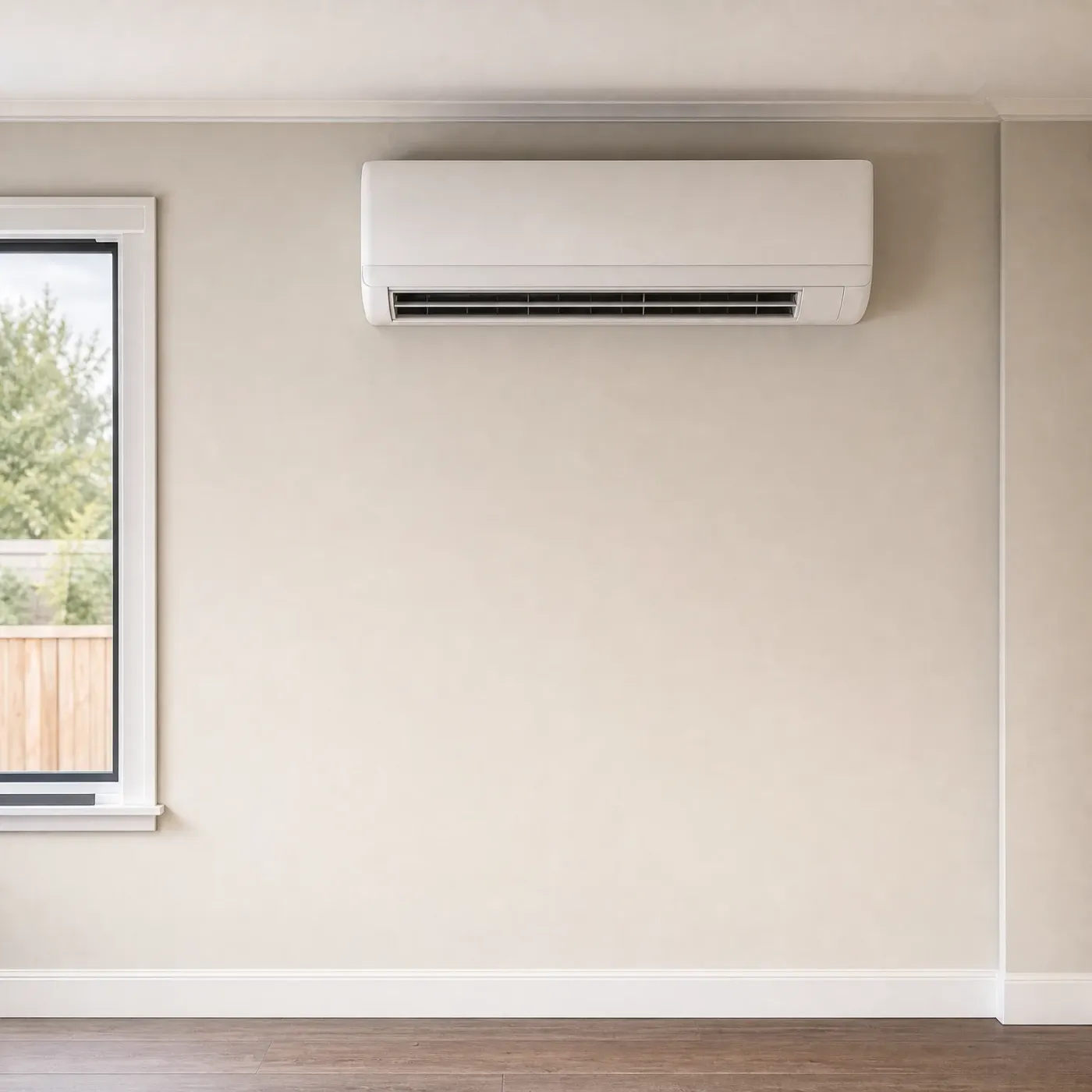
A white wall-mounted mini-split air conditioner on a beige interior wall, with a window at left showing trees and a wooden fence, and dark wood flooring below.
After you get your mini split installation

COP: the number that explains it

  • A mini split's efficiency is rated as COP, the ratio of heat delivered to electricity used, and it runs above 1 even in cold weather.
  • Baseboard heat has a COP of exactly 1, since every watt in becomes a watt of heat and no more.
  • Below a certain outdoor temperature, usually in the single digits or lower, a mini split's output drops and its COP falls toward that same 1.
  • Most cold climate mini splits hold a COP near 2 or better down to 5°F, meaning two units of heat for every one unit of power bought.
  • Michigan rarely sees stretches cold enough to erase that advantage for more than a few days at a time.
  • A mini split set to a steady temperature cycles its compressor up and down rather than switching fully off, which baseboard can't do.

COP stands for coefficient of performance, and it's the number that actually explains why your mini split costs less to run. It's just a ratio: heat delivered divided by electricity used. Baseboard heat sits at a COP of 1 all the time, in any weather, because resistance heat can't do anything but convert power straight into warmth. A mini split moves heat instead of making it, so its COP runs higher, and in most of a Michigan winter it holds near 2 or better. That means for every unit of electricity it buys, you're getting roughly two units of heat out the indoor head.

That number doesn't hold forever. As the outdoor air gets colder, there's less heat out there for the outdoor unit to pull in, and COP drops. Push the temperature down far enough, into the single digits or below, and a mini split's COP sinks toward that same 1 baseboard has always run at. On those days the two systems get closer in cost.

Michigan doesn't sit at those temperatures for long. Stretches cold enough to erase the mini split's advantage tend to last a few days, not weeks, so the rest of the season the ratio favors the mini split. It also helps that a mini split's compressor cycles up and down to hold a set temperature instead of snapping fully off and on, something baseboard elements simply can't do.

Power costs 20.03 cents per kilowatt-hour statewide

That rate is what makes the gap between baseboard and a mini split show up on your bill. Baseboard turns every one of those cents into heat at a one to one ratio. A mini split moves heat instead of making it, so it gets more warmth out of the same 20.03 cents.

EIA-861 2025 statewide residential average

A white wall-mounted mini-split air conditioner indoor unit installed near the ceiling on a plain beige wall.

When baseboard still makes sense

A mini split doesn't always win outright. In a three season porch or a room you heat for a few hours a week, the lower upfront cost of baseboard can outweigh what you'd save running a mini split, since there's so little runtime to recover the difference. Baseboard also has no outdoor unit to place, which matters on a lot or a wall where there's nowhere good to put one. For a room used rarely, baseboard still has a case.

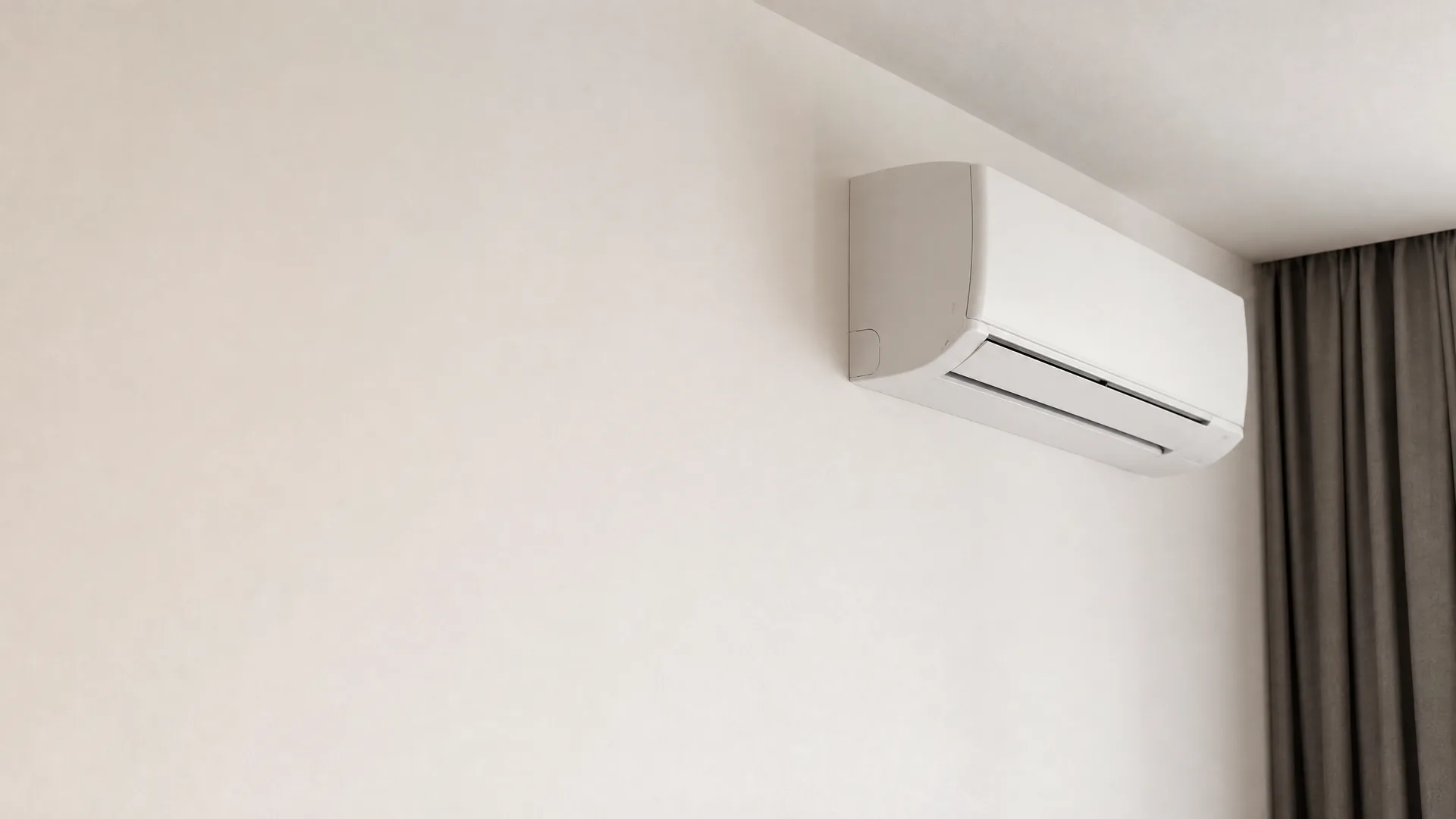
A white wall-mounted mini-split air conditioner on a plain off-white interior wall, with a gray curtain at the right edge.

Where the gap adds up fastest

A room that's occupied most of the day, or one that runs cold and calls for heat often, is where a mini split pulls ahead by the most. The same goes for any room with a lot of glass or a wall that loses heat fast, since that's exactly the kind of room that used to run baseboard nonstop all winter. If that's the room you're looking at, the switch tends to pay off faster than in a room used only occasionally.

A mini split costs less to run than the baseboard it replaced, in just about any room in Michigan where it's sized and placed right. That's the answer, and the facts above are the reasons behind it. Where you go from here depends on getting the installation right, since a unit that's undersized for the room or an outdoor unit set somewhere it fights the wind gives up a lot of that advantage before it ever shows up on a bill. That part isn't something to guess at. A contractor who works on mini splits through Michigan winters and humid summers both has seen what goes wrong when sizing or placement gets skipped over, and knows what to check before the unit ever goes on the wall. You'd be matched with one contractor local to you, not a handful competing for the job, so there's no round of calls to field or quotes to sort through. You already know the math behind the savings. What's left is making sure the install doesn't cost you any of it.

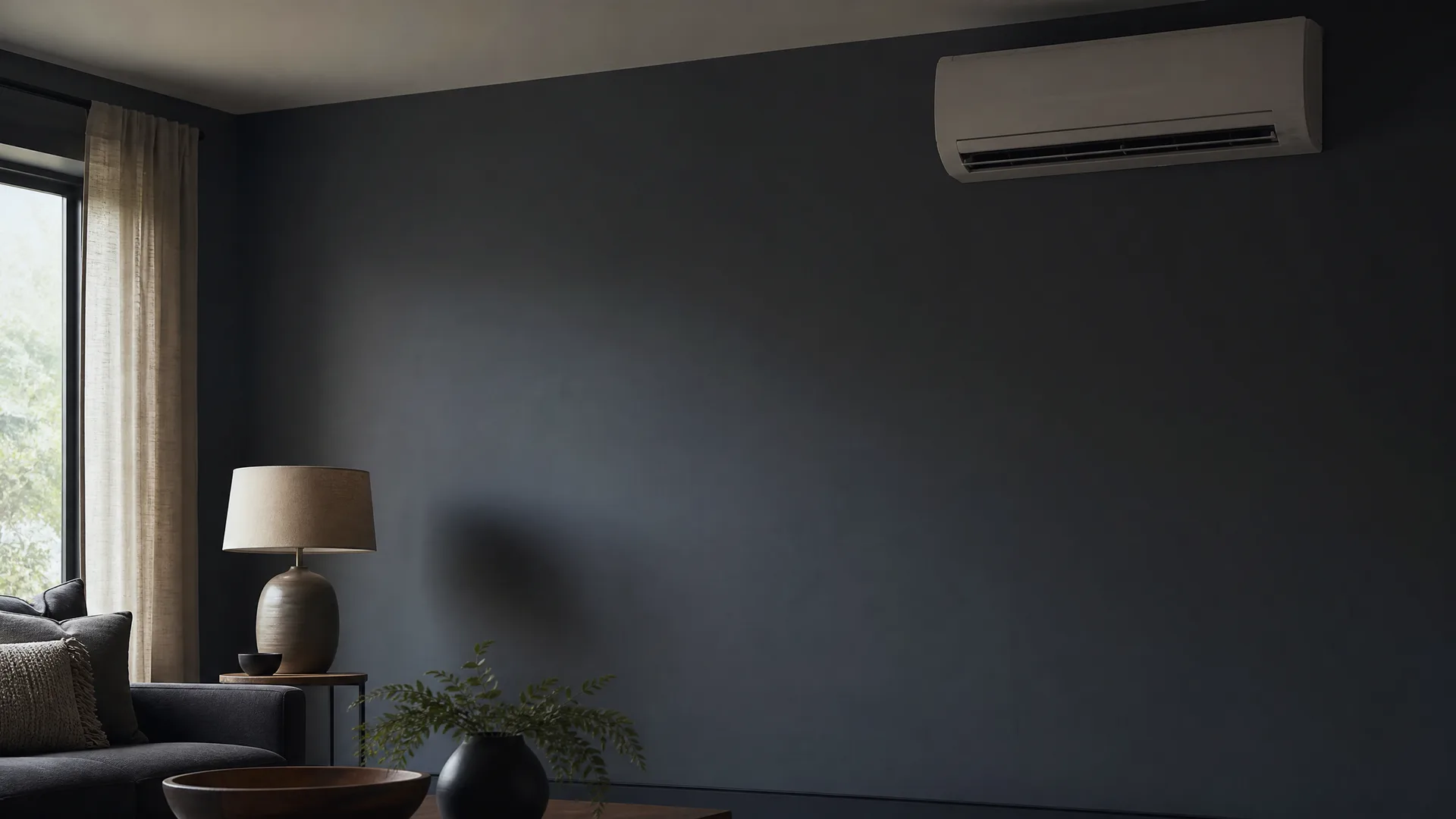
A dimly lit room with a dark gray wall holding a white wall-mounted mini-split air conditioner near the ceiling, with a sofa, table lamp, potted plant, and curtained window at left.

No quotes to chase

One installer gets your project, so there's no bidding war over it.

Step 1 of 3: Equipment