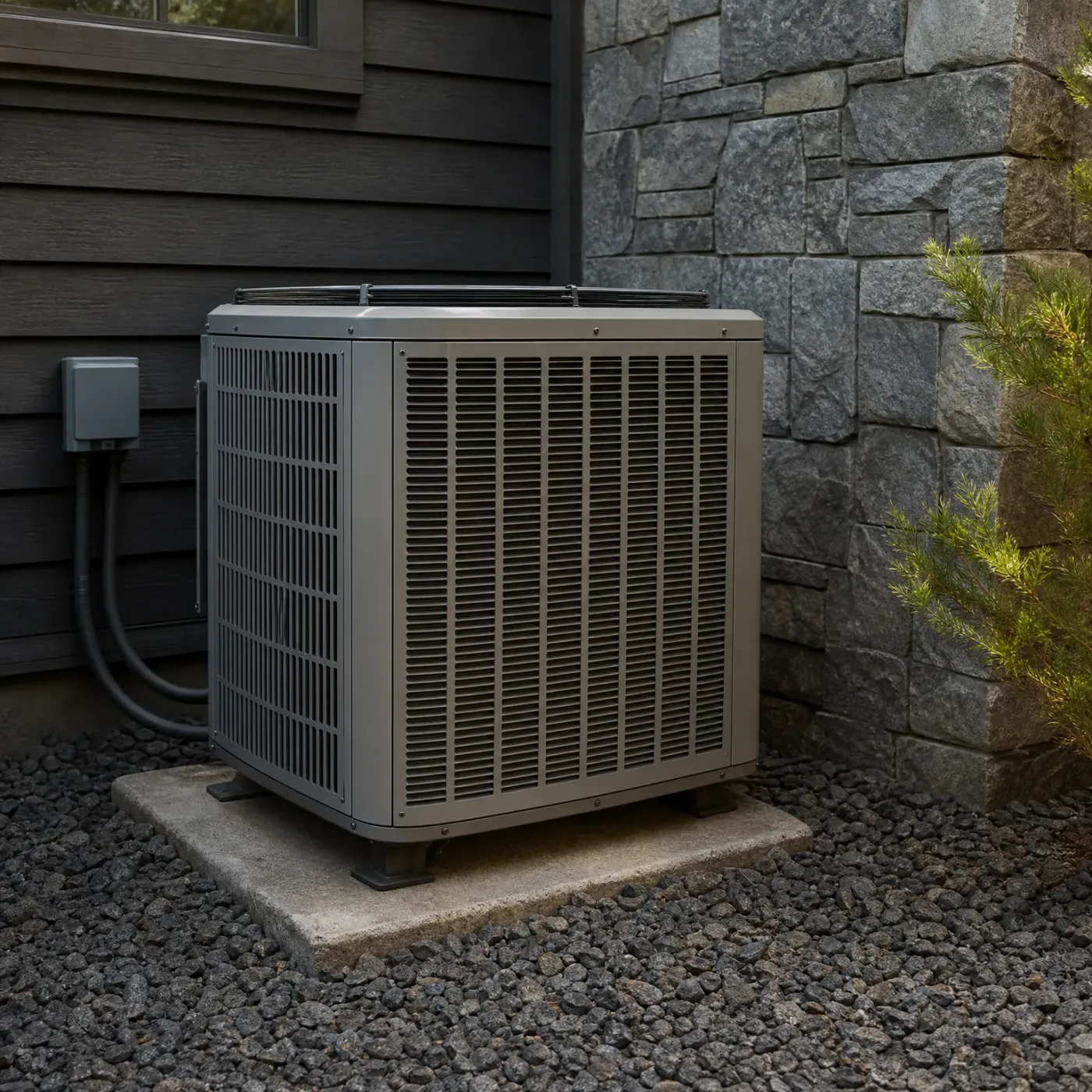
Set up to handle the room
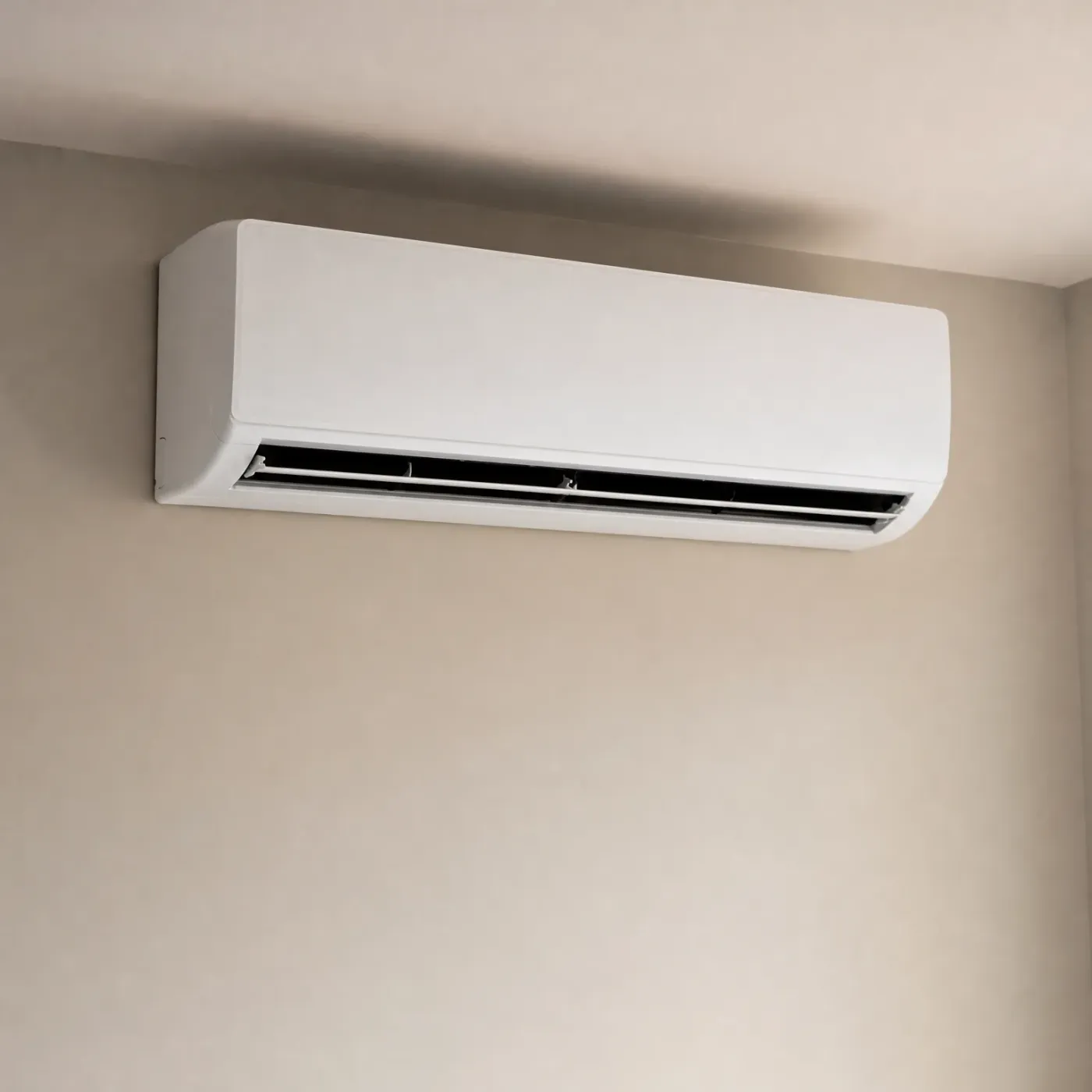
A mini split sized and placed right keeps up with a sticky Michigan summer without strain. The coil stays clean, the line set is sealed, and the unit cools the space it was matched to instead of fighting it.
The right pro for this job
Adding a mini split alongside your gas furnace raises real questions: where it should go, whether your electrical panel can handle it, and how the two systems should work together once summer humidity sets in. This page gets into how that pairing actually works in a Michigan home. A local contractor who installs these year-round can look at your setup and tell you what it needs.
Get my matchA mini split works alongside your furnace instead of replacing it. Your furnace keeps handling the heat through a Michigan winter, and the mini split takes over cooling in the room or zone it's installed in, usually in place of or alongside a window unit or part of your central AC's job. Some homeowners also run the mini split for mild shoulder-season days in spring and fall, since it can heat that one room without firing up the whole furnace. The two systems don't share ductwork or controls. Your furnace keeps its thermostat and its own cycle, and the mini split runs on its own remote or control, cooling whatever space its indoor unit serves. Where it gets installed matters: the room's exposure to sun, how the space is used, and where the outdoor unit can sit all affect how well it keeps up once the humidity sets in for summer.
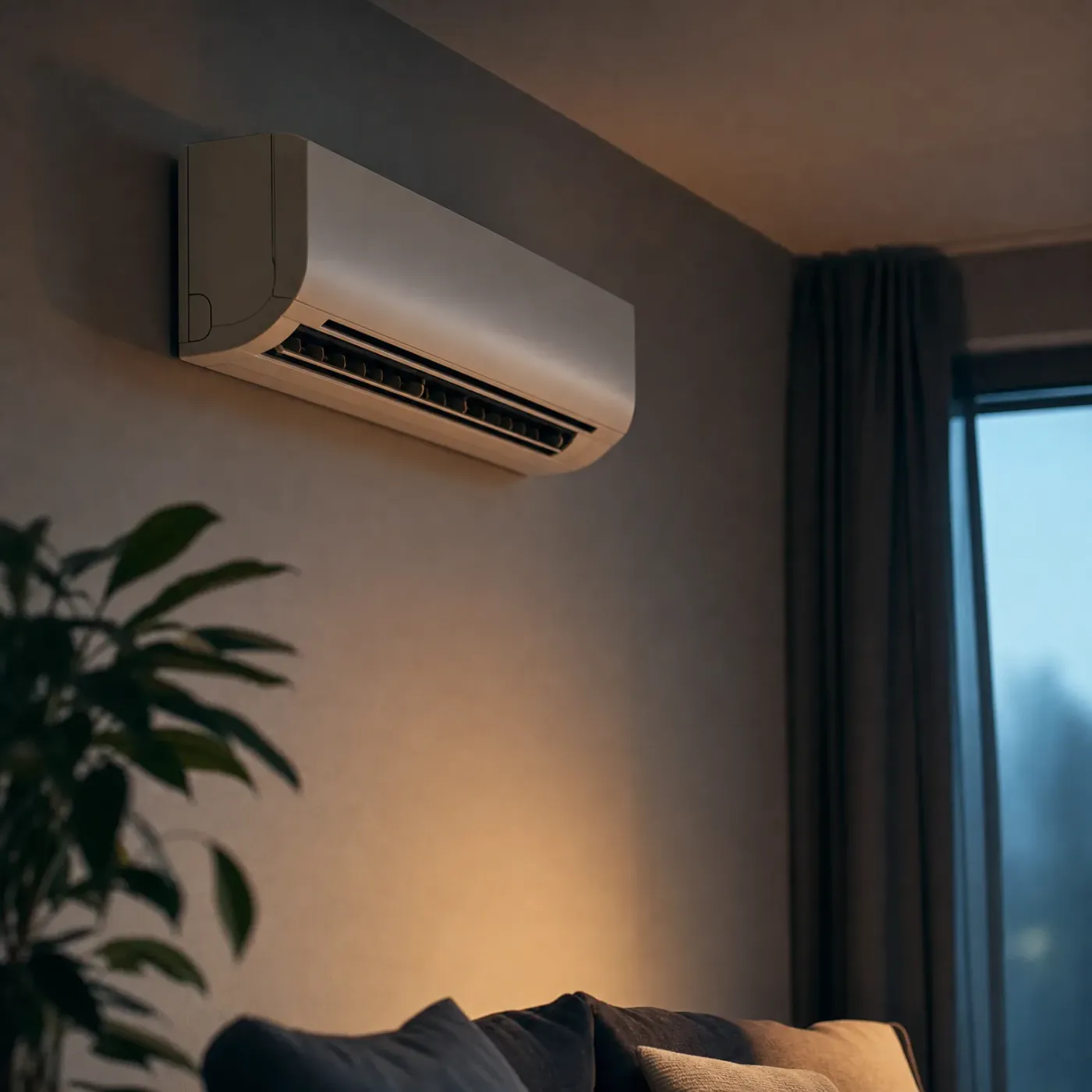
A mini split sized and placed right keeps up with a sticky Michigan summer without strain. The coil stays clean, the line set is sealed, and the unit cools the space it was matched to instead of fighting it.
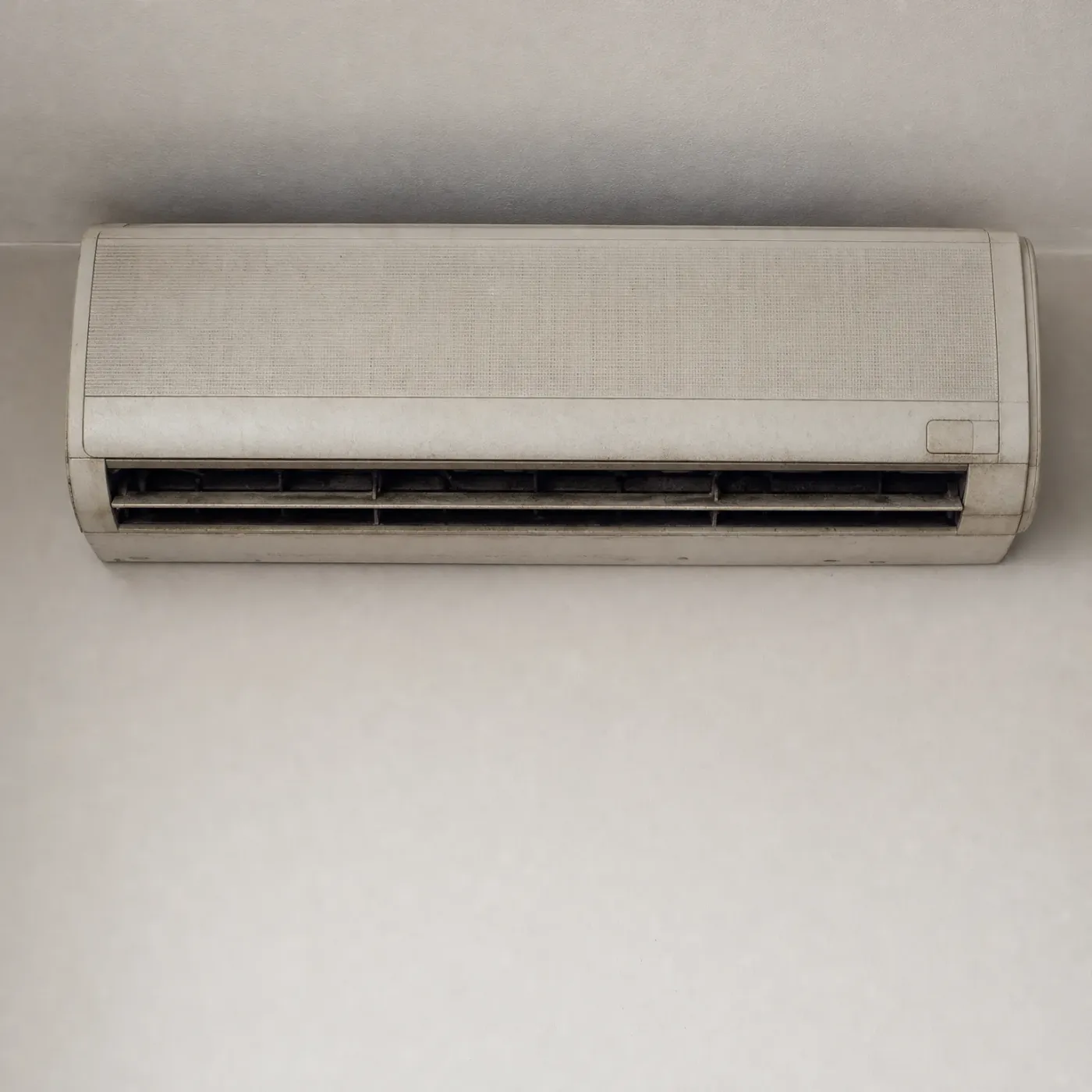
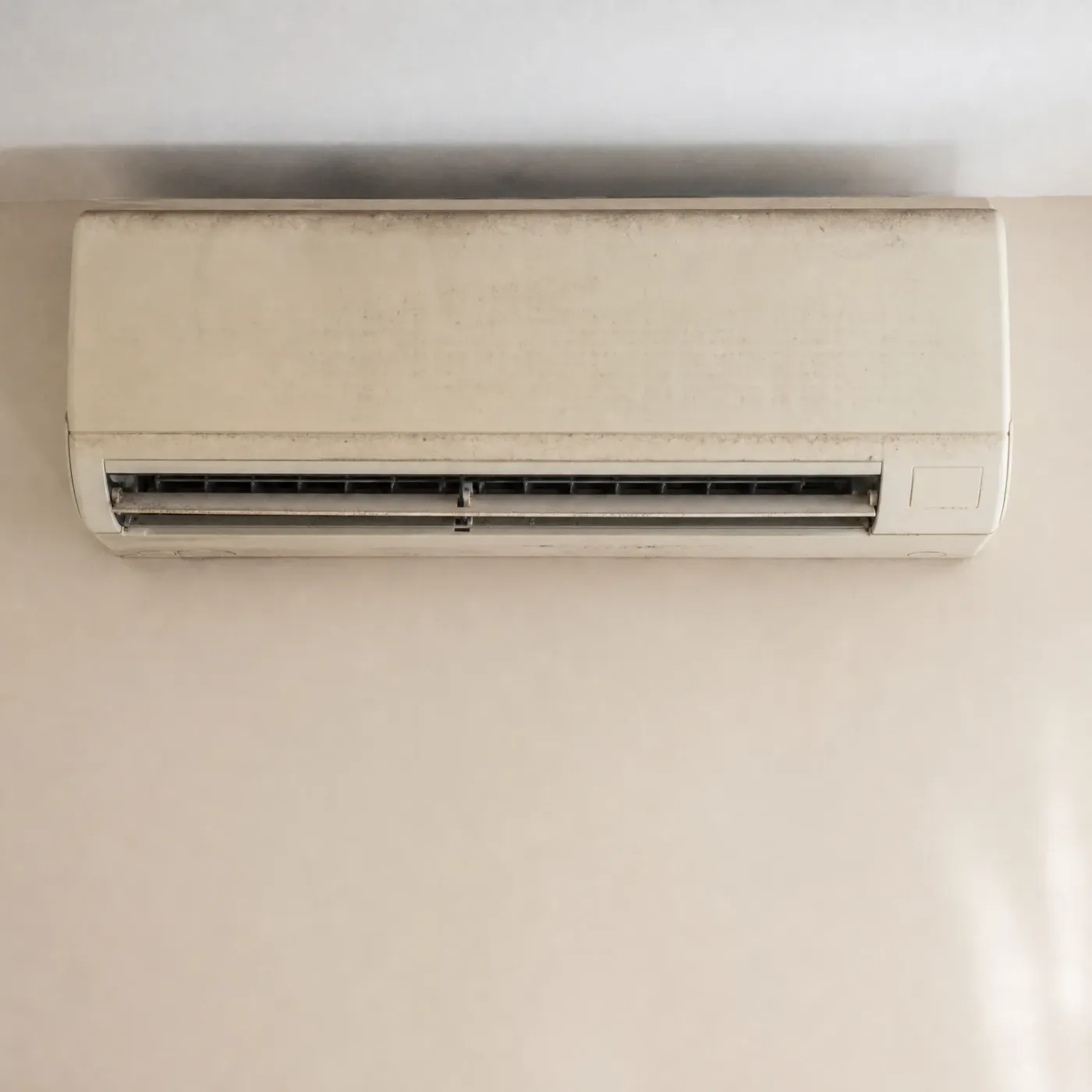
Grime like this builds up when the filter isn't maintained or airflow was never right to begin with. A unit fighting a room too big for it runs longer, pulls more power, and wears down faster than it should.




A mini split needs its own dedicated circuit, separate from whatever outlets or appliances already run in that room. Most run on 208-230 volt power, which is different from the standard household outlets you'd plug a window unit into. That means a licensed electrician or HVAC contractor has to check your panel, confirm there's room for the new circuit, and run the wiring to the spot where the outdoor unit will sit. Skipping that step is how you end up with a breaker that trips under load or a unit that never gets full power to the compressor. It's also why this isn't a job to size up from a parts list alone.
The line set carries refrigerant between the indoor and outdoor units, and it has to pass through an exterior wall at a short, direct angle. A contractor who's done this before in Michigan homes knows how to route it to avoid floor joists, electrical runs, and insulation gaps, and how to seal the wall penetration so winter air doesn't leak in around it. A sloppy seal there undoes some of what the mini split is supposed to gain you, since the whole point of adding one is to cool that room without losing ground on the heating side come winter.
You get matched with a licensed local contractor who installs mini splits in Michigan homes alongside gas furnaces, and knows how to size and place one for your rooms.
A unit sized or mounted wrong can short-cycle, leave rooms muggy all summer, or trip a panel that wasn't ready for the load. Getting it matched right the first time avoids that.
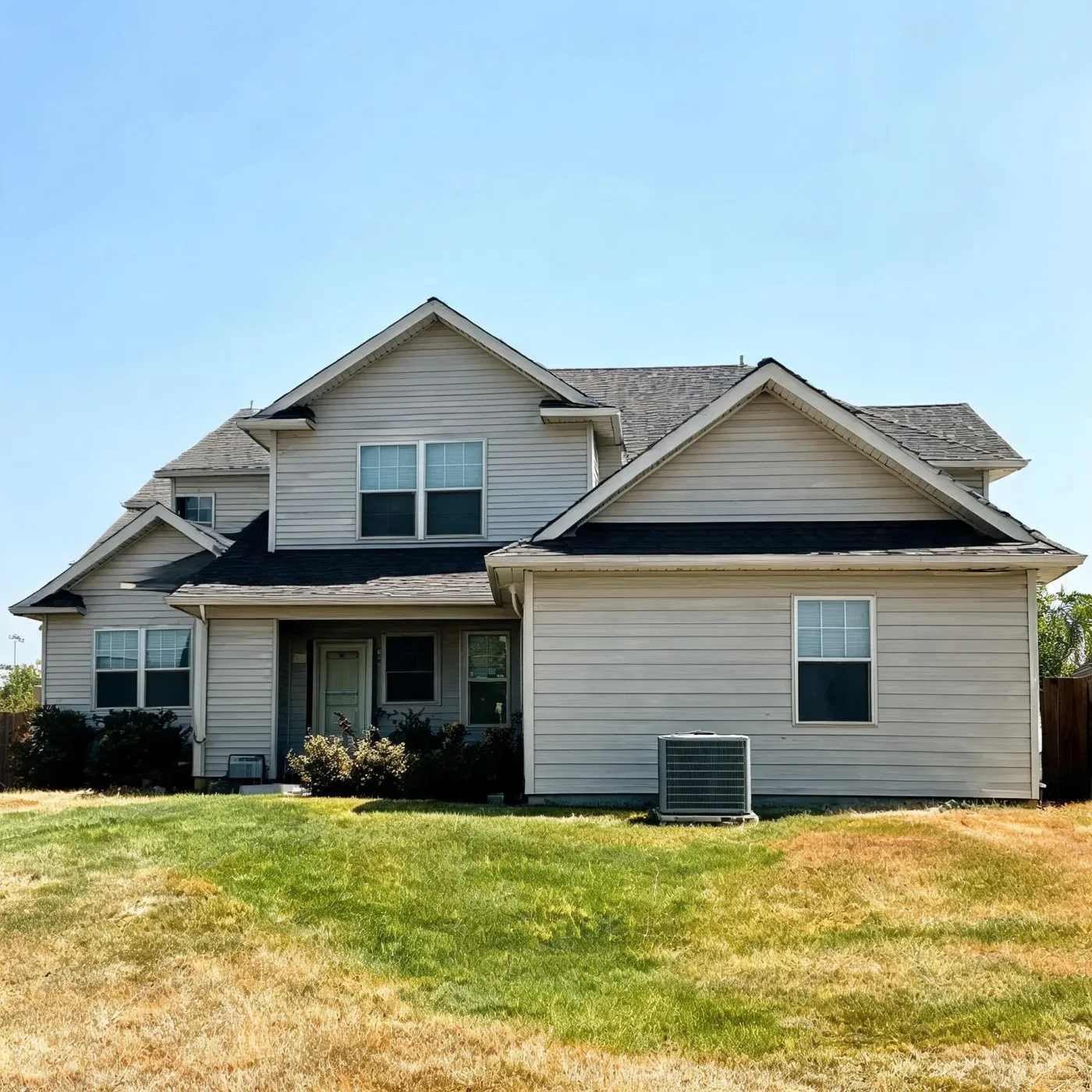
A Michigan summer doesn't look brutal on a thermometer, but the air carries a dew point around 60°F across June, July and August, averaged over where Michigan homes sit, according to NOAA climate data. That's the number that makes a room feel damp even when the temperature itself seems fine. A mini split pulls that moisture out as it cools, which is why the room it's installed in dries out faster than one cooled by a window unit left to just blow cold air around. Getting that right depends on placement and sizing, which is where a local contractor who installs these in Michigan homes every summer earns their keep. You're matched with one contractor, not a handful competing for the job.
NASA POWER T2MDEW county cells weighted by homes
A mini split installed wrong is a bad spot for the line set, a circuit that's undersized, or a unit too big or small for the room, and you usually don't find out until the first humid week it can't keep up. Getting the sizing, placement and electrical right the first time matters more here than with a straightforward furnace swap, because this install has to work alongside a system that's already running your heat. That's a judgment call, not a form you fill out. A contractor who installs these in Michigan homes every season, alongside gas furnaces, has seen which spots fail and which panels need work before the line set ever goes in. Submitting your details here gets your specific house, your panel, your room, in front of one contractor local to you who does this work regularly, instead of you trying to sort through installers who may never have paired a mini split with a furnace before.
A mini split cools the specific room or zone it's mounted in, with its own thermostat separate from the furnace. That's a good fit if it's a bedroom that never cools down fast enough, a sunroom with no ductwork at all, or an addition the furnace was never sized to cover. You control that space on its own, apart from the rest of the house. It won't do anything for rooms outside where it's installed, so if the goal is cooling the whole house evenly, one unit in one room isn't going to get you there. It's built for a specific space, not the whole house.
Central air ties into the same ductwork your furnace already uses, so every room gets cooled through the same vents that heat it in winter. That's the better fit if the whole house runs warm in summer, not just one or two rooms. It also means one thermostat for the house instead of a separate control for each mini split zone you add. The tradeoff is you're cooling rooms you might not need cooled, and if the ductwork isn't sized right for AC, some rooms end up colder or warmer than others regardless of what the thermostat reads.


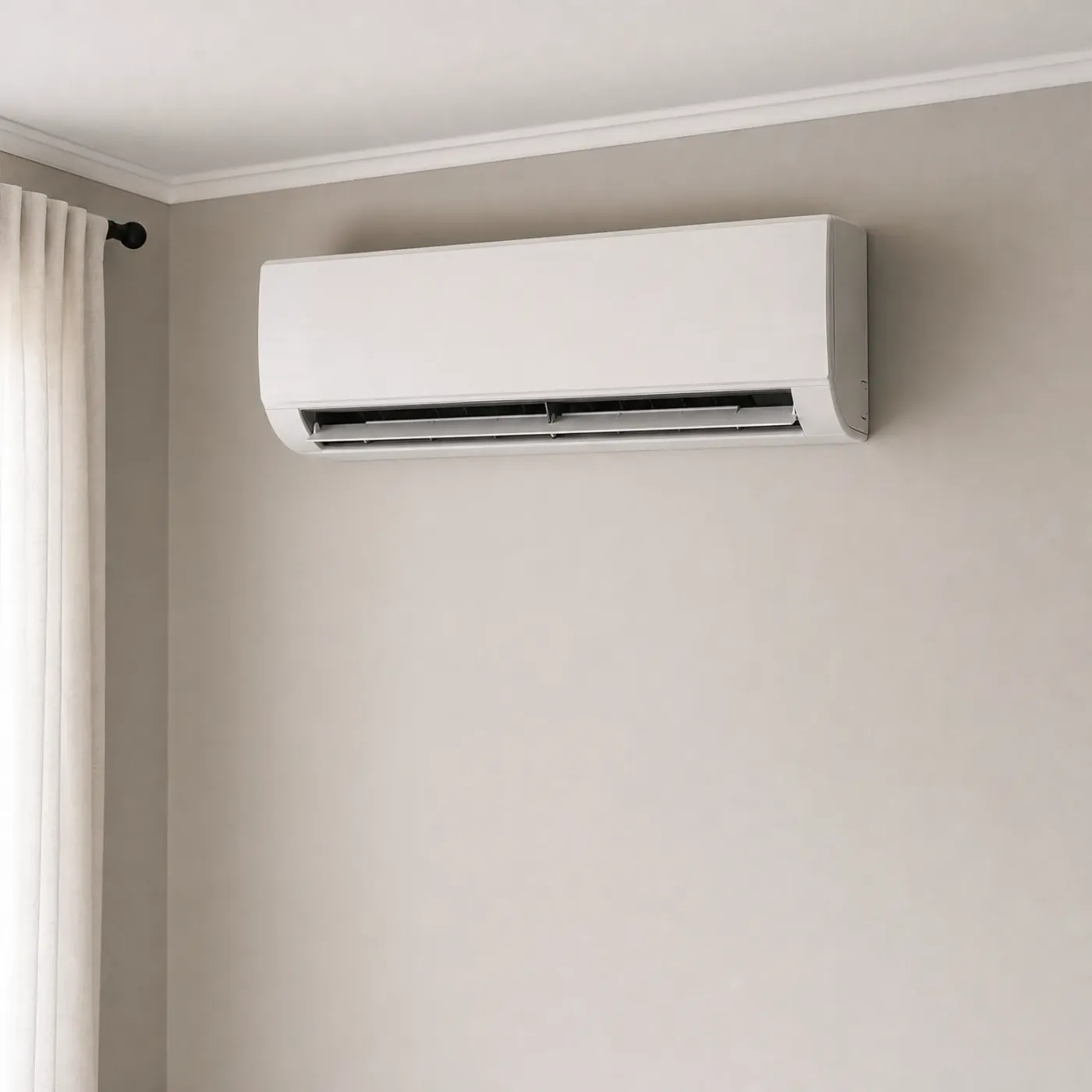
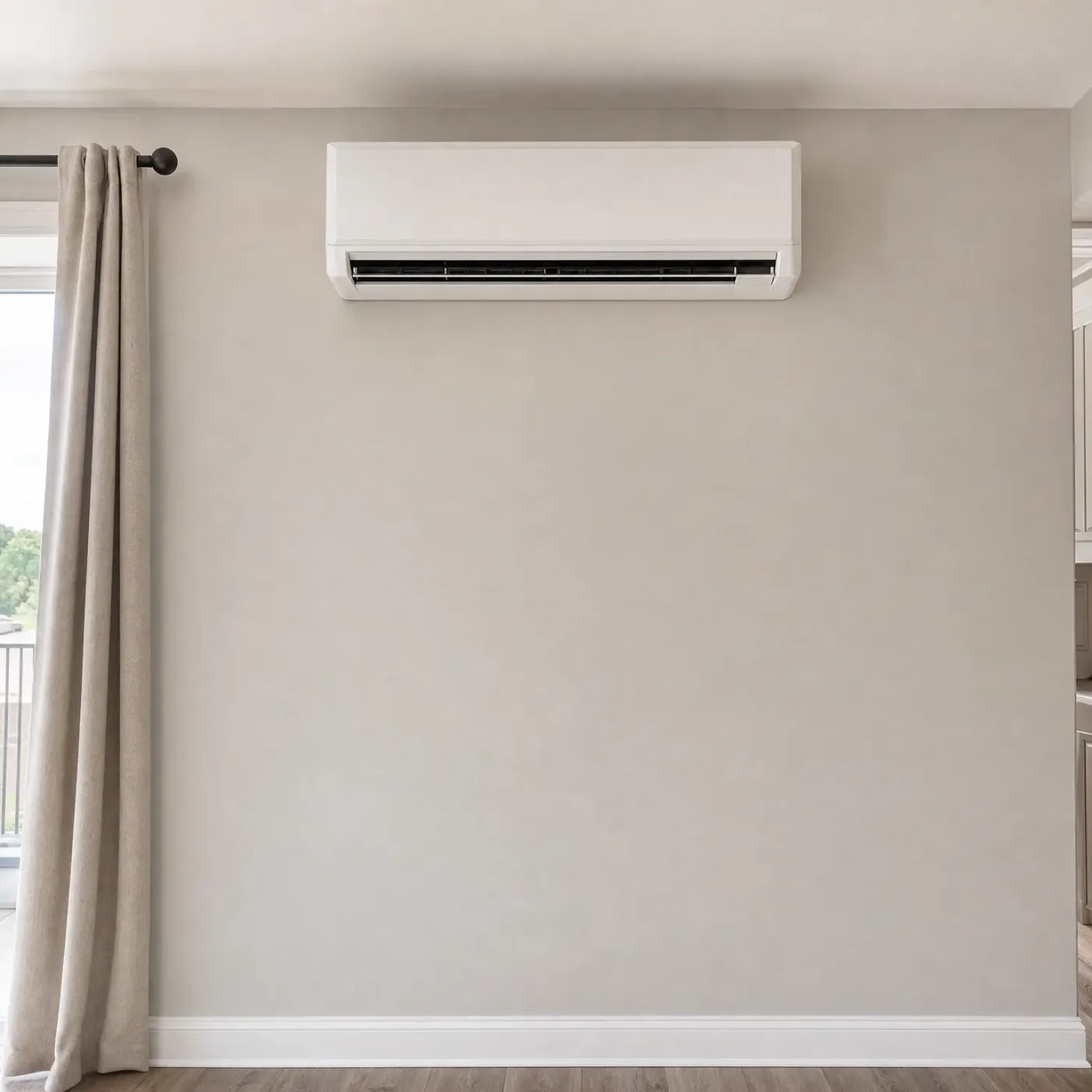
A mini split that's sized right keeps its coil clear and its casing white, year after year. The air moving through it stays steady, and the room it's assigned to holds temperature without the unit straining. You notice it by not noticing it.
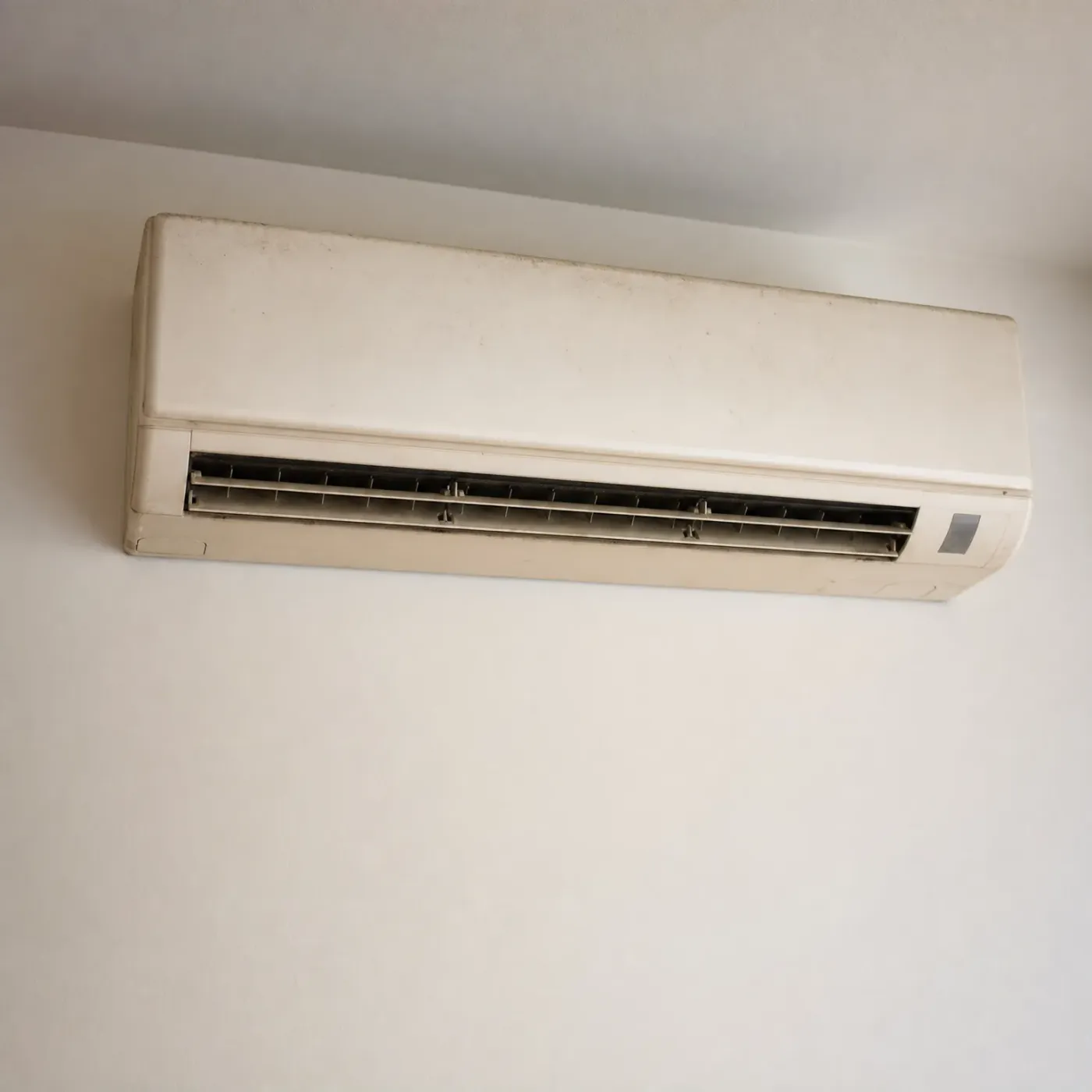
Dust and yellowing like this usually mean the filter hasn't been cleaned in a long while, or the unit's been working harder than it should for a room its size. Left alone, it keeps losing ground against a Michigan summer instead of handling it.
At 20.03 cents per kilowatt-hour, every hour your mini split runs costs more here than it would in most states. That's a real reason to size and place it right from the start, since an oversized or poorly placed unit burns extra electricity cooling a room it was never matched to.
EIA-861 2025 statewide residential average

Your furnace still carries the Michigan winter. The mini split takes the room the furnace can't quite reach, or the one that turns sticky every summer, and runs it on its own thermostat without fighting the ductwork or the electrical panel. Get the sizing, the placement and the circuit right at install, and that's the last time you think about any of it.
A local contractor who installs these in Michigan homes every season has seen where they go wrong: a line set run through the wrong wall, a circuit that's a size too small, a unit hung where it can't actually cool the room it's in. You'll be matched with one contractor who knows that pairing, not a list of them, and they'll reach out to go over your house, your furnace and where the mini split fits into both.


A local pro for your mini split installation